What If Dark Energy Isn't Constant? Exploring New Findings
TL;DR
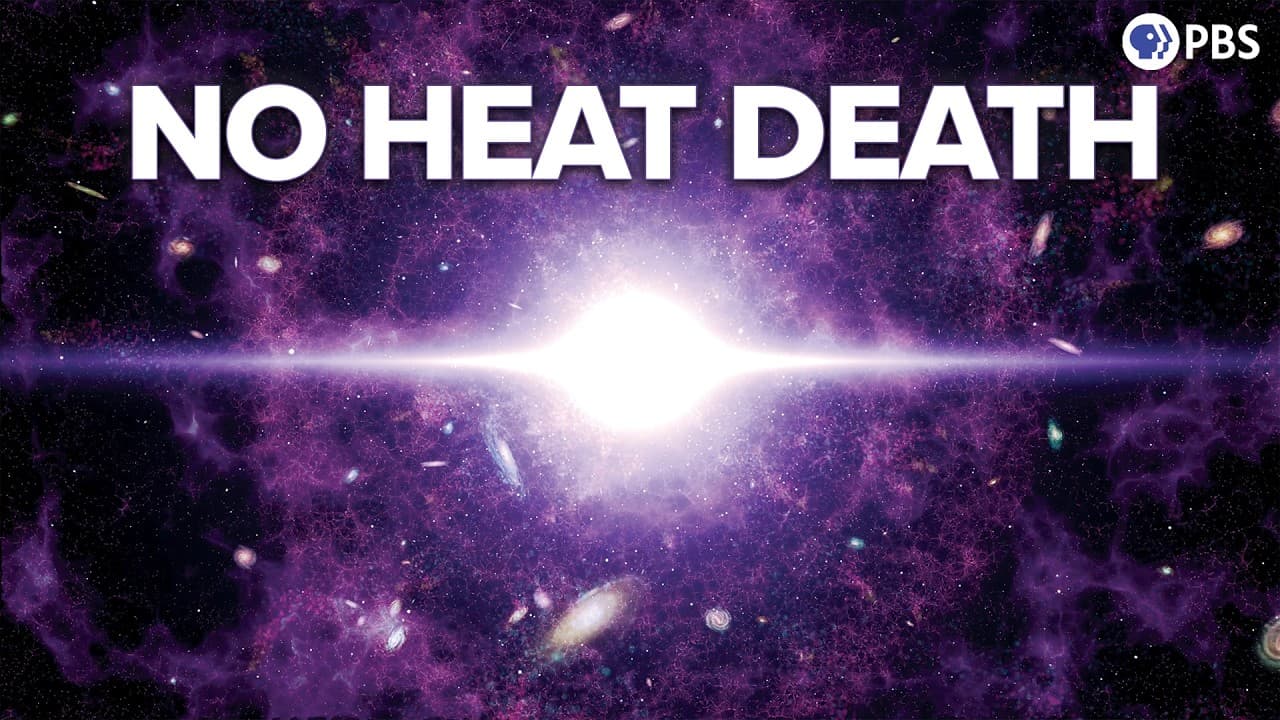
Recent findings suggest that dark energy may be weakening over time, challenging the long-held assumption of a constant cosmological constant. By utilizing Baryon Acoustic Oscillations (BAOs), researchers aim to map the universe's expansion history, which could lead to a better understanding of dark energy and its implications for the universe's fate.
Transcript
Hey Everyone. Before we get started, I wanted to let you know there’s an exciting new PBS series called Weathered: Earth’s Extremes as well as some new Merch available at the merch store. More info at the end of the episode We know that the universe is getting bigger. And we know that the speed that the universe is getting bigger is also gettin... Read More
Key Insights
- The universe's expansion is accelerating, which was a major discovery in 1998, linked to mysterious dark energy.
- Current cosmology primarily uses the Lambda-CDM model, assuming a constant cosmological constant, represented by Lambda.
- Quantum fluctuations challenge the idea of a constant vacuum energy, suggesting either zero or enormous values.
- Baryon Acoustic Oscillations (BAOs) provide a method to map the universe's expansion history, complementing supernova and CMB data.
- DESI's measurements suggest dark energy might be weakening over time, challenging the notion of a constant cosmological constant.
- The DESI findings align with a model called thawing quintessence, where dark energy changes over time.
- A non-constant dark energy could potentially resolve some cosmological tensions, like the Hubble tension, though current data is inconclusive.
- Future observations from DESI and other surveys will help refine our understanding of dark energy and the universe's fate.
Install to Summarize YouTube Videos and Get Transcripts
Explore YouTube Video Summarizer or Get YouTube Transcript Extractor
Questions & Answers
Q: What is the significance of the universe's accelerating expansion?
The accelerating expansion of the universe, discovered in 1998, was a groundbreaking finding in cosmology. It suggests the presence of a mysterious force termed dark energy, which is thought to drive this acceleration. Understanding this phenomenon is crucial as it challenges our current physics models and could lead to new insights into the universe's fate.
Q: How does the Lambda-CDM model relate to dark energy?
The Lambda-CDM model is the standard cosmological model that incorporates the cosmological constant (Lambda) and cold dark matter (CDM). It assumes a constant dark energy density, represented by Lambda, which accounts for the universe's accelerating expansion. This model has been widely accepted, although recent findings suggest the constancy of Lambda might be in question.
Q: What role do Baryon Acoustic Oscillations play in cosmology?
Baryon Acoustic Oscillations (BAOs) are crucial for mapping the universe's expansion history. They serve as standard rulers, allowing scientists to measure distances in the universe by observing the distribution of galaxies. BAOs provide a complementary method to supernova and cosmic microwave background (CMB) data, helping to refine our understanding of dark energy and cosmic expansion.
Q: What are the implications of DESI's findings on dark energy?
DESI's findings suggest that dark energy might be weakening over time, challenging the notion of a constant cosmological constant. This aligns with the thawing quintessence model, where dark energy changes over time. If confirmed, this could lead to a significant shift in our understanding of cosmology and the universe's ultimate fate.
Q: How might non-constant dark energy affect cosmological models?
Non-constant dark energy could resolve existing tensions, such as the Hubble tension, though current data is inconclusive. It challenges the Lambda-CDM model, suggesting that dark energy may not be constant. This could lead to new cosmological models and a deeper understanding of the universe's expansion and potential future scenarios.
Q: What future observations are planned to study dark energy?
Future observations from DESI and other surveys, like the Dark Energy Survey and the Vera Rubin Observatory, aim to refine our understanding of dark energy. These observations will help determine whether dark energy is constant or variable, providing insights into the universe's expansion history and its ultimate fate.
Q: What is the significance of quintessence in cosmology?
Quintessence is a model of dark energy where its equation of state changes over time, unlike the constant cosmological constant in the Lambda-CDM model. The thawing quintessence model suggests dark energy may become variable, offering a potential explanation for DESI's findings. If true, this could reshape our understanding of dark energy and the universe's expansion.
Q: How does DESI's research impact the understanding of the universe's fate?
DESI's research could significantly impact our understanding of the universe's fate by challenging the constancy of dark energy. If dark energy is indeed weakening, it could alter predictions about the universe's ultimate fate, such as the likelihood of a Big Rip or Big Crunch scenario. Continued research will help clarify these possibilities.
Summary & Key Takeaways
-
The universe's expansion is accelerating, a discovery linked to dark energy. The Lambda-CDM model assumes a constant cosmological constant, but recent findings suggest this might not be the case. DESI's measurements indicate that dark energy could be weakening over time, challenging current cosmological models.
-
Baryon Acoustic Oscillations (BAOs) offer a method to map the universe's expansion history, providing insights into the nature of dark energy. DESI's findings align with the thawing quintessence model, where dark energy changes over time, suggesting a potential shift in our understanding of cosmology.
-
Future observations from DESI and other surveys will help refine our understanding of dark energy and the universe's fate. These findings could resolve some cosmological tensions, like the Hubble tension, though current data is inconclusive. The exploration of dark energy's nature continues to be a focal point in cosmology.
Read in Other Languages (beta)
Share This Summary 📚
Summarize YouTube Videos and Get Video Transcripts with 1-Click
Try YouTube Summary with ChatGPT & Claude or YouTube Transcript Generator
Explore More Summaries from PBS Space Time 📚

Summarize YouTube Videos and Get Video Transcripts with 1-Click
Try YouTube Summary with ChatGPT & Claude or YouTube Transcript Generator