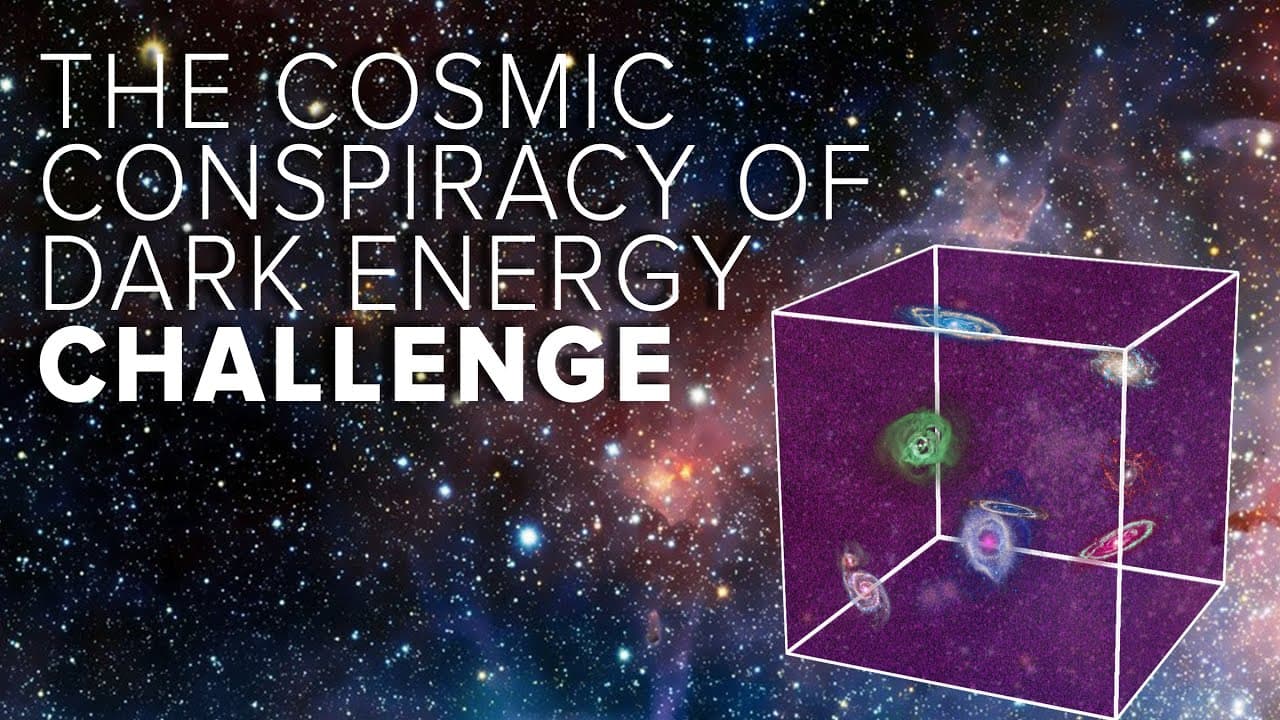
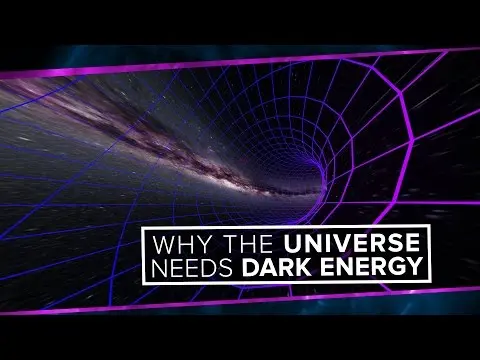
The Cosmic Conspiracy of Dark Energy Challenge Question
TL;DR
Explores the cosmic balance between dark energy and matter.
Transcript
In the past few episodes, we've delved deep into cosmology, building up the tools we need to really understand dark energy and its influence on the universe. Pretty soon you'll understand as much as anyone, with the possible exception of people who are actually paid to understand dark energy. But before we get there, it's time for some homework. To... Read More
Key Insights
- Dark energy currently constitutes about 70% of the universe's energy, with the remaining 30% being regular matter, including dark matter.
- The universe's expansion has accelerated due to dark energy, leading to a significant cosmic coincidence where its influence is measurable along with matter.
- This cosmic balance is recent in astronomical terms, having only occurred in the last two to three billion years.
- The challenge question asks how many of the past 100 doublings of the universe's size have seen dark energy contribute significantly to energy density.
- Participants are invited to calculate when dark energy began to significantly influence the universe and when matter will cease to matter.
- The video encourages viewers to solve the Friedmann equations or use simple algebra for extra credit questions.
- The challenge rewards participants with Space Time t-shirts for correct answers, emphasizing the importance of detailed reasoning.
- Answers must be emailed to [email protected] with a specific subject line to be considered.
Install to Summarize YouTube Videos and Get Transcripts
Explore YouTube Video Summarizer or Get YouTube Transcript Extractor
Questions & Answers
Q: What is the current composition of the universe in terms of energy?
The universe is composed of approximately 70% dark energy and 30% regular matter, which includes dark matter. This composition reflects the current cosmic balance where dark energy has become the dominant force influencing the universe's expansion.
Q: Why is the current cosmic balance between dark energy and matter considered a coincidence?
The current balance is considered a coincidence because it is a brief period in cosmic history where both dark energy and matter have a measurable effect on the universe's expansion. This balance has only occurred in the last two to three billion years, making it a recent and unique phenomenon.
Q: What is the challenge question posed to viewers?
The challenge question asks viewers to determine how many of the past 100 doublings of the universe's size have seen dark energy contribute at least 10% to the energy density, and how many future doublings will see matter contribute at least 10%. Participants are encouraged to provide detailed reasoning and calculations.
Q: What are the requirements for participating in the challenge?
To participate in the challenge, viewers must email their answers to [email protected] with the subject line 'Dark Energy Challenge.' They must also provide detailed reasoning and calculations to qualify for a chance to win a Space Time t-shirt. Answers in the comments section will disqualify participants.
Q: What additional question is included for extra credit?
The extra credit question asks participants to estimate how many billion years ago dark energy began to have a significant effect on the universe and how many billion years in the future it will take for matter to cease to matter. Participants can use simple algebra or solve the Friedmann equations.
Q: How has the universe's expansion been influenced by dark energy?
Dark energy has caused the universe's expansion to accelerate. As the universe expands, the density of matter decreases while dark energy remains constant, leading to dark energy becoming the dominant force. This acceleration has been a significant factor in the universe's development over the past few billion years.
Q: What is the significance of the Friedmann equations in this context?
The Friedmann equations are crucial for understanding the dynamics of the universe's expansion, including the effects of dark energy and matter. Solving these equations can provide insights into the timing and influence of dark energy, helping to answer the challenge question and extra credit question posed in the video.
Q: What is the prize for correctly answering the challenge question?
Participants who correctly answer the challenge question and provide detailed reasoning can win a Space Time t-shirt. The video emphasizes the importance of explaining the reasoning behind the answers and submitting them via email with the correct subject line to be eligible for the prize.
Summary & Key Takeaways
-
The video discusses the current cosmic balance between dark energy and matter, with dark energy making up 70% of the universe's energy. This balance is a recent phenomenon, occurring only in the last two to three billion years, and presents a unique cosmic coincidence.
-
A challenge question is posed to viewers, asking them to determine how many of the past 100 doublings of the universe's size have seen dark energy contribute significantly to energy density, and how many future doublings will see matter have a significant effect.
-
Participants are encouraged to solve the Friedmann equations or use simple algebra for extra credit. Correct answers can win a Space Time t-shirt, and responses must be emailed with a specific subject line to qualify.
Read in Other Languages (beta)
Share This Summary 📚
Summarize YouTube Videos and Get Video Transcripts with 1-Click
Try YouTube Summary with ChatGPT & Claude or YouTube Transcript Generator
Explore More Summaries from PBS Space Time 📚
Summarize YouTube Videos and Get Video Transcripts with 1-Click
Try YouTube Summary with ChatGPT & Claude or YouTube Transcript Generator