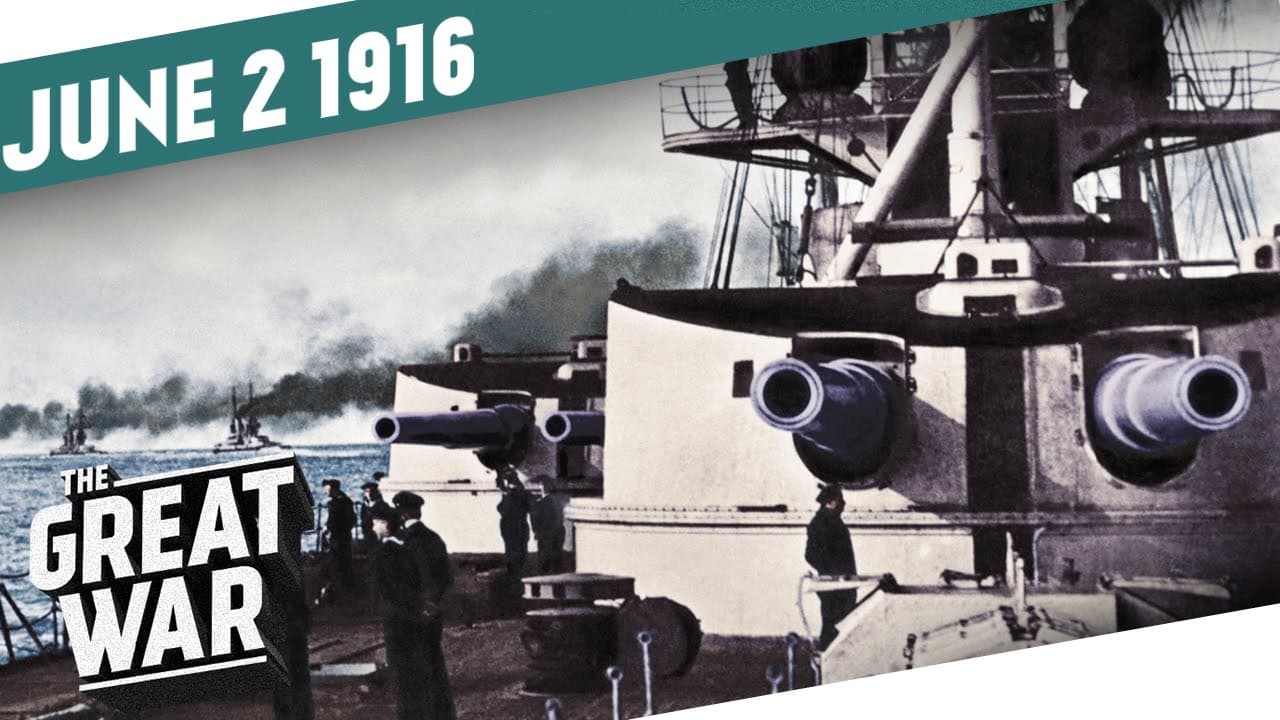
The Battle of Jutland - Royal Navy vs. German Imperial Navy I THE GREAT WAR Week 97
TL;DR
The Battle of Jutland was a strategic defeat for Germany.
Transcript
Since the beginning of the war, the two most powerful navies in the world had failed to decisively engage, the British navy instead blockading the Germans to deprive them of supplies, the Germans harassing international shipping with U-boats, but that changes this week when mighty ships clash. 100 years ago this week was the Battle of Jutland. I’m ... Read More
Key Insights
- The Battle of Jutland was the largest naval battle of World War I, involving the British Grand Fleet and the German High Seas Fleet.
- The British navy aimed to maintain their blockade of Germany, while the Germans sought to break it and damage British naval power.
- Poor armor and inadequate anti-flash precautions led to significant British losses, with ships exploding upon being hit.
- The British Grand Fleet, despite losing more ships, maintained strategic control, preventing the German fleet from breaking the blockade.
- The German fleet managed to evade complete destruction and returned to port, but they did not challenge the British fleet again.
- The battle demonstrated the effectiveness of British intelligence, as they intercepted German communications and anticipated their movements.
- Both fleets suffered heavy casualties, with over 6,000 British and 2,500 German sailors losing their lives.
- The aftermath saw the German navy shift focus to U-boat warfare, acknowledging the difficulty of achieving victory through surface fleet engagements.
Install to Summarize YouTube Videos and Get Transcripts
Explore YouTube Video Summarizer or Get YouTube Transcript Extractor
Questions & Answers
Q: What was the strategic significance of the Battle of Jutland?
The Battle of Jutland was strategically significant because it solidified the British naval blockade of Germany, preventing the German fleet from breaking it and gaining control of the North Sea. Although the British lost more ships, the German fleet did not challenge them again, effectively maintaining British naval dominance.
Q: Why did the British suffer greater losses in the battle?
The British suffered greater losses at Jutland primarily due to the inadequacies in their battlecruiser design. Their ships had insufficient armor to withstand German shells, and poor anti-flash precautions led to catastrophic explosions when shells penetrated the hulls, resulting in significant casualties and ship losses.
Q: How did intelligence impact the outcome of the Battle of Jutland?
Intelligence played a crucial role in the Battle of Jutland. British operatives, particularly those in Room 40, decoded German wireless signals, allowing the British fleet to anticipate German movements. This forewarning helped the British avoid traps and position their fleet advantageously, contributing to the strategic outcome despite material losses.
Q: What changes did the German navy make after the Battle of Jutland?
After the Battle of Jutland, the German navy shifted its strategy towards U-boat warfare. Recognizing the challenges of achieving decisive victory through surface fleet engagements, they focused on using submarines to disrupt British merchant shipping, aiming to weaken the British economy and war effort indirectly.
Q: What role did Admiral Scheer play in the battle?
Admiral Reinhard Scheer, commander of the German High Seas Fleet, played a pivotal role in the Battle of Jutland. He aimed to engage the British fleet in a decisive battle to break the blockade. Despite initial tactical maneuvers, Scheer ultimately ordered a retreat to avoid complete destruction, preserving his fleet for future engagements.
Q: How did the British and German fleets compare in terms of ship design?
The British and German fleets differed significantly in ship design. British battlecruisers prioritized speed over armor, making them vulnerable to German shells. In contrast, German ships were better armored and subdivided into watertight compartments, allowing them to withstand more damage and avoid catastrophic explosions.
Q: What was the public perception of the battle's outcome?
Public perception of the Battle of Jutland's outcome was confused and mixed. British Admiralty's conflicting reports, influenced by propaganda efforts, left the public uncertain whether to view the battle as a victory or defeat. The ambiguity reflected the complex nature of naval warfare and the challenges in interpreting strategic outcomes.
Q: What was the long-term impact of the Battle of Jutland on World War I?
The long-term impact of the Battle of Jutland was significant in maintaining British naval supremacy and the blockade of Germany, which contributed to the eventual Allied victory. It also led to a strategic shift in German naval tactics towards submarine warfare, influencing subsequent naval engagements and economic warfare during World War I.
Summary & Key Takeaways
-
The Battle of Jutland in 1916 was a pivotal naval engagement between the British Grand Fleet and the German High Seas Fleet. Despite suffering greater losses, the British maintained control, preventing the Germans from breaking their blockade. The battle marked a strategic defeat for Germany, shifting their focus to U-boat warfare.
-
The battle highlighted the vulnerabilities of British battlecruisers, which suffered catastrophic damage due to inadequate armor and anti-flash precautions. The German fleet, better armored and compartmentalized, managed to evade total destruction and returned to port, though they did not seek further engagement with the British fleet.
-
Intelligence played a crucial role, with British operatives intercepting German communications, allowing them to anticipate and counter German movements. Despite the British losses, the strategic outcome maintained the status quo, with the German fleet unable to challenge British naval supremacy again during the war.
Read in Other Languages (beta)
Share This Summary 📚
Summarize YouTube Videos and Get Video Transcripts with 1-Click
Try YouTube Summary with ChatGPT & Claude or YouTube Transcript Generator
Explore More Summaries from The Great War 📚

Summarize YouTube Videos and Get Video Transcripts with 1-Click
Try YouTube Summary with ChatGPT & Claude or YouTube Transcript Generator