Plant reproductive success | Organism growth and reproduction | Middle school biology | Khan Academy
TL;DR
Plants increase their reproductive success through strategies like pollination by animals and seed dispersal.
Transcript
- [Instructor] We've already talked about reproductive success in other videos. It's related to the number of offspring an organism can have in its lifetime. And so in this video, we're going to think about strategies that plants will use for reproductive success. A plant that has more surviving offspring has a higher reproductive success. So one m... Read More
Key Insights
- 🌱 Reproductive success is crucial for both plants and animals, and they employ various strategies to increase their chances of successful reproduction.
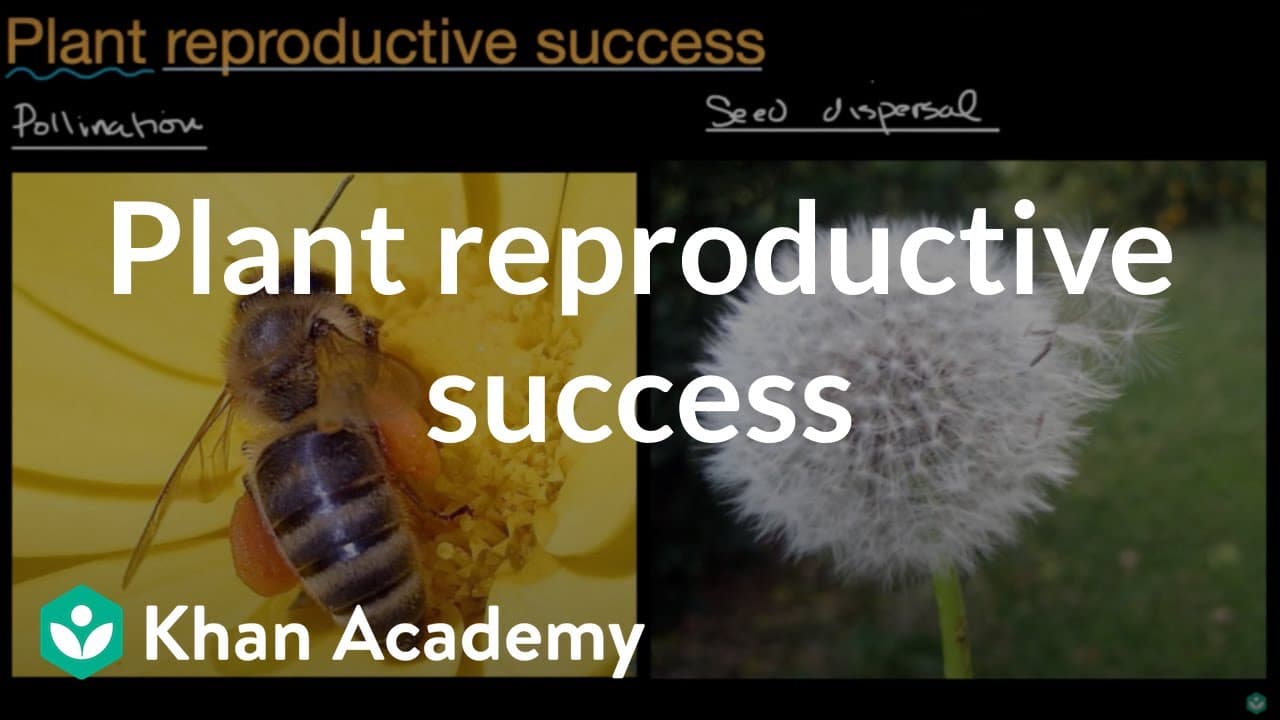
- 🐝 Pollination by animals, especially insects like bees, facilitates genetic mixing and boosts plant reproduction.
- 🌱 Seed dispersal is vital for plants to ensure the survival and distribution of their offspring to favorable locations.
- 🌱 Wind is a common mechanism for seed dispersal, as seen in dandelions.
- 🌱 Animals can also aid in seed dispersal by consuming fruits and dispersing the seeds through their droppings.
- 🌱 Plant strategies for reproductive success are analogous to animal strategies, highlighting the significance of reproductive success in nature.
- 🌱 The success of plant offspring depends not only on reproduction but also on their ability to thrive in different conditions.
Install to Summarize YouTube Videos and Get Transcripts
Explore YouTube Video Summarizer or Get YouTube Transcript Extractor
Questions & Answers
Q: How do plants increase their chances of reproduction through pollination?
Plants increase their chances of reproduction through pollination by leveraging animals like bees. As bees gather nectar from flowers, pollen gets attached to them, and as they move from flower to flower, they transfer the pollen, allowing for genetic mixing and increased plant reproduction.
Q: What is seed dispersal and why is it important?
Seed dispersal is the process by which plants spread their seeds to various locations. It is important for increasing the chances of the seeds ending up in nutrient-rich areas where they can survive and reproduce. Seed dispersal can occur through mechanisms like wind or with the help of animals that eat fruits and disperse the seeds through their droppings.
Q: How do dandelions disperse their seeds?
Dandelions disperse their seeds through wind. The dandelion seeds have structures that catch the wind and allow them to be transported for long distances, potentially even miles away from the parent plant. While not all seeds may end up in useful places, some may land in locations where the future dandelion offspring are more likely to survive and reproduce.
Q: How do animals assist in seed dispersal?
Animals play a role in seed dispersal by eating fruits from plants. As they consume the fruit, they may inadvertently ingest seeds, which are later dispersed through their droppings. This process helps the seeds reach new locations, increasing the chances of successful plant reproduction.
Summary & Key Takeaways
-
Plants increase their chances of reproduction by leveraging animals for pollination, where pollen is transferred from one plant to another through animals like bees.
-
Seed dispersal is another strategy used by plants to ensure the survival of their offspring, aiming to spread seeds to as many locations as possible.
-
Seed dispersal can occur through wind, like the dandelion seeds that catch the wind, or with the help of animals that eat the fruits and later disperse the seeds through their droppings.
Read in Other Languages (beta)
Share This Summary 📚
Summarize YouTube Videos and Get Video Transcripts with 1-Click
Try YouTube Summary with ChatGPT & Claude or YouTube Transcript Generator
Explore More Summaries from Khan Academy 📚




Summarize YouTube Videos and Get Video Transcripts with 1-Click
Try YouTube Summary with ChatGPT & Claude or YouTube Transcript Generator