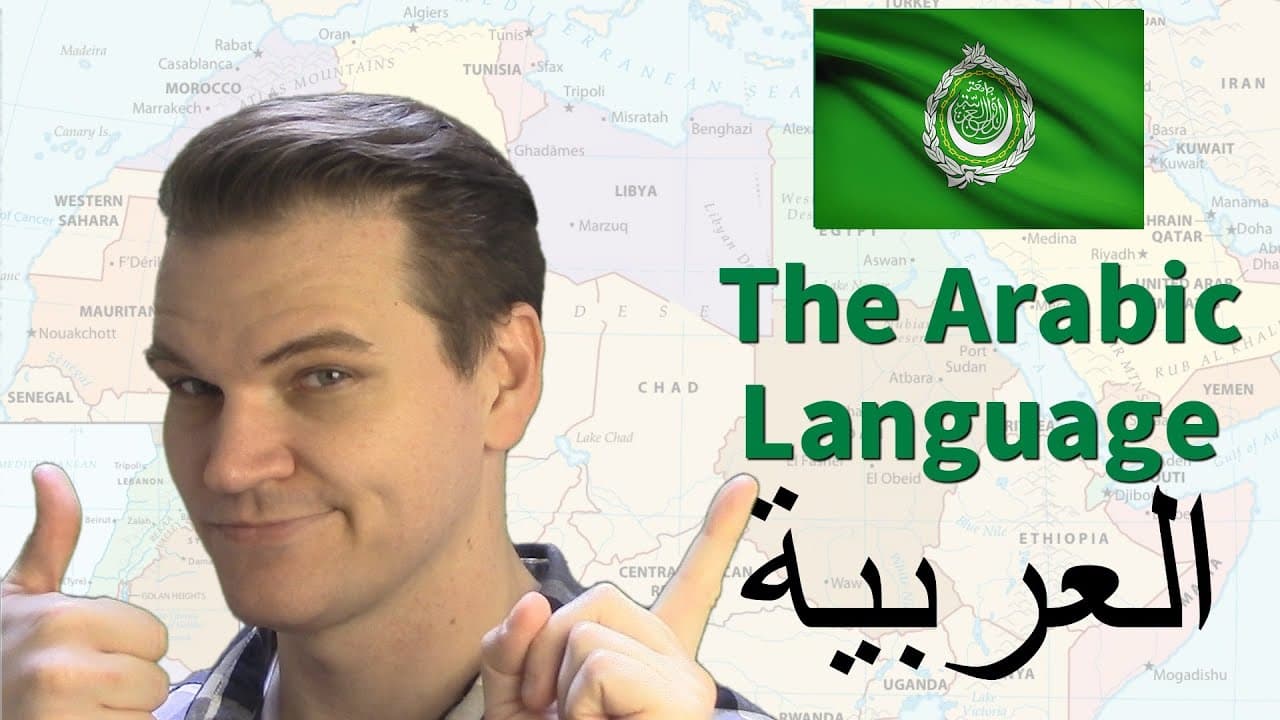
The ARABIC Language (Its Amazing History and Features)
TL;DR
Explores Arabic's history, varieties, and linguistic features.
Transcript
Back in 2013 I produced one of the strangest videos on YouTube: a video about Arabic in Japanese with English subtitles and me teaching an arabic lesson to Japanese viewers at the end. Lots of people were bewildered. Today, I'm going to try again. Hello everyone, welcome to the Lang Focus channel and my name is Paul. Today's topic is the Arabic lan... Read More
Key Insights
- Arabic is the fifth most widely spoken language globally, with 293 million native speakers and 422 million speakers in total. It is an official language in 26 countries and one of the six official languages of the United Nations.
- Arabic is a Semitic language related to Hebrew, Aramaic, and Phoenician. It developed from a proto-Semitic language and forms a branch of Central Semitic languages.
- The Arabic language has many varieties, including Classical Arabic, Modern Standard Arabic, and various local dialects, which can differ significantly from each other.
- Modern Standard Arabic is used in formal settings, media, and education, while local dialects are used for everyday speech. This creates a diglossic situation where speakers use different forms of the language for different purposes.
- The Arabic script is an abjad, where each letter represents a consonant, and short vowels are typically not written. It is written from right to left, and many letters join with others.
- Arabic phonology includes unique sounds that can be challenging for non-native speakers, such as emphatic consonants and sounds produced further back in the throat.
- Arabic morphology is based on a root-and-template system, where words are constructed from three or four-letter roots and inserted into templates with fixed vowel patterns.
- Modern Arabic dialects evolved from neo-Arabic dialects, influenced by the original languages of conquered areas, while literary Arabic remained relatively constant due to the influence of the Quran.
Install to Summarize YouTube Videos and Get Transcripts
Explore YouTube Video Summarizer or Get YouTube Transcript Extractor
Questions & Answers
Q: What is the significance of Arabic as a language?
Arabic is significant as it is the fifth most widely spoken language globally, with 293 million native speakers. It serves as an official language in 26 countries and is one of the six official languages of the United Nations. Additionally, it holds religious importance as the liturgical language of Islam, being the language of the Quran.
Q: What are the main varieties of Arabic?
The main varieties of Arabic include Classical Arabic, Modern Standard Arabic, and various local dialects. Classical Arabic is the language of the Quran, while Modern Standard Arabic is used in formal contexts like media and education. Local dialects, which can vary significantly, are used for everyday communication.
Q: How does the Arabic script function?
The Arabic script is an abjad, meaning each letter represents a consonant, and short vowels are not typically written. It is written from right to left, with most letters joining to the following letter. This script developed from the Nabataean script, which itself derived from the Aramaic script.
Q: What is diglossia in Arabic?
Diglossia in Arabic refers to the use of two distinct varieties of the language for different purposes. Modern Standard Arabic is used for formal settings, media, and education, while local dialects are used for everyday conversation. This situation requires speakers to switch between language forms depending on the context.
Q: How did Arabic dialects develop historically?
Arabic dialects developed from pre-Islamic Arabic dialects and a common koine used by Arab armies during Islamic conquests. These dialects were influenced by the original languages of conquered regions, such as Aramaic in the Levant and Mesopotamia, Berber in the Maghreb, and Coptic in Egypt.
Q: What is the root-and-template system in Arabic morphology?
The root-and-template system in Arabic morphology involves constructing words from three or four-letter roots inserted into templates with fixed vowel patterns. This system allows speakers to identify the core meaning of a word through its root and its grammatical function through its template.
Q: What challenges do learners face with Arabic phonology?
Learners of Arabic face challenges with its phonology, which includes unique sounds not found in many other languages. These include emphatic consonants and sounds produced further back in the throat, such as the sounds represented by the letters 'ha', 'qaf', and 'ghayn'.
Q: Why is it important to learn Modern Standard Arabic?
Learning Modern Standard Arabic is important because it serves as the formal language used in media, literature, and education. It provides a foundation for understanding different Arabic dialects and registers of speech. While not necessary for everyday conversation, it enhances comprehension and communication across various Arabic-speaking regions.
Summary & Key Takeaways
-
The Arabic language is one of the most widely spoken languages in the world, with a rich history and a variety of dialects. It is a Semitic language related to Hebrew and Aramaic, and its script is an abjad written from right to left.
-
Arabic has a diglossic nature, with Modern Standard Arabic used in formal contexts and local dialects used in everyday speech. The language's morphology is based on a root-and-template system, making it unique and complex.
-
Throughout history, Arabic has been influenced by various languages due to Islamic conquests and interactions with the West. Despite these influences, the language has maintained a relatively stable literary form due to its religious significance.
Read in Other Languages (beta)
Share This Summary 📚
Summarize YouTube Videos and Get Video Transcripts with 1-Click
Try YouTube Summary with ChatGPT & Claude or YouTube Transcript Generator
Explore More Summaries from Langfocus 📚

Summarize YouTube Videos and Get Video Transcripts with 1-Click
Try YouTube Summary with ChatGPT & Claude or YouTube Transcript Generator