How Does Hamlet Explore Gender and Power?
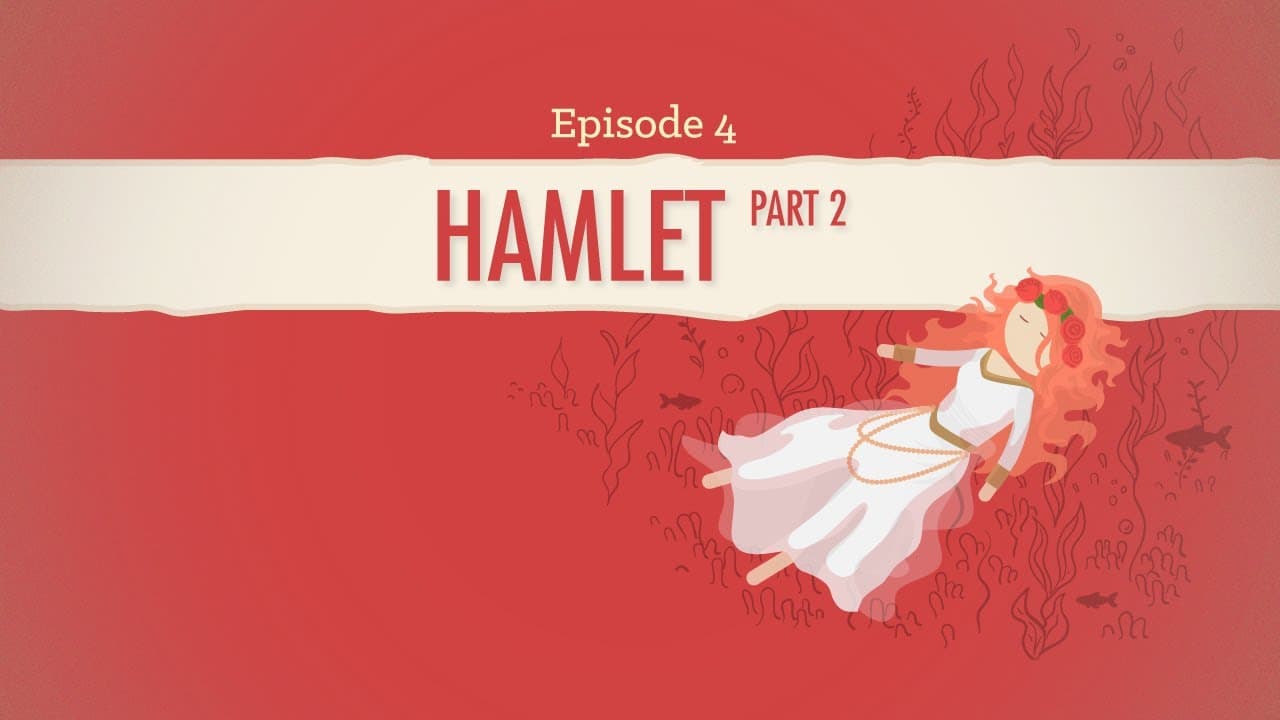
TL;DR
Hamlet's interactions with Ophelia and Gertrude reveal complex gender dynamics and power struggles. Ophelia, often seen as powerless, uses symbolic flowers to express judgment, while Gertrude's actions suggest ambiguous loyalty. Both women's defiance leads to tragic ends, highlighting the limited agency they possess. The play examines the consequences of inaction and the moral complexities of revenge.
Transcript
Hi, I’m John Green, this is Crash Course Literature and today we continue our discussion of Hamlet. Mr. Green, Mr. Green, I’ve figured it out already. Hamlet has an Oedipus complex. That explains everything. No, no, no Me From the Past. As we’ve already learned, not even Oedipus had an Oedipus complex. Although your fascination with it is starting ... Read More
Key Insights
- Ophelia uses flowers symbolically to express judgment on corruption and infidelity.
- Gertrude's actions, like drinking the poisoned cup, suggest ambiguous loyalty between Hamlet and Claudius.
- Hamlet's inaction is central to the play, reflecting on human conscience and decision-making.
- Ophelia's perceived madness is a form of subversive expression against societal norms.
- Gertrude's marriage to Claudius complicates Hamlet's perception of loyalty and power.
- Ophelia's death is debated as either a suicide or an accident, reflecting her agency.
- Hamlet's hesitation to kill Claudius stems from moral and existential dilemmas.
- The play contrasts decisive action with the consequences of inaction, questioning heroism.
Install to Summarize YouTube Videos and Get Transcripts
Explore YouTube Video Summarizer or Get YouTube Transcript Extractor
Questions & Answers
Q: How does Ophelia express her agency in Hamlet?
Ophelia expresses her agency through symbolic acts, such as distributing flowers with specific meanings to characters like Gertrude and Claudius. These flowers, understood by Elizabethan audiences, convey judgments on corruption and infidelity. Despite her apparent madness, Ophelia uses this symbolism to critique the court's moral decay, asserting her voice in a society that limits female power.
Q: What is the significance of Gertrude's actions in Hamlet?
Gertrude's actions, particularly her marriage to Claudius and her choice to drink the poisoned cup, reveal her ambiguous loyalties. Her marriage complicates Hamlet's perception of her as either a traitor or a victim of Claudius's manipulation. In the duel scene, her decision to drink suggests a possible allegiance to Hamlet, highlighting the complexity of her character and her limited agency.
Q: Why does Hamlet hesitate to kill Claudius?
Hamlet's hesitation to kill Claudius stems from moral and existential dilemmas. He grapples with the ethical implications of regicide, especially given the divine right of kings. His indecision is also influenced by doubts about the ghost's reliability and the fear of damnation. This internal conflict reflects broader themes of conscience and the human struggle with decisive action.
Q: What role do gender dynamics play in Hamlet?
Gender dynamics in Hamlet are central to the play's exploration of power and agency. Ophelia and Gertrude navigate a patriarchal society that limits their influence, yet they assert themselves through symbolic gestures and ambiguous actions. Their interactions with Hamlet and other male characters highlight the complexities of female agency and the societal constraints imposed on women in Elizabethan times.
Q: How does the play address the theme of inaction?
Hamlet addresses the theme of inaction through the protagonist's prolonged hesitation and philosophical musings. His soliloquies reveal a deep internal struggle with moral and existential questions, illustrating the paralysis that can result from overthinking. The play contrasts this inaction with the consequences of decisive actions, questioning the nature of heroism and the human condition.
Q: What is the significance of Ophelia's flowers?
Ophelia's flowers carry significant symbolic meanings understood by Elizabethan audiences. Each flower represents a specific judgment, such as fennel for flattery and columbines for infidelity. By distributing these flowers, Ophelia critiques the court's moral corruption, using her perceived madness as a veil for subversive expression. This act underscores her agency and the play's exploration of gender dynamics.
Q: How does Hamlet's character evolve throughout the play?
Hamlet's character evolves from a state of indecision and philosophical reflection to decisive action in the play's climax. Initially paralyzed by moral and existential dilemmas, he eventually embraces action after a transformative sea voyage. However, his decisive actions, driven by personal and moral imperatives, lead to further tragedy, highlighting the complex interplay between thought and action.
Q: What moral questions does Hamlet raise about revenge?
Hamlet raises moral questions about revenge by exploring its ethical implications and consequences. The play questions the righteousness of avenging a father's murder, especially when it involves regicide. Hamlet's internal conflict reflects broader themes of justice, morality, and the cyclical nature of violence, prompting audiences to consider the complexities of revenge and its impact on the human psyche.
Summary & Key Takeaways
-
Ophelia and Gertrude's roles in Hamlet challenge traditional views of female power and agency. Ophelia uses symbolic flowers to critique corruption, while Gertrude's actions suggest complex loyalties. Both women ultimately meet tragic ends, raising questions about their agency and the play's gender dynamics.
-
Hamlet's struggle with inaction and existential dilemmas highlights the moral complexities of revenge and justice. His hesitation to kill Claudius reflects a deep conflict between conscience and duty, making his eventual decisive actions both inevitable and morally ambiguous.
-
The play's exploration of gender and power is underscored by Ophelia and Gertrude's defiance of authority, leading to their tragic fates. Hamlet's inaction serves as a commentary on human decision-making, questioning what constitutes true heroism in the face of moral uncertainty.
Read in Other Languages (beta)
Share This Summary 📚
Summarize YouTube Videos and Get Video Transcripts with 1-Click
Try YouTube Summary with ChatGPT & Claude or YouTube Transcript Generator
Explore More Summaries from CrashCourse 📚
Summarize YouTube Videos and Get Video Transcripts with 1-Click
Try YouTube Summary with ChatGPT & Claude or YouTube Transcript Generator