Reinhart on Who Trump Could Appoint to Fed
TL;DR
Analyzing potential Federal Reserve appointments under Trump administration.
Transcript
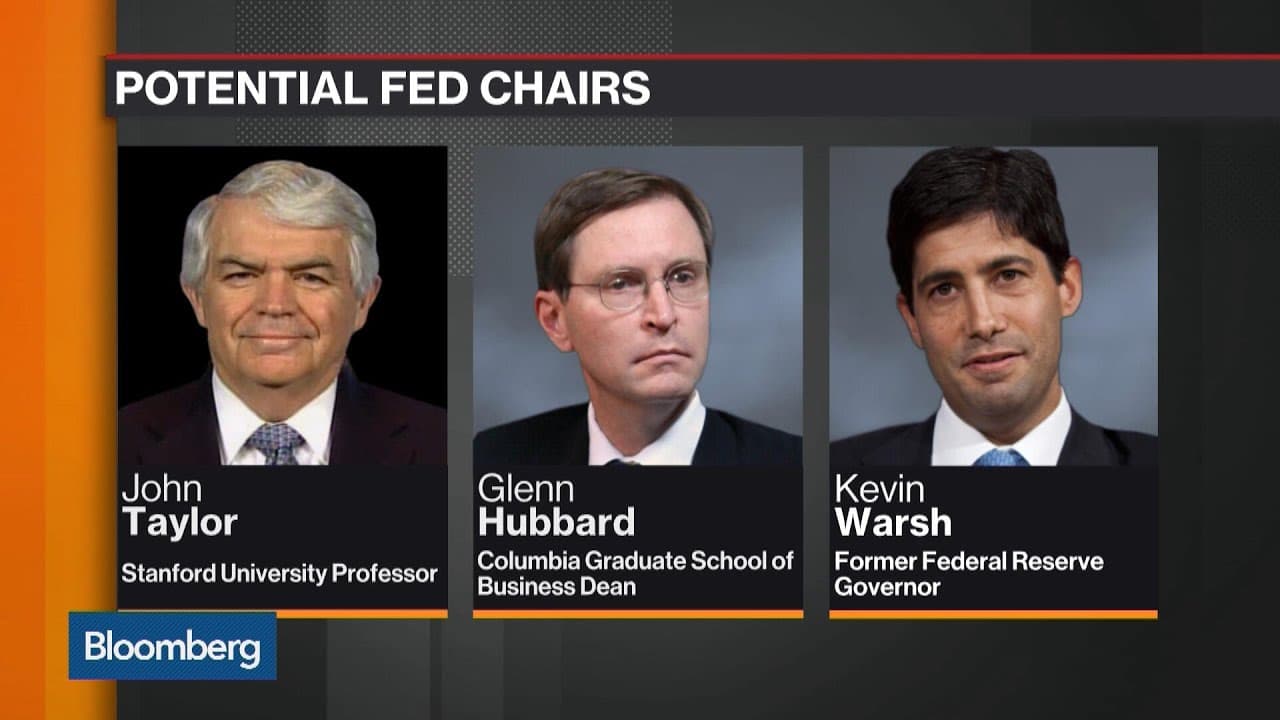
fechar Jan yells for your term ends in January 2018 and we're already hearing what the central bank may look like by that time three of her potential replacement stanford's John Taylor Columbia Business School's Glenn Hubbard and former fed governor Kevin wash are saying they would pursue tighter monetary policy if they were in charge all right Vin... Read More
Key Insights
- The discussion centers on potential Federal Reserve appointments by the Trump administration, including John Taylor, Glenn Hubbard, and Kevin Warsh, known for preferring tighter monetary policy.
- Historically, Federal Reserve chair appointments have been predictable, aligning with expected candidates, though occasionally unconventional choices have been made, often with mixed outcomes.
- Trump's real estate background suggests a preference for low interest rates, yet his campaign indicated dissatisfaction with the Fed's previous low-rate policies, creating an uncertain outlook.
- The Federal Reserve's communication strategy is complex, with various tools like the dot plot, often leading to confusion about future interest rate projections among market participants.
- The impact of a new Fed chair could be significant, affecting bond portfolios and decisions on mortgage-backed securities, indicating the importance of the appointment decision.
- Communication within the Federal Reserve involves multiple participants, each with unique perspectives, contributing to a broad range of policy outcomes and sometimes mixed messages.
- Economic growth and unemployment metrics are key considerations for the Fed, with discussions on how to stimulate demand without causing inflationary pressures.
- The Trump administration's economic goals, such as boosting aggregate demand, require careful consideration of productivity, labor force participation, and immigration policies.
Install to Summarize YouTube Videos and Get Transcripts
Explore YouTube Video Summarizer or Get YouTube Transcript Extractor
Questions & Answers
Q: What are the key considerations for Trump's potential Fed appointments?
Trump's potential Fed appointments are influenced by his preference for low interest rates, given his real estate background, and his campaign criticism of previous low-rate policies. Candidates like John Taylor and Glenn Hubbard, who favor tighter monetary policies, are considered conventional Republican picks, aligning with the administration's economic agenda.
Q: How does historical precedent influence Fed chair appointments?
Historically, Fed chair appointments have been predictable, with candidates often appearing on shortlists well before their selection. However, unconventional appointments have occurred, such as CEO types, which have yielded mixed results. This historical context suggests that while predictability is common, deviations can have significant implications for policy outcomes.
Q: Why is the Fed's communication strategy considered complex?
The Fed's communication strategy is complex due to the use of various tools like the dot plot, which can lead to confusion about future interest rate projections. Additionally, the diversity of opinions among FOMC participants and the intricacies of internal communication contribute to a wide range of policy outcomes and sometimes mixed messages.
Q: What impact could a new Fed chair have on financial markets?
A new Fed chair could significantly impact financial markets, particularly in terms of bond portfolios and decisions on mortgage-backed securities. The difference between two and four rate hikes, for example, can materially affect market expectations and investment strategies, underscoring the importance of the appointment decision.
Q: How do economic growth and unemployment metrics influence Fed policy?
Economic growth and unemployment metrics are critical in shaping Fed policy. The Fed must balance stimulating demand with avoiding inflationary pressures, considering factors like productivity, labor force participation, and immigration. These metrics inform decisions on interest rates and other monetary policy tools to achieve economic stability.
Q: What challenges does the Trump administration face in achieving its economic goals?
The Trump administration's economic goals, such as boosting aggregate demand, face challenges due to limited potential output growth and low unemployment. Achieving these goals requires addressing productivity, labor force participation, and immigration, while ensuring that increased demand does not lead to inflation, posing a complex policy challenge.
Q: What role do internal Fed communications play in policy decisions?
Internal Fed communications play a crucial role in policy decisions, as they involve multiple participants with diverse perspectives. This diversity can lead to a broad range of policy outcomes and sometimes mixed messages, highlighting the importance of effective communication and consensus-building among FOMC members to guide monetary policy.
Q: How does Trump's unconventional political style affect Fed appointments?
Trump's unconventional political style adds uncertainty to Fed appointments, as he may prioritize candidates aligned with his economic agenda over traditional picks. His real estate background and campaign criticism of low-rate policies further complicate predictions, suggesting that his ultimate choice could significantly influence future monetary policy directions.
Summary & Key Takeaways
-
Vincent Reinhart discusses potential Federal Reserve appointments under Trump, highlighting candidates like John Taylor and Glenn Hubbard, who favor tighter monetary policies. The discussion also touches on Trump's unconventional political style and its implications for Fed appointments.
-
The conversation explores the historical context of Fed chair appointments, noting that while most have been predictable, occasional unconventional choices have led to varied outcomes. The potential impact of a new Fed chair on financial markets is also considered.
-
Fed communication strategies, including the use of dot plots, are analyzed for their role in shaping market expectations. The discussion highlights the complexities of internal Fed communication and the challenges of aligning economic goals with policy actions.
Read in Other Languages (beta)
Share This Summary 📚
Summarize YouTube Videos and Get Video Transcripts with 1-Click
Try YouTube Summary with ChatGPT & Claude or YouTube Transcript Generator
Explore More Summaries from Bloomberg Originals 📚





Summarize YouTube Videos and Get Video Transcripts with 1-Click
Try YouTube Summary with ChatGPT & Claude or YouTube Transcript Generator