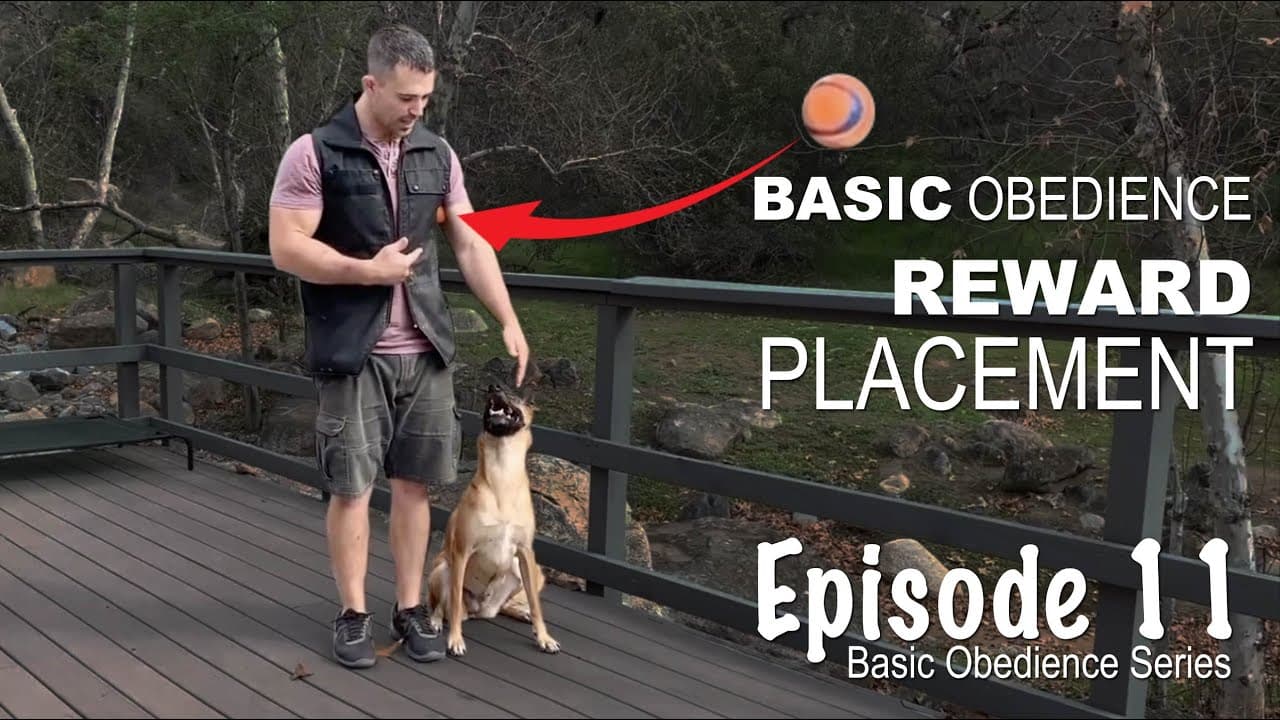
Understanding the importance of REWARD placement. Episode 11
TL;DR
Proper reward placement enhances dog training effectiveness.
Transcript
if you're worried about your precision in your obedience you want to be focused on reward placement sit and what I mean by that let's say we're working our sit front position if I want my dog to be nice and close to me I want to reward her in that position especially when I start doing my recall command because if I'm standing away and I call my do... Read More
Key Insights
- Reward placement is crucial in training dogs to maintain desired positions, such as sitting closely during recall commands.
- Improper reward placement can lead to unwanted behaviors, like a dog anticipating a reward from the wrong side.
- Using toys or food strategically can help guide a dog's movements and maintain focus during training exercises.
- Trainers can manipulate a dog's body posture and movement by altering where rewards are given during exercises.
- Rewarding a dog from behind can encourage a more upright head position, enhancing the dog's alertness during training.
- Placing rewards strategically can correct undesirable behaviors, such as a crab walk, by guiding the dog's focus differently.
- Understanding a dog's mindset during training and adjusting reward placement accordingly can significantly improve obedience results.
- Reward placement is a fundamental aspect of both basic and advanced dog obedience training, influencing every exercise.
Install to Summarize YouTube Videos and Get Transcripts
Explore YouTube Video Summarizer or Get YouTube Transcript Extractor
Questions & Answers
Q: What is the significance of reward placement in dog training?
Reward placement is significant in dog training as it directly influences a dog's behavior and positioning. By strategically placing rewards, trainers can guide dogs to maintain desired positions, such as sitting closely or focusing during heel exercises. Proper reward placement can prevent unwanted behaviors and enhance training effectiveness.
Q: How can improper reward placement affect a dog's behavior?
Improper reward placement can lead to unwanted behaviors in dogs, such as anticipating rewards from incorrect positions. For example, if a dog is rewarded from the right side during training, it may start to anticipate rewards from that side, resulting in a crab walk or other undesired movements.
Q: How can trainers use toys and food to guide a dog's focus?
Trainers can use toys and food strategically to guide a dog's focus during training. By placing rewards in specific positions, trainers can encourage dogs to maintain desired postures and movements. For instance, rewarding a dog from behind can encourage an upright head position, enhancing alertness and focus.
Q: What techniques can correct a dog's crab walk during training?
To correct a dog's crab walk, trainers can strategically place rewards to guide the dog's focus differently. By rewarding the dog off to one side, trainers can encourage the dog to straighten its posture. This method helps to reshape the dog's focus and correct undesired movements during training.
Q: Why is understanding a dog's mindset important in training?
Understanding a dog's mindset is crucial in training because it allows trainers to adjust reward placement to improve obedience results. By knowing how a dog thinks during exercises, trainers can strategically place rewards to influence the dog's behavior, posture, and focus, leading to more effective training outcomes.
Q: How does reward placement influence both basic and advanced obedience training?
Reward placement plays a fundamental role in both basic and advanced obedience training. It influences every exercise by guiding a dog's behavior and focus. Proper reward placement helps maintain desired positions and prevents unwanted behaviors, making it an essential component of successful dog training at all levels.
Q: What role does reward placement play in shaping a dog's posture?
Reward placement plays a critical role in shaping a dog's posture during training. By strategically placing rewards, trainers can encourage dogs to adopt desired postures, such as an upright head position or a straight walk. This technique enhances the dog's alertness and focus, improving overall training effectiveness.
Q: How can trainers prevent unwanted behaviors through reward placement?
Trainers can prevent unwanted behaviors by strategically placing rewards to guide a dog's focus and movements. By rewarding dogs in desired positions, trainers can discourage behaviors like anticipating rewards from incorrect sides. This approach helps maintain proper posture and focus, leading to more effective training outcomes.
Summary & Key Takeaways
-
This episode emphasizes the importance of reward placement in dog training, explaining how it influences a dog's behavior and obedience. Trainers are advised to strategically place rewards to encourage desired positions and movements, such as sitting closely or maintaining a focused heel.
-
Improper reward placement can lead to unwanted behaviors, such as a dog anticipating rewards from incorrect positions. The episode provides insights into using toys and food to guide a dog's focus and correct behaviors like crab walking.
-
Understanding a dog's mindset and adjusting reward placement accordingly is crucial for successful training. The episode highlights the role of reward placement in shaping a dog's posture, focus, and obedience, making it a vital component of both basic and advanced training.
Read in Other Languages (beta)
Share This Summary 📚
Summarize YouTube Videos and Get Video Transcripts with 1-Click
Try YouTube Summary with ChatGPT & Claude or YouTube Transcript Generator
Explore More Summaries from Nate Schoemer 📚



Summarize YouTube Videos and Get Video Transcripts with 1-Click
Try YouTube Summary with ChatGPT & Claude or YouTube Transcript Generator