Manfred von Richthofen's First Victory - American Volunteers in WW1 I THE GREAT WAR Week 113
TL;DR
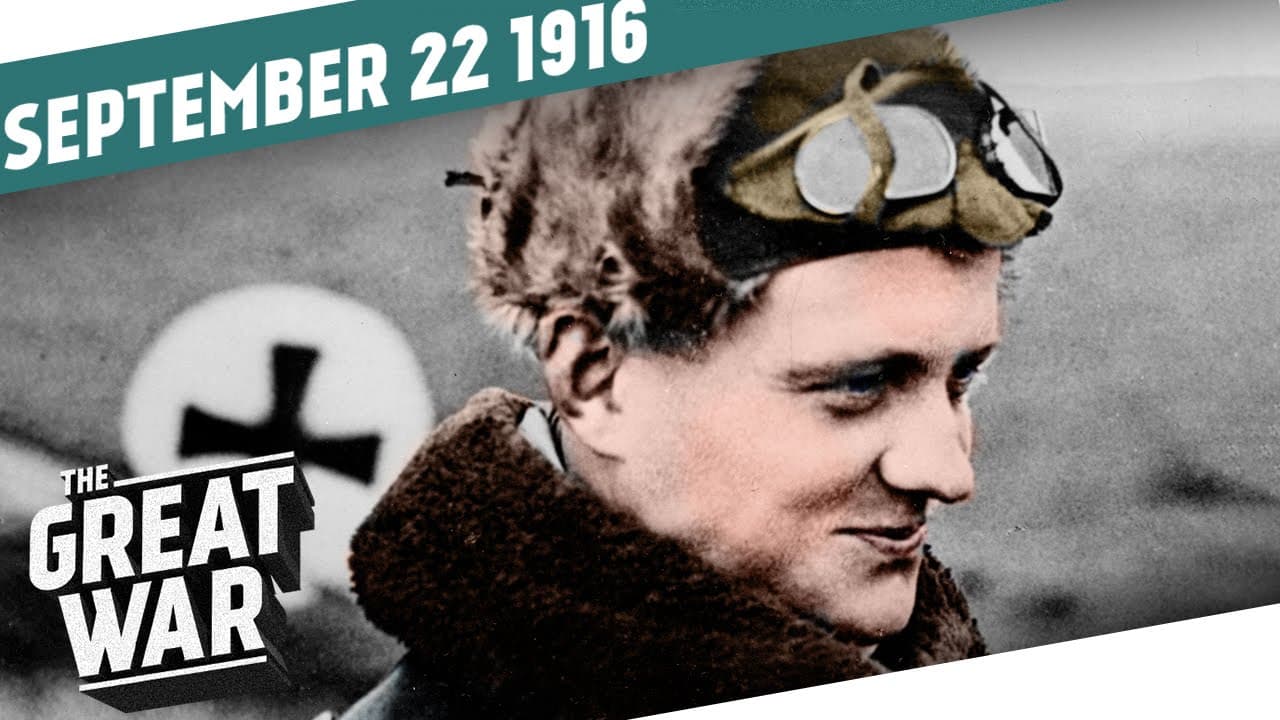
Manfred von Richthofen achieves his first aerial victory in WW1.
Transcript
By this time in the war, there were men from all over the world taking part, but you know what? They weren’t just men from the warring nations, thousands of men from nations that were not at war were fighting in Europe, including many thousands of Americans. I’m Indy Neidell; welcome to the Great War. Last week saw the introduction of the new Briti... Read More
Key Insights
- Manfred von Richthofen, later known as the Red Baron, achieved his first aerial victory on September 17, 1916, marking the beginning of his legendary career as a fighter ace.
- The 7th Battle of the Isonzo River saw heavy casualties for the Italians without significant territorial gains, highlighting the defensive advantage in World War I battles.
- Italian Army Chief of Staff Luigi Cadorna faced criticism for outdated tactics and strategic failures, leading to the arrest and court-martial of Colonel Douhet for breaching confidentiality.
- The Battle of Flers-Courcelette featured the first use of tanks by the British, resulting in significant territorial gains despite mechanical issues with the new weapon.
- Canadian forces saw action at the Somme for the first time, with Private John Chipman Kerr earning the Victoria Cross for bravery in battle.
- General Paul von Hindenburg ordered the construction of the Hindenburg Line, a fortified defensive position on the Western Front to prevent Allied breakthroughs.
- In Romania, General August von Mackensen's Central Powers forces were pushed back by Russo-Romanian troops, preventing a strategic breakthrough.
- 32,000 Americans served illegally in British forces during World War I, motivated by a sense of noble cause despite the war not being their own.
Install to Summarize YouTube Videos and Get Transcripts
Explore YouTube Video Summarizer or Get YouTube Transcript Extractor
Questions & Answers
Q: What significant event marked the beginning of Manfred von Richthofen's career as a fighter ace?
Manfred von Richthofen, later known as the Red Baron, marked the beginning of his career as a fighter ace with his first official aerial victory on September 17, 1916. He shot down a British airplane over Cambrai, which was a significant achievement that set the stage for his legendary status as the deadliest ace of World War I.
Q: What was the outcome of the 7th Battle of the Isonzo River for the Italians?
The 7th Battle of the Isonzo River resulted in heavy casualties for the Italian forces without any significant territorial gains. Despite repeated attacks, the Italians were unable to break through Austrian defenses, and the battle ended without achieving its objectives. This highlighted the challenges of offensive operations in World War I, where defense often had the upper hand.
Q: How did the introduction of tanks impact the Battle of Flers-Courcelette?
The introduction of tanks at the Battle of Flers-Courcelette had a significant impact, allowing the British to make substantial territorial gains despite mechanical problems with the new weapon. The tanks, combined with a creeping barrage, helped collapse German defenses, resulting in more ground gained compared to earlier efforts and with fewer casualties. This marked a turning point in the use of armored vehicles in warfare.
Q: What actions led to Private John Chipman Kerr receiving the Victoria Cross?
Private John Chipman Kerr received the Victoria Cross for his extraordinary bravery during the Battle of Flers-Courcelette. Despite having a finger blown off, he charged along the top of a trench, shooting down enemy bombers and capturing 62 unwounded prisoners. His actions demoralized the German forces, leading to their surrender, and he continued fighting without having his wound treated, showcasing remarkable courage and determination.
Q: What strategic defensive measure did General Paul von Hindenburg order on the Western Front?
General Paul von Hindenburg ordered the construction of the Hindenburg Line, a semi-permanent defensive position built miles behind the front lines on the Western Front. This fortified zone was intended to prevent any Allied breakthrough and served as a fallback position, reflecting the strategic shift towards defensive warfare in World War I and the challenges of achieving decisive victories in trench warfare.
Q: How did the Central Powers fare in Romania during this period?
In Romania, the Central Powers, led by General August von Mackensen, faced setbacks as Russo-Romanian forces mounted a successful counterattack. Despite initial advances, Mackensen's forces were pushed back, particularly at Rasova on the Danube, preventing a strategic breakthrough that could have cut off communication between Dobrogea and the rest of Romania. This marked a significant defensive success for the Romanian forces.
Q: What role did American volunteers play in the British forces during World War I?
American volunteers played a significant role in the British forces during World War I, with 32,000 Americans serving despite it being illegal under British, American, and German regulations. Motivated by a sense of noble cause, these volunteers circumvented enlistment restrictions to join the fight, contributing to the war effort and highlighting the complex motivations and allegiances of individuals during the conflict.
Q: What criticism did Italian Army Chief of Staff Luigi Cadorna face, and what were the consequences?
Luigi Cadorna, the Italian Army Chief of Staff, faced criticism for his outdated tactics and strategic failures, particularly his insistence on frontal assaults and holding territory at high costs. Colonel Douhet, who voiced these criticisms, was arrested and court-martialed for breaching confidentiality. This incident highlighted the internal conflicts and challenges within the Italian military leadership during World War I.
Summary & Key Takeaways
-
Manfred von Richthofen, later known as the Red Baron, achieved his first aerial victory in September 1916, marking the start of his career as a fighter ace. The Italian front saw heavy casualties without significant gains, highlighting the defensive advantage in WW1.
-
The introduction of tanks at the Battle of Flers-Courcelette allowed the British to make significant territorial gains despite mechanical issues. Canadian forces joined the Somme battle for the first time, with notable acts of bravery earning recognition.
-
The Hindenburg Line was ordered for construction as a defensive measure on the Western Front, while in Romania, the Central Powers were pushed back by Russo-Romanian forces. Thousands of Americans served illegally in British forces, driven by a sense of noble cause.
Read in Other Languages (beta)
Share This Summary 📚
Summarize YouTube Videos and Get Video Transcripts with 1-Click
Try YouTube Summary with ChatGPT & Claude or YouTube Transcript Generator
Explore More Summaries from The Great War 📚


Summarize YouTube Videos and Get Video Transcripts with 1-Click
Try YouTube Summary with ChatGPT & Claude or YouTube Transcript Generator