What Are the Risks of India's Egg Donation Market?
TL;DR
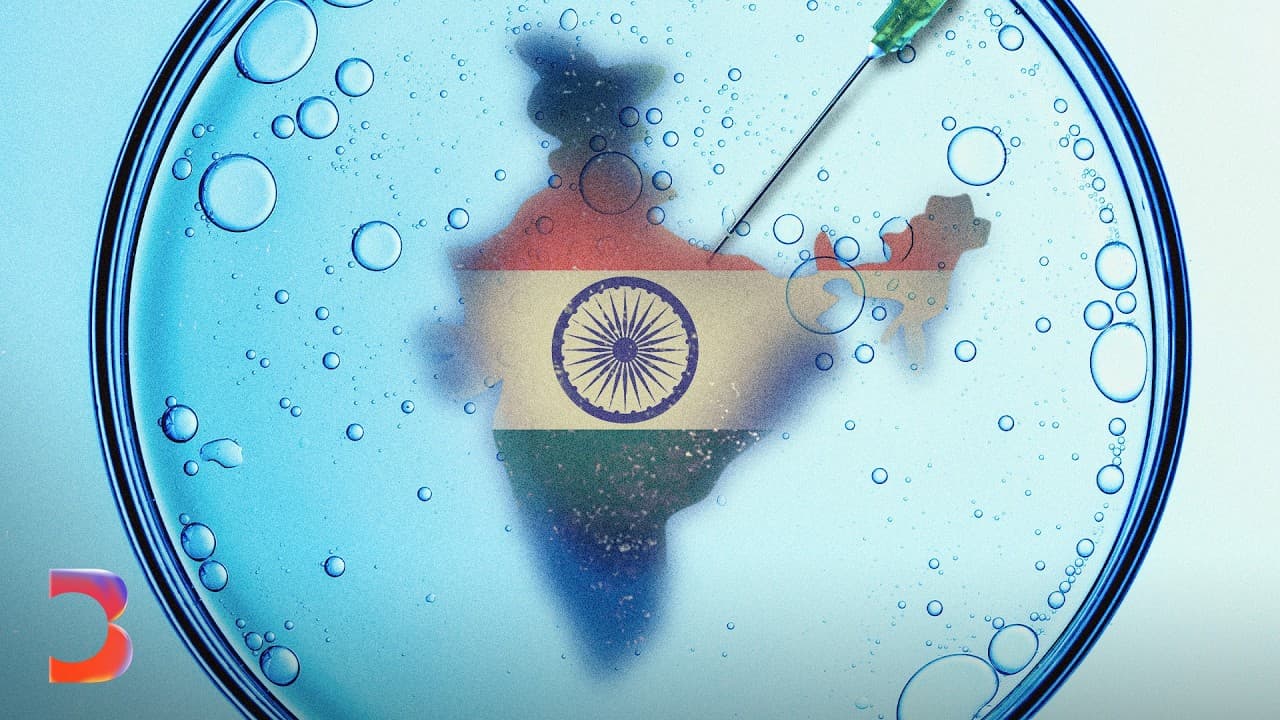
India's egg donation market is rife with exploitation, with impoverished women often risking their health for financial gain. Despite a 2021 law intended to protect donors, the demand for eggs has driven the trade underground, increasing risks for donors. Fertility agents like Sumathi play a key role in connecting donors with clinics, but the system heavily favors clinics over donors.
Transcript
Their blood, wombs, and ovarian eggs. Just some of what Sumathi convinces neighborhood women to exchange for cash. It’s an open secret that she is the fertility agent. In the shadows of Chennai’s vibrant cityscape, countless women face the harsh reality of having few ways to make a living. With loan sharks circling her doorstep, 40-year-old Sumath... Read More
Key Insights
- India's egg donation market is a part of a $35 billion global fertility industry.
- Egg donors, often from impoverished backgrounds, face health risks due to the donation process.
- A 2021 law aimed to protect egg donors, but it has driven the trade underground.
- Fertility agents like Sumathi connect donors with clinics, taking a cut from the donation fee.
- The demand for eggs is high due to cultural and social pressures to have children in India.
- Egg donation involves significant health risks, including pain and potential complications.
- New regulations make it difficult to source eggs legally, leading to exploitation of donors.
- The majority of egg donors are from marginalized communities, often lacking education and job opportunities.
Install to Summarize YouTube Videos and Get Transcripts
Explore YouTube Video Summarizer or Get YouTube Transcript Extractor
Questions & Answers
Q: How does India's egg donation market operate?
India's egg donation market operates through a network of fertility agents who connect impoverished women with clinics. These women often donate eggs due to financial need, despite significant health risks. A 2021 law aimed to protect donors, but has pushed the trade underground, increasing exploitation.
Q: What are the health risks associated with egg donation?
Egg donation involves health risks such as pain, complications from overstimulation of the ovaries, and potential long-term effects. Donors undergo a 10-day injection process to trigger superovulation, which can lead to severe discomfort and, in rare cases, life-threatening conditions.
Q: Why has the egg donation trade gone underground in India?
The 2021 law intended to protect egg donors by regulating the trade has inadvertently driven it underground. The stringent regulations make it difficult to source eggs legally, leading clinics and agents to exploit loopholes, resulting in increased risks and exploitation of donors.
Q: What role do fertility agents play in the egg donation market?
Fertility agents like Sumathi are intermediaries who connect potential egg donors with clinics. They often take a percentage of the donor's fee and play a crucial role in sourcing donors, particularly from impoverished communities, where women are more likely to donate eggs for financial reasons.
Q: How does social stigma affect infertility in India?
Infertility carries a social stigma in India, where there is significant cultural pressure to have children. This stigma drives demand for fertility treatments like egg donation, as couples are willing to spend considerable amounts to overcome infertility, contributing to the booming fertility industry.
Q: What are the economic factors driving women to donate eggs?
Economic factors such as poverty, lack of job opportunities, and financial desperation drive women to donate eggs. Many donors come from marginalized communities and see egg donation as a way to alleviate immediate financial burdens, despite the health risks involved.
Q: What legal protections exist for egg donors in India?
The 2021 ART Act was introduced to protect egg donors, establishing guidelines for age, number of eggs extracted, and altruistic donation. However, the law's implementation has been challenging, with many donors unaware of their rights and clinics exploiting regulatory loopholes for financial gain.
Q: How do cultural pressures influence the fertility industry in India?
Cultural pressures to have children significantly influence India's fertility industry. The desire to overcome infertility, coupled with societal expectations, fuels demand for egg donation and IVF treatments. This demand, in turn, drives the expansion of fertility clinics and the exploitation of egg donors.
Summary & Key Takeaways
-
India's egg donation market is driven by high demand and cultural pressures to have children. Despite a 2021 law to protect donors, the trade has gone underground, increasing risks for impoverished women who often donate eggs to alleviate financial burdens.
-
Fertility agents like Sumathi play a crucial role in connecting donors with clinics, but the system heavily favors clinics, leading to exploitation. Donors face significant health risks and often lack awareness of the legal and medical implications of the donation process.
-
The new regulations have made it difficult to source eggs legally, pushing the trade into a grey area where donors are at risk of exploitation. The majority of donors come from marginalized communities, highlighting the socio-economic disparities in India's fertility industry.
Read in Other Languages (beta)
Share This Summary 📚
Summarize YouTube Videos and Get Video Transcripts with 1-Click
Try YouTube Summary with ChatGPT & Claude or YouTube Transcript Generator
Explore More Summaries from Bloomberg Originals 📚





Summarize YouTube Videos and Get Video Transcripts with 1-Click
Try YouTube Summary with ChatGPT & Claude or YouTube Transcript Generator