Why do we have crooked teeth when our ancestors didn’t? - G. Richard Scott
TL;DR
Ancient humans had straight teeth and wisdom teeth, but dental crowding and issues with wisdom teeth extraction are recent developments possibly linked to changes in diet and lifestyle.
Transcript
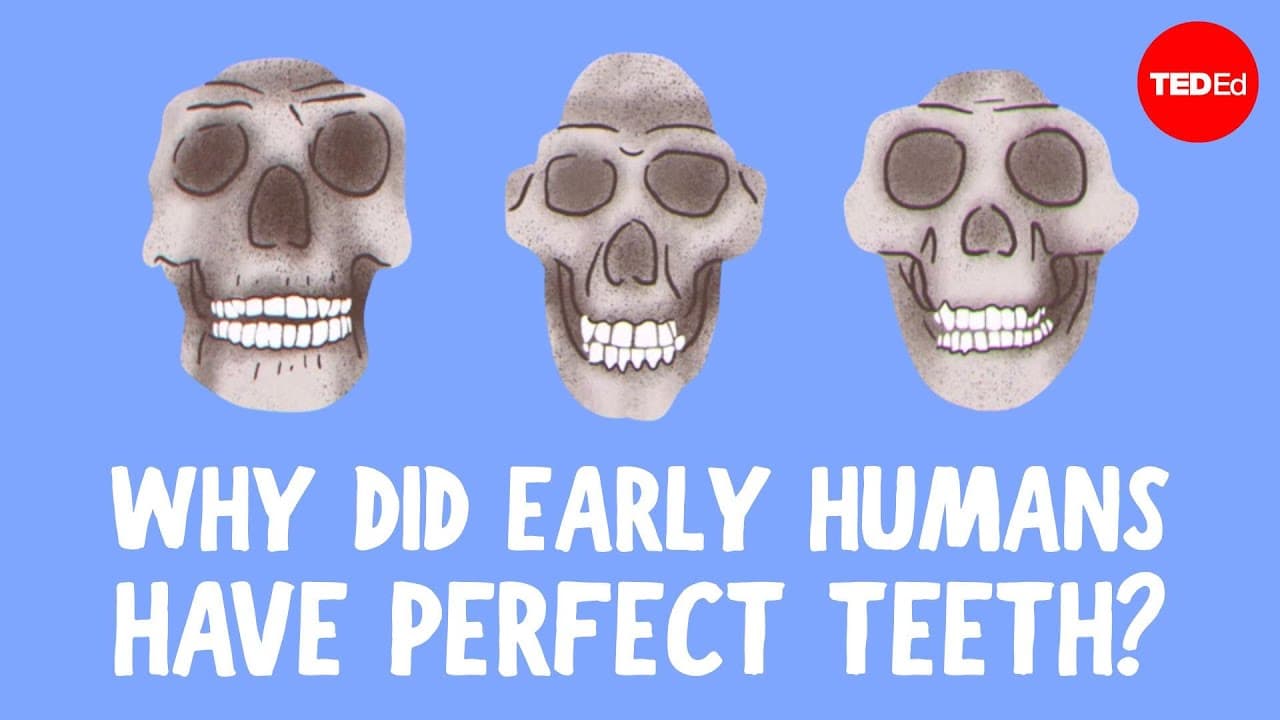
All these ancient skulls have perfectly straight teeth, despite almost certainly never sporting braces. And this isn't some strange sample. According to the fossil record, ancient humans usually had straight teeth, complete with third molars— or wisdom teeth. In fact, the dental dilemmas that fuel the demand for braces and wisdom teeth extractions ... Read More
Key Insights
- 🦷 Ancient humans had straight teeth and larger jaws due to a subsistence lifestyle involving extensive chewing.
- 🍳 The invention of tools and the advent of cooking helped break down food, resulting in smaller jaws and teeth.
- 🥺 Technological advancements during the industrial revolution accelerated the decrease in jaw size and may have led to dental crowding.
- 🦷 Dental crowding and impacted wisdom teeth are more common in populations with smaller jaws and less processed diets.
- 🧑🏭 Environmental and lifestyle factors have a significant impact on dental crowding, while heritable factors may also play a role.
- 😋 Consuming less processed food and maintaining a diet that requires more chewing may help prevent tooth crowding.
- 🦷 Orthodontic interventions like braces can help align crowded teeth.
Install to Summarize YouTube Videos and Get Transcripts
Explore YouTube Video Summarizer or Get YouTube Transcript Extractor
Questions & Answers
Q: Why do ancient humans have straight teeth even without braces?
Ancient humans had straight teeth due to a subsistence lifestyle that involved extensive chewing of unprocessed food, which resulted in larger jaws and teeth.
Q: Why did dental crowding and wisdom teeth issues emerge more recently?
With the introduction of farming and more refined food processing techniques, human jaws became smaller while teeth size remained relatively constant, leading to limited space and dental crowding, especially with the eruption of wisdom teeth.
Q: What factors contribute to dental crowding and impacted wisdom teeth?
Environmental and lifestyle factors play a significant role, with a decrease in chewing demands and the consumption of processed diets contributing to smaller jaws and dental crowding. However, heritable factors may also play a role in some instances.
Q: Can tooth crowding be prevented with lifestyle changes and orthodontics?
Lifestyle changes like consuming less processed food and maintaining a diet that requires more chewing may help prevent tooth crowding. Orthodontic interventions such as braces can also help align crowded teeth.
Key Insights:
- Ancient humans had straight teeth and larger jaws due to a subsistence lifestyle involving extensive chewing.
- The invention of tools and the advent of cooking helped break down food, resulting in smaller jaws and teeth.
- Technological advancements during the industrial revolution accelerated the decrease in jaw size and may have led to dental crowding.
- Dental crowding and impacted wisdom teeth are more common in populations with smaller jaws and less processed diets.
- Environmental and lifestyle factors have a significant impact on dental crowding, while heritable factors may also play a role.
- Consuming less processed food and maintaining a diet that requires more chewing may help prevent tooth crowding.
- Orthodontic interventions like braces can help align crowded teeth.
- Further research is needed to fully understand the relationship between diet, lifestyle, and dental crowding.
Summary & Key Takeaways
-
Ancient humans had straight teeth and large jaws due to the need for extensive chewing of unprocessed food.
-
The invention of tools and the advent of cooking helped break down food, leading to smaller jaws and teeth.
-
Technological innovations during the industrial revolution further decreased the need for chewing and may have contributed to dental crowding and impacted wisdom teeth.
Read in Other Languages (beta)
Share This Summary 📚
Summarize YouTube Videos and Get Video Transcripts with 1-Click
Try YouTube Summary with ChatGPT & Claude or YouTube Transcript Generator
Explore More Summaries from TED-Ed 📚
Summarize YouTube Videos and Get Video Transcripts with 1-Click
Try YouTube Summary with ChatGPT & Claude or YouTube Transcript Generator