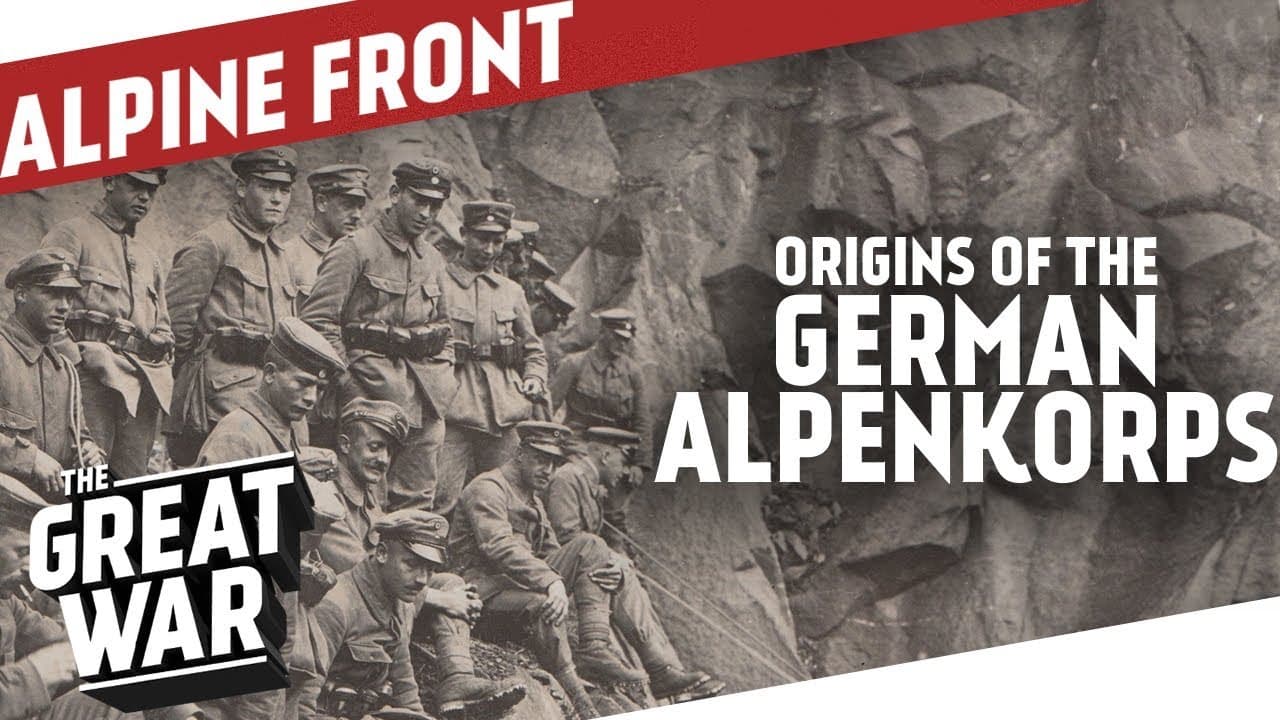
Origins Of The German Alpenkorps I THE GREAT WAR On The Road
TL;DR
Exploration of German Alpenkorps' formation and training in WWI.
Transcript
i'm indy neidell and this is another exciting episode of the great war on the road and as you can see i'm about eight and a half thousand feet high in the Italian Dolomites mountains that's like 2700 meters I've never been this high of actually in my whole life and we're gonna go around today and we're gonna be looking to some of the locations on t... Read More
Key Insights
- The German Alpenkorps was formed in 1915 due to the need for specialized mountain troops, as Germany lacked dedicated mountain units at the onset of WWI.
- The Alpenkorps were secretly deployed to the Italian front to train with Austrian counterparts, highlighting the covert nature of their operations.
- The Dolomites served as a challenging training ground for the Alpenkorps, where they learned mountain warfare tactics and survival skills.
- The Germans initially had no mountain warfare training, relying on learning from Austrians and on-the-job experience in the Dolomites.
- Despite being untrained initially, the Alpenkorps quickly adapted, becoming proficient in mountain warfare by the time they left the Dolomites.
- The Alpenkorps' presence in Italy was kept secret to avoid provoking Italy or Romania, which were not at war with Germany at the time.
- The terrain and weather conditions in the Dolomites were harsh, with soldiers facing difficulties in supply lines and harsh weather.
- The video explores the historical significance of specific locations in the Dolomites, such as the Col di Lana, known as the 'Mountain of Blood'.
Install to Summarize YouTube Videos and Get Transcripts
Explore YouTube Video Summarizer or Get YouTube Transcript Extractor
Questions & Answers
Q: Why was the German Alpenkorps formed?
The German Alpenkorps was formed in 1915 due to the lack of specialized mountain troops in the German Army at the start of World War I. The need arose as the war expanded into mountainous regions, necessitating troops who could effectively operate in such challenging terrains.
Q: How did the Alpenkorps receive their training?
The Alpenkorps received their training in the Dolomites, where they were sent in secrecy to learn from their Austrian counterparts. They had no initial mountain warfare training and had to adapt quickly through on-the-job experience and guidance from local Alpine guides.
Q: What challenges did the Alpenkorps face in the Dolomites?
The Alpenkorps faced numerous challenges in the Dolomites, including harsh weather conditions, difficult terrain, and logistical issues with supply lines. The extreme altitude and cold made survival and combat operations particularly challenging, requiring rapid adaptation and learning.
Q: Why was the Alpenkorps' presence in Italy kept secret?
The presence of the Alpenkorps in Italy was kept secret to avoid diplomatic complications, as Italy and Romania were not at war with Germany at the time. Revealing their presence could have provoked these countries into joining the war against Germany.
Q: What was the significance of the Col di Lana?
The Col di Lana, known as the 'Mountain of Blood,' was significant due to the intense battles fought there. The Italians repeatedly attempted to capture it, but the Austrians, with German support, defended it fiercely. It symbolizes the brutal mountain warfare of the period.
Q: How did the Alpenkorps' training affect their later operations?
The training in the Dolomites equipped the Alpenkorps with essential skills for mountain warfare, which proved invaluable in later operations, such as in Romania. Their experience in the Dolomites helped them adapt to different terrains and combat scenarios effectively.
Q: What was the role of the Austrian guides in the Alpenkorps' training?
Austrian guides played a crucial role in the Alpenkorps' training by teaching them how to navigate and fight in the mountainous terrain. Their expertise and local knowledge were instrumental in helping the German troops adapt to the challenging conditions.
Q: What were the casualty figures for the Alpenkorps in the Dolomites?
The casualty figures for the Alpenkorps in the Dolomites were relatively low, with only about 350 losses out of 26,000 men. This was partly due to the limited fighting and the fact that they were initially kept in reserve, allowing time for training and adaptation.
Summary & Key Takeaways
-
The German Alpenkorps was formed in 1915 due to the necessity for specialized mountain troops, as Germany had no such units at the start of WWI. They were secretly sent to the Italian front to train alongside Austrian forces.
-
The Dolomites presented a challenging environment for the Alpenkorps, who initially had no mountain warfare training. They learned from Austrian guides and through experience, adapting quickly to the harsh conditions.
-
The Alpenkorps' presence in Italy was kept secret to prevent diplomatic issues, as Italy and Romania were not at war with Germany. By the end of their training, they were well-prepared for mountain warfare.
Read in Other Languages (beta)
Share This Summary 📚
Summarize YouTube Videos and Get Video Transcripts with 1-Click
Try YouTube Summary with ChatGPT & Claude or YouTube Transcript Generator
Explore More Summaries from The Great War 📚


Summarize YouTube Videos and Get Video Transcripts with 1-Click
Try YouTube Summary with ChatGPT & Claude or YouTube Transcript Generator