Was Germany Really Starved Into Surrender in WW1? (Documentary)
TL;DR
The WW1 naval blockade's role in Germany's surrender is debated.
Transcript
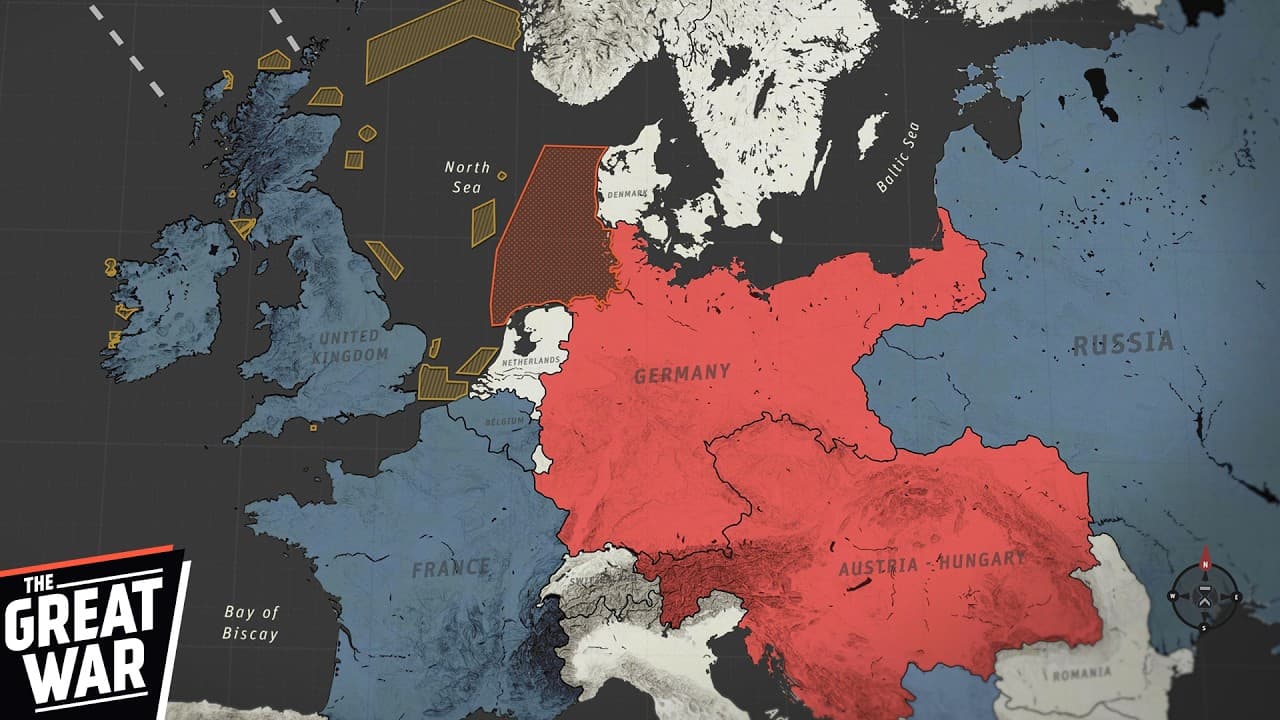
From 1914 to 1919, Allied warships in the Atlantic and Mediterranean controlled maritime trade to and from the Central Powers – stopping shipments of weapons and raw materials, but also food, from reaching their enemies. At the same time, hundreds of thousands of German civilians died of hunger-related causes. Often, these deaths and even the o... Read More
Key Insights
- The Allied naval blockade from 1914 to 1919 significantly restricted Germany's access to food and raw materials, contributing to civilian suffering.
- Despite the blockade, Germany attempted to mitigate shortages by trading with neutral countries, but this was not entirely effective.
- The blockade, while impactful, was not the sole cause of Germany's food shortages; internal economic policies and war with major food suppliers played significant roles.
- Germany's agricultural inefficiencies and poor wartime governance exacerbated food shortages, leading to widespread malnutrition and increased mortality rates.
- The blockade's impact on the German military's access to materials like rubber and fuel may have been more critical to the war's outcome than food shortages.
- Post-war narratives often exaggerated the blockade's impact, influenced by political motives and the need to justify wartime actions.
- The debate continues over whether the blockade constituted a war crime due to its impact on civilian populations.
- The blockade's legacy influenced post-WW1 perceptions and political developments, including the rise of the Nazi Party.
Install to Summarize YouTube Videos and Get Transcripts
Explore YouTube Video Summarizer or Get YouTube Transcript Extractor
Questions & Answers
Q: What was the primary goal of the Allied naval blockade during WW1?
The primary goal of the Allied naval blockade during WW1 was to restrict the Central Powers' access to essential supplies, including weapons, raw materials, and food. By controlling maritime trade routes, the Allies aimed to weaken the enemy's economy and morale, thereby contributing to their eventual surrender. The blockade was a strategic component of economic warfare, designed to complement military efforts on the battlefield.
Q: How did Germany attempt to circumvent the blockade's impact?
Germany attempted to circumvent the blockade's impact by trading with neutral countries such as the United States (until 1917), the Netherlands, Denmark, Sweden, and Norway. These countries could import goods and re-export them to Germany or replace their exports with imports from other nations. Despite these efforts, the blockade still significantly reduced Germany's access to essential goods, contributing to shortages and civilian suffering.
Q: What role did internal German policies play in exacerbating food shortages?
Internal German policies played a significant role in exacerbating food shortages. The government failed to effectively plan for a long war, leading to inefficiencies in food production and distribution. Price caps intended to control inflation discouraged farmers from selling produce, pushing them to the black market. Additionally, the slaughter of pigs to conserve food backfired as farmers continued breeding them secretly. These factors, along with the mobilization of manpower for the military, reduced agricultural output and worsened shortages.
Q: Why is the blockade's impact on Germany debated among historians?
The blockade's impact on Germany is debated among historians due to varying interpretations of its severity and effectiveness. Traditional views attribute significant civilian suffering and Germany's eventual surrender to the blockade. However, more recent research suggests that internal economic factors, governance failures, and Germany's strategic decisions played crucial roles. Additionally, post-war narratives and political motives have influenced perceptions, leading to ongoing debate over the blockade's true impact.
Q: How did the blockade affect the German military compared to civilians?
The blockade affected the German military differently than civilians. While civilians faced severe food shortages and malnutrition, the military was prioritized in resource allocation. Studies indicate no evidence of malnutrition among soldiers, who sometimes sent food home to their families. Although the military did not enjoy abundant supplies, it did not experience the same level of deprivation as the civilian population, highlighting the government's prioritization of military needs over civilian well-being.
Q: What were the long-term political implications of the blockade on post-war Germany?
The long-term political implications of the blockade on post-war Germany included shaping narratives around the perceived injustice of the Treaty of Versailles and contributing to the rise of nationalist and revisionist movements, such as the Nazi Party. The blockade was used as a scapegoat for Germany's defeat, deflecting blame from military and political leaders. This narrative fueled resentment and instability, influencing Germany's political landscape and contributing to the conditions that led to World War II.
Q: How did the blockade compare to food shortages in other countries during WW1?
The blockade's impact on Germany's food shortages was significant, but other countries also experienced similar issues due to various factors. For instance, Russia faced food shortages due to transportation breakdowns, and Italy and France had higher civilian death rates despite access to food imports. These comparisons suggest that while the blockade contributed to Germany's hardships, it was not the sole factor, as other nations also struggled with food supply challenges during the war.
Q: What evidence challenges the view that the blockade was the primary cause of German surrender?
Evidence challenging the view that the blockade was the primary cause of German surrender includes the role of internal economic policies, poor governance, and strategic decisions that contributed to food shortages. Additionally, military defeats and a deteriorating military situation were decisive in Germany's decision to seek an armistice. Some historians argue that the blockade's impact on military resources, rather than civilian food shortages, was more critical to the war's outcome, suggesting a more complex interplay of factors led to Germany's surrender.
Summary & Key Takeaways
-
The Allied naval blockade during WW1 restricted Germany's access to essential goods, leading to severe civilian suffering and debate over its impact on the war's outcome.
-
While the blockade contributed to Germany's hardships, internal economic issues and poor governance were also significant factors in the food shortages experienced.
-
The blockade's role in Germany's defeat is contested, with some arguing it was not as decisive as traditionally believed, influenced by post-war narratives and political agendas.
Read in Other Languages (beta)
Share This Summary 📚
Summarize YouTube Videos and Get Video Transcripts with 1-Click
Try YouTube Summary with ChatGPT & Claude or YouTube Transcript Generator
Explore More Summaries from The Great War 📚

Summarize YouTube Videos and Get Video Transcripts with 1-Click
Try YouTube Summary with ChatGPT & Claude or YouTube Transcript Generator