The French Revolution: Crash Course World History #29
TL;DR
The French Revolution was complex and not entirely successful.
Transcript
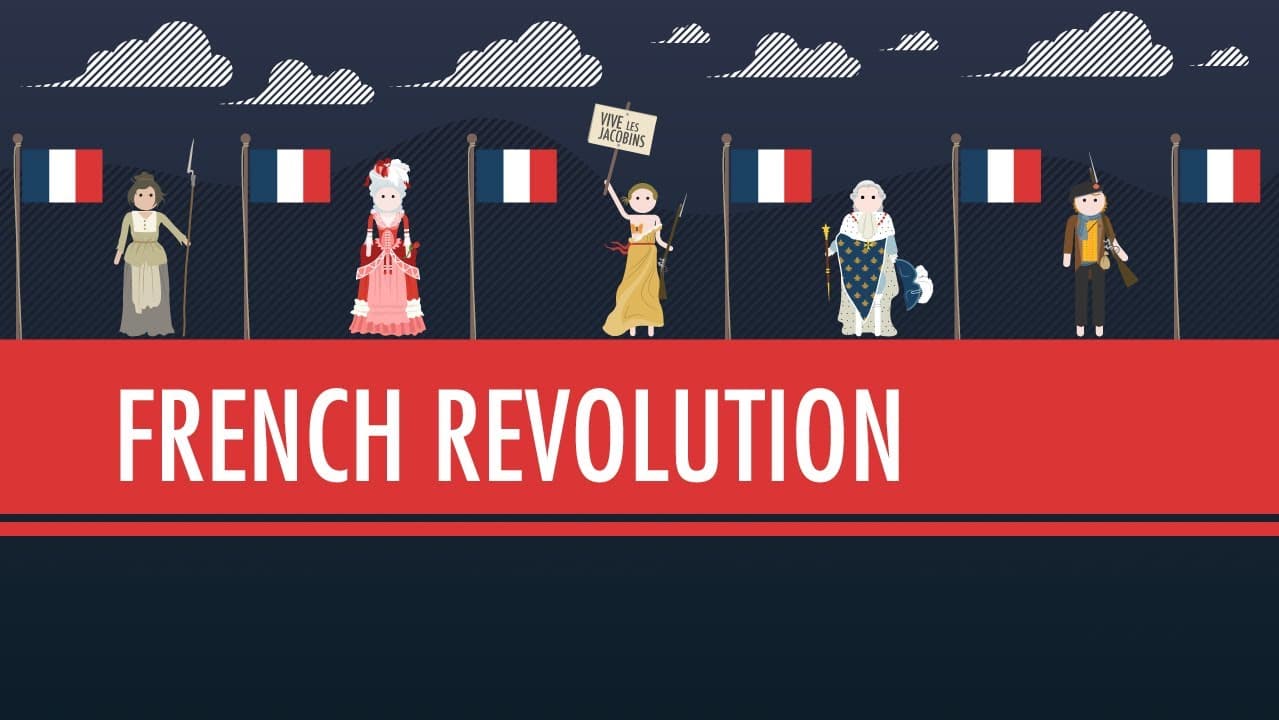
Hi, my name is John Green, this is Crash Course World History, and today we’re going to talk about The French Revolution. Admittedly, this wasn’t the French flag until 1794, but we just felt like he looked good in stripes. As does this guy. Huh? So, while the American Revolution is considered a pretty good thing, the French Revolution is often seen... Read More
Key Insights
- The French Revolution is often perceived as chaotic due to its violent and authoritarian nature, despite its revolutionary ideas.
- France's financial issues were exacerbated by a flawed tax system where the wealthy were exempt, leading to national debt and bankruptcy.
- The storming of the Bastille symbolized the revolution's initial radical phase, driven by hunger and economic disparity.
- The Declaration of Rights of Man and Citizen established universal rights, contrasting with the American Bill of Rights.
- The revolution's first phase aimed for a constitutional monarchy, but radical factions like the Jacobins pushed for a republic.
- The Reign of Terror, led by Robespierre, saw mass executions, showcasing the revolution's descent into authoritarianism.
- Napoleon Bonaparte's rise marked the revolution's end, as he established a regime resembling an absolute monarchy.
- The revolution's legacy is debated; it spread enlightenment ideals but also emphasized state power over individual liberty.
Install to Summarize YouTube Videos and Get Transcripts
Explore YouTube Video Summarizer or Get YouTube Transcript Extractor
Questions & Answers
Q: What was the primary cause of the French Revolution?
The primary cause of the French Revolution was France's severe financial crisis, exacerbated by an unfair tax system where the nobility and clergy were exempt from taxes. This led to national debt and bankruptcy, sparking public unrest and calls for change.
Q: How did the storming of the Bastille impact the revolution?
The storming of the Bastille on July 14, 1789, symbolized the revolution's radical phase. It was a reaction to the king's military actions and marked a significant turning point, as revolutionaries sought to arm themselves and challenge the existing regime.
Q: What was the significance of the Declaration of Rights of Man and Citizen?
The Declaration of Rights of Man and Citizen, proclaimed on August 26, 1789, was significant for establishing universal rights such as liberty, property, and security. It laid the foundation for a new constitution and contrasted with the American Bill of Rights by emphasizing equality for all citizens.
Q: Who were the Jacobins and what role did they play?
The Jacobins were a radical political faction during the French Revolution. They advocated for the creation of a republic and played a crucial role in escalating the revolution's intensity, leading to the Reign of Terror where thousands, including King Louis XVI, were executed.
Q: Why did France declare war on Austria and Prussia?
France declared war on Austria and Prussia to plunder resources and spread revolutionary ideals. However, it backfired as Prussia joined Austria against France, complicating the revolution and leading to internal political turmoil and external military challenges.
Q: What was the Reign of Terror?
The Reign of Terror was a period during the French Revolution characterized by mass executions of perceived enemies of the revolution. Led by the Committee of Public Safety under Robespierre, it aimed to protect the revolution but resulted in widespread fear and authoritarian rule.
Q: How did Napoleon Bonaparte rise to power?
Napoleon Bonaparte rose to power through military success and political maneuvering. In 1799, he became the First Consul of France, gaining near-unlimited executive power. His leadership marked the end of the revolution and the beginning of a new authoritarian regime.
Q: What is the legacy of the French Revolution?
The French Revolution's legacy is debated; it spread enlightenment ideals and questioned traditional power structures, but also increased state power. It highlighted issues of rights and equality, influencing future revolutions and shaping modern political thought, despite not achieving lasting democracy in France.
Summary & Key Takeaways
-
The French Revolution began as a response to financial crises and social inequality, leading to the overthrow of the monarchy and establishment of a republic.
-
Despite initial goals for a constitutional monarchy, the revolution spiraled into violence and authoritarian rule, notably during the Reign of Terror.
-
Napoleon Bonaparte's rise to power ended the revolution, establishing a regime with similarities to the monarchy it replaced, yet the revolution's ideals persisted globally.
Read in Other Languages (beta)
Share This Summary 📚
Summarize YouTube Videos and Get Video Transcripts with 1-Click
Try YouTube Summary with ChatGPT & Claude or YouTube Transcript Generator
Explore More Summaries from CrashCourse 📚




Summarize YouTube Videos and Get Video Transcripts with 1-Click
Try YouTube Summary with ChatGPT & Claude or YouTube Transcript Generator