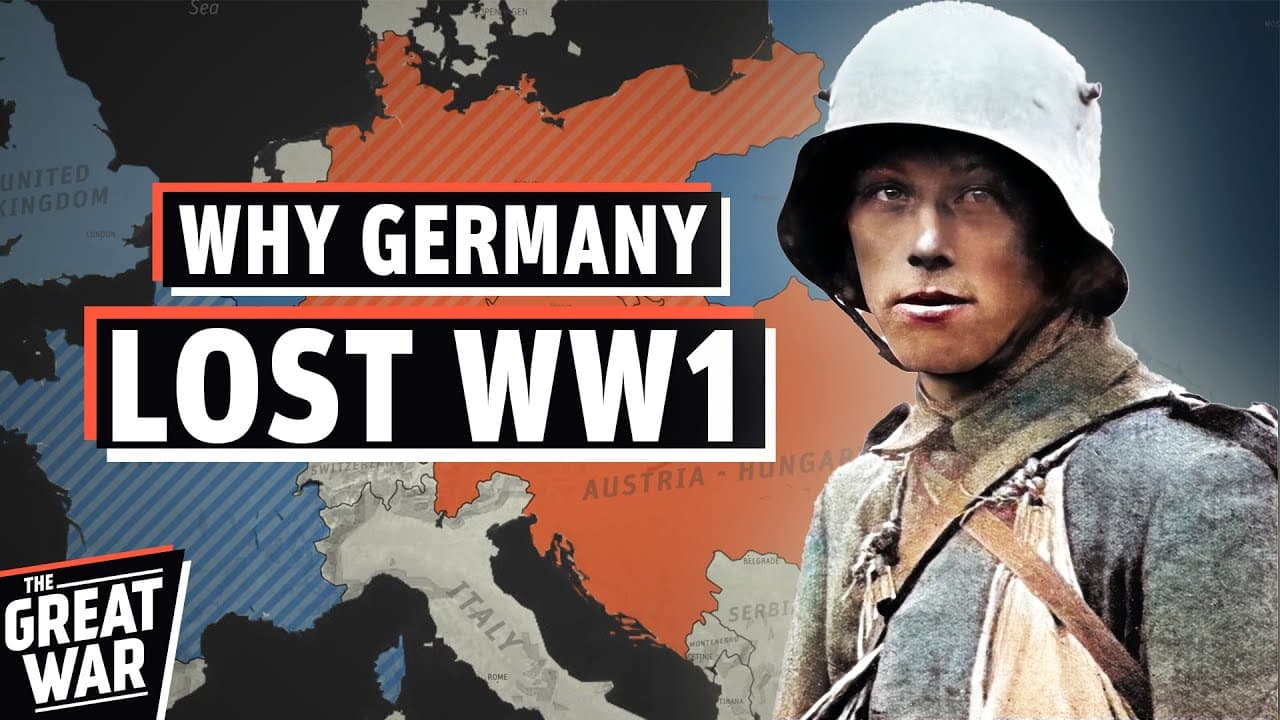
Why Did Germany Lose WWI?
TL;DR
Germany lost World War I due to a combination of strategic errors, ineffective governance, and the inability to adapt to changing circumstances. The failure to secure a quick victory, combined with poor coordination with allies and the entry of the United States into the war, further weakened Germany's position. Ultimately, the collapse in morale and internal political upheaval led to Germany's defeat.
Transcript
In November 1918, the German army was beaten and Germany in the grip of revolution. Less than a year earlier though, Germany and its allies controlled most of Eastern Europe, had defeated Russia, and outnumbered the British and French in the West. So why did Germany lose World War One? The German Empire entered the First World War in August 1914 wi... Read More
Key Insights
- Germany's initial war plan, the Schlieffen Plan, failed due to logistical issues and strategic mistakes.
- The violation of Belgian neutrality brought Britain into the war, complicating Germany's position.
- Germany's military leadership failed to adapt its strategy after early defeats, leading to further setbacks.
- Unrestricted submarine warfare in 1917 backfired, drawing the United States into the conflict.
- The German army suffered heavy losses in 1918, with insufficient replacements to maintain strength.
- Internal political struggles and ineffective governance weakened Germany's war effort.
- The Allies outpaced Germany in technological advancements and resource mobilization.
- Germany's morale collapsed in 1918, leading to widespread desertions and surrenders.
Install to Summarize YouTube Videos and Get Transcripts
Explore YouTube Video Summarizer or Get YouTube Transcript Extractor
Questions & Answers
Q: Why did Germany lose World War I?
Germany lost World War I due to strategic errors, ineffective governance, and failure to adapt. The Schlieffen Plan's failure, Britain's entry into the war, and unrestricted submarine warfare drawing in the U.S. weakened Germany. Internal political struggles and a collapse in morale further contributed to its defeat.
Q: What was the Schlieffen Plan and why did it fail?
The Schlieffen Plan was Germany's strategy for a quick victory by invading France through Belgium. It failed due to logistical issues, underestimation of resistance, and strategic mistakes. The plan's collapse led to a prolonged war, drawing Britain into the conflict and complicating Germany's position.
Q: How did unrestricted submarine warfare affect Germany's war effort?
Unrestricted submarine warfare, resumed by Germany in 1917, aimed to blockade Britain but backfired by provoking U.S. entry into the war. This decision intensified the conflict against Germany, as American resources and troops bolstered the Allies, further weakening Germany's chances of victory.
Q: What role did internal political struggles play in Germany's defeat?
Internal political struggles in Germany weakened its war effort. The military leadership's ineffective governance, coupled with the Kaiser and High Command's rigid war aims, led to poor strategic decisions. These internal conflicts eroded public support and contributed to the morale collapse in 1918.
Q: How did the Allies surpass Germany in technological advancements?
The Allies surpassed Germany in technological advancements by effectively mobilizing resources and coordinating efforts. They developed superior combined arms tactics, fielded more tanks and aircraft, and improved artillery capabilities. This technological edge, combined with greater resource mobilization, gave the Allies a decisive advantage.
Q: Why did Germany's morale collapse in 1918?
Germany's morale collapsed in 1918 due to heavy casualties, insufficient replacements, and internal political turmoil. Widespread desertions and surrenders increased as soldiers lost hope in victory. The high command's admission of defeat and the failure of the spring offensives further demoralized troops and civilians.
Q: What was the impact of the U.S. entry into World War I?
The U.S. entry into World War I provided the Allies with additional resources, troops, and morale. American involvement bolstered the Allied war effort, offsetting German advances and contributing to the eventual defeat of Germany. The U.S. presence also symbolized a shift in the war's momentum against Germany.
Q: How did Germany's alliance management affect its war effort?
Germany's poor alliance management weakened its war effort. Lack of coordination with Austria-Hungary and other Central Powers led to strategic disunity. Germany's focus on territorial gains strained alliances, while its allies' desire for peace went unheeded. This disorganization contributed to Germany's eventual defeat.
Summary & Key Takeaways
-
Germany's failure to secure a quick victory and strategic missteps led to its defeat in World War I. The Schlieffen Plan's failure and Britain's entry into the war complicated Germany's position. Additionally, unrestricted submarine warfare prompted U.S. involvement, further tilting the balance against Germany.
-
The German army suffered significant losses in 1918, with a lack of replacements exacerbating the situation. Internal political struggles and ineffective governance further weakened Germany's war effort. Meanwhile, the Allies surpassed Germany in technological advancements and resource mobilization.
-
Germany's morale collapsed in 1918, leading to widespread desertions and surrenders. The internal political upheaval, combined with the inability to adapt to changing circumstances, ultimately sealed Germany's fate and led to its defeat in World War I.
Read in Other Languages (beta)
Share This Summary 📚
Summarize YouTube Videos and Get Video Transcripts with 1-Click
Try YouTube Summary with ChatGPT & Claude or YouTube Transcript Generator
Explore More Summaries from The Great War 📚

Summarize YouTube Videos and Get Video Transcripts with 1-Click
Try YouTube Summary with ChatGPT & Claude or YouTube Transcript Generator