Dipole Moment, Molecular Polarity & Percent Ionic Character
TL;DR
This analysis explains the factors influencing dipole moments of molecules, compares dipole moments of different molecules, and calculates the percent ionic character of bonds.
Transcript
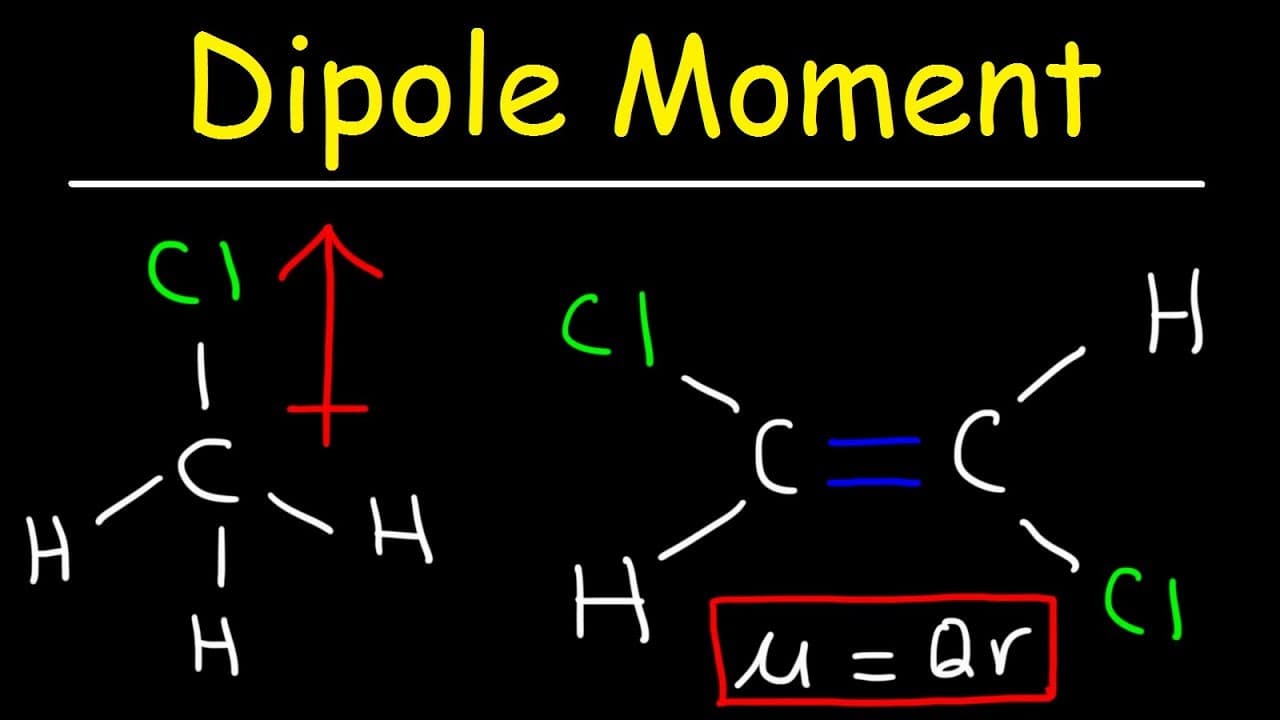
let's start with a question which of these two molecules has a greater dipole moment is it methylchloride also known as chloromethane or is it carbon tetrachloride what would you say well let's analyze the ch bond and the ccl bond before we talk about the dipole moment of the entire molecule carbon has an electronegativity value of 2.5 and for hydr... Read More
Key Insights
- 🫀 The dipole moment of a bond depends on the difference in electronegativity and the size of the atoms involved.
- 🐻❄️ Molecules with polar bonds can be polar or nonpolar depending on the cancellation of dipole moments.
- 🌥️ Larger electronegativity differences and atom sizes result in larger dipole moments.
- 😑 The percent ionic character of a bond can be determined using the experimental dipole moment and the dipole moment if the atoms were fully charged ions.
Install to Summarize YouTube Videos and Get Transcripts
Explore YouTube Video Summarizer or Get YouTube Transcript Extractor
Questions & Answers
Q: How is the dipole moment of a bond influenced by electronegativity and atom size?
The dipole moment increases with a greater difference in electronegativity and larger atom sizes. These factors contribute to a larger separation between partial charges, leading to a larger dipole moment.
Q: Why does methyl chloride have a greater dipole moment than carbon tetrachloride?
Methyl chloride has a greater electronegativity difference and larger size between carbon and chlorine atoms, resulting in a larger dipole moment. Carbon tetrachloride, on the other hand, has a tetrahedral structure that cancels out the dipole moments.
Q: What determines whether a molecule is polar or nonpolar?
If a molecule has a net dipole moment, it is considered polar. If the dipole moments of the individual bonds cancel each other out, the molecule is nonpolar.
Q: How is the percent ionic character of a bond calculated?
The percent ionic character is calculated by dividing the experimental dipole moment by the dipole moment of the bond if it were purely ionic, and then multiplying by 100 percent.
Summary & Key Takeaways
-
The dipole moment of a bond is determined by the difference in electronegativity between the atoms and the distance between them.
-
Methyl chloride (chloromethane) has a greater dipole moment than carbon tetrachloride due to the electronegativity difference and the size of the atoms involved.
-
The cis isomer has a net dipole moment, making it polar, while the trans isomer is nonpolar.
-
The percent ionic character of a bond can be calculated using the experimental dipole moment and the dipole moment if the atoms were purely ionic.
Read in Other Languages (beta)
Share This Summary 📚
Summarize YouTube Videos and Get Video Transcripts with 1-Click
Try YouTube Summary with ChatGPT & Claude or YouTube Transcript Generator
Explore More Summaries from The Organic Chemistry Tutor 📚




Summarize YouTube Videos and Get Video Transcripts with 1-Click
Try YouTube Summary with ChatGPT & Claude or YouTube Transcript Generator