How to Reduce Chemical Waste with Bio-Based Solutions
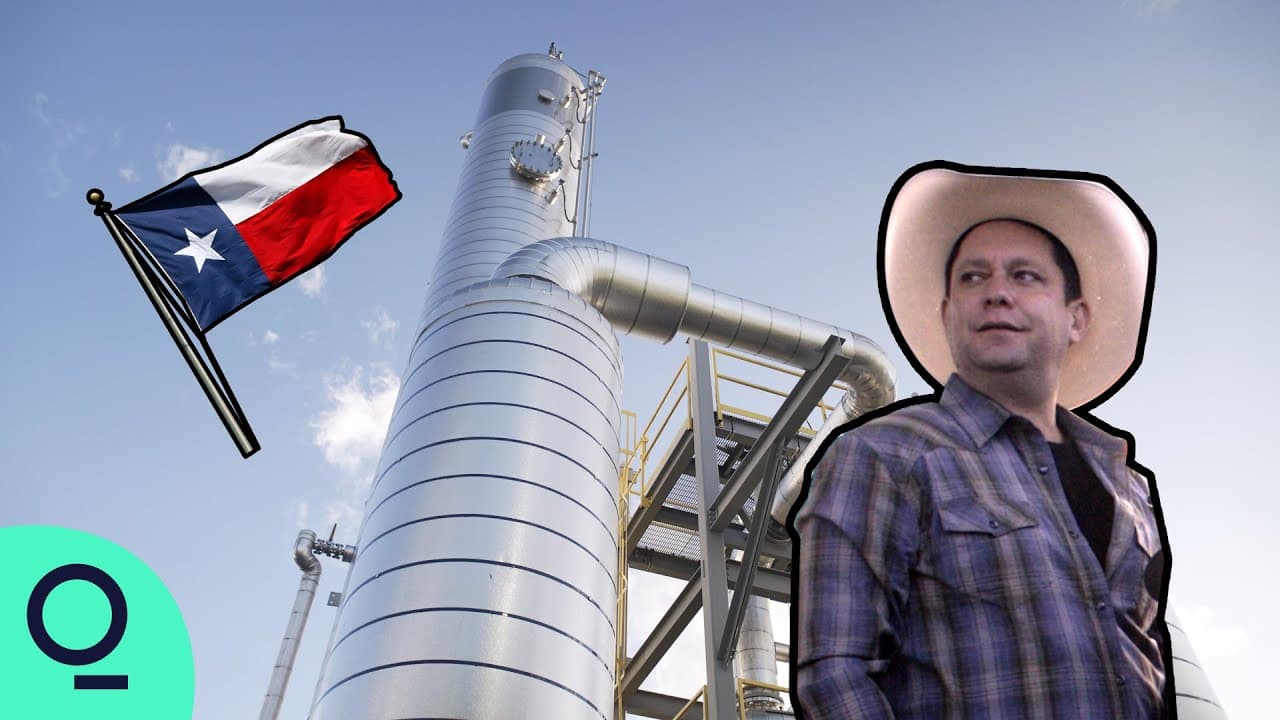
TL;DR
Solugen's innovative approach uses bio-based feedstock, like corn syrup, to produce chemicals without creating waste. By employing enzymes and metal catalysts, they aim to replace traditional petrochemical processes, potentially reducing environmental impact and carbon emissions. Their technology could revolutionize the chemical industry by offering safer, sustainable alternatives.
Transcript
It's like a religious right for anyone raised in Texas. You roll into the gas station, look gorgeous and pump your large vehicle to the brim. With that sumptuous, glistening gas that turn the state into an energy empire. Smell that? It's a rush of petrochemical pheromones straight to the brain. The blessing of oil has given Texas many wonderful thi... Read More
Key Insights
- Solugen uses bio-based feedstock instead of fossil fuels to produce chemicals, aiming for zero waste.
- Their technology combines enzymes and metal catalysts to create a wide range of chemicals.
- The Bioforge process can potentially replace traditional petrochemical methods, reducing environmental impact.
- Solugen's process eliminates toxic emissions and waste streams associated with conventional chemical manufacturing.
- The company has raised over $420 million and counts Leonardo DiCaprio as an investor.
- Solugen's ultimate goal is to use carbon dioxide directly from the air as a feedstock.
- Their products are already used in industries like concrete, agriculture, and water treatment.
- Solugen envisions democratizing access to their technology, akin to the business models of Airbnb and Uber.
Install to Summarize YouTube Videos and Get Transcripts
Explore YouTube Video Summarizer or Get YouTube Transcript Extractor
Questions & Answers
Q: How does Solugen produce chemicals without waste?
Solugen employs a process called Bioforge, which uses enzymes and corn syrup as feedstock to produce chemicals. This method eliminates the toxic emissions and waste streams typical of traditional chemical manufacturing. By optimizing enzyme reactions and using metal catalysts, Solugen creates a closed-loop system that results in zero waste production.
Q: What is the role of enzymes in Solugen's chemical production?
Enzymes are crucial in Solugen's process as they facilitate the conversion of bio-based feedstock, like corn syrup, into valuable chemicals. These enzymes are engineered to perform specific tasks, enabling the production of various chemicals without the harmful by-products associated with traditional methods. The enzymes work in tandem with metal catalysts for efficient chemical synthesis.
Q: What industries can benefit from Solugen's products?
Solugen's bio-based chemicals are used in industries such as concrete, agriculture, and water treatment. Their products offer safer, environmentally friendly alternatives to conventional chemicals, potentially reducing the ecological footprint of these industries. By providing bio-based solutions, Solugen aims to revolutionize the chemical industry and promote sustainability.
Q: How does Solugen plan to use carbon dioxide as a feedstock?
Solugen aims to utilize carbon dioxide directly from the atmosphere as a feedstock in their Bioforge process. This approach would further enhance sustainability by reducing reliance on fossil fuels and converting CO2 into valuable chemicals. Solugen is currently perfecting techniques to achieve this goal, which could significantly impact the fight against climate change.
Q: What is the significance of Solugen's zero waste claim?
Solugen's zero waste claim signifies a major advancement in chemical manufacturing. By eliminating toxic emissions and waste streams, their process reduces environmental impact and enhances sustainability. This innovation challenges traditional methods, offering a cleaner alternative that aligns with global efforts to address climate change and promote eco-friendly practices.
Q: How does Solugen's technology differ from traditional petrochemical processes?
Solugen's technology differs from traditional petrochemical processes by using bio-based feedstock and enzymes instead of fossil fuels. This approach eliminates the toxic by-products and waste associated with conventional methods. Solugen's process is more efficient, environmentally friendly, and aims to reduce the chemical industry's carbon footprint.
Q: What are the potential environmental benefits of Solugen's process?
The environmental benefits of Solugen's process include the elimination of toxic emissions, reduced reliance on fossil fuels, and decreased waste production. By using bio-based feedstock and targeting carbon dioxide as a future feedstock, Solugen's technology could significantly reduce the chemical industry's environmental impact and contribute to climate change mitigation.
Q: How has Solugen's innovative approach been received by investors?
Solugen's innovative approach has attracted significant investment, raising over $420 million. Notable investors include Leonardo DiCaprio, highlighting the potential and appeal of their sustainable technology. The company's focus on reducing environmental impact and transforming the chemical industry aligns with global sustainability trends, making it an attractive investment opportunity.
Summary & Key Takeaways
-
Solugen's Bioforge technology uses enzymes and corn syrup to produce chemicals without waste, offering a sustainable alternative to traditional petrochemical processes. Their approach combines synthetic biology with traditional chemistry, potentially transforming the industry by reducing toxic emissions and environmental impact.
-
The company aims to replace fossil fuel-based feedstocks with carbon dioxide from the atmosphere, further enhancing sustainability. Solugen's products are already used in various industries, and they plan to democratize access to their technology, making it widely available.
-
Solugen has raised significant investment, including from Leonardo DiCaprio, and is actively working on expanding their technology. Their innovative approach could revolutionize the chemical industry, offering safer, bio-based solutions to reduce the environmental footprint of chemical manufacturing.
Read in Other Languages (beta)
Share This Summary 📚
Summarize YouTube Videos and Get Video Transcripts with 1-Click
Try YouTube Summary with ChatGPT & Claude or YouTube Transcript Generator
Explore More Summaries from Bloomberg Originals 📚
Summarize YouTube Videos and Get Video Transcripts with 1-Click
Try YouTube Summary with ChatGPT & Claude or YouTube Transcript Generator