3 The Need for High Voltage
TL;DR
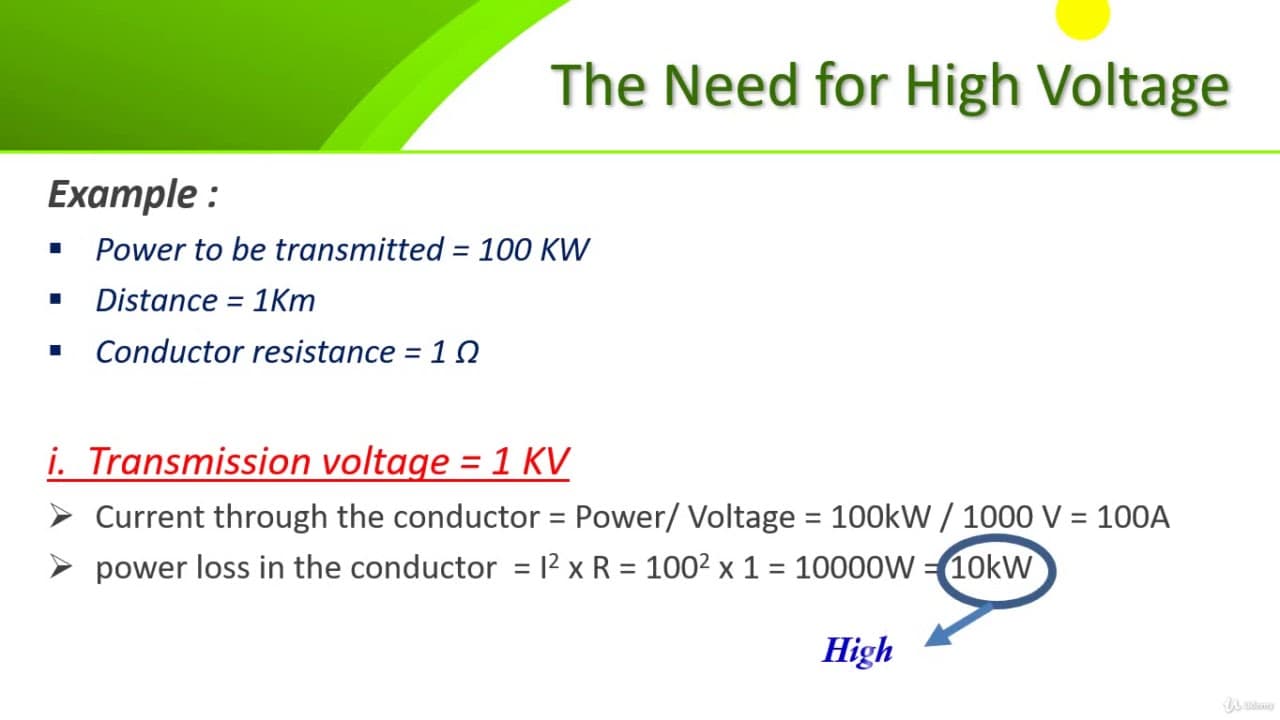
High voltage is crucial for efficient power transmission over long distances.
Transcript
hello everyone before going to the course let me show you the need for high voltage and why high voltage engineering branch is primarily created so let's see the importance of high voltage in electrical power system you might have noticed huge towers supporting the transmission lines in your locality these transmission lines transmit the el... Read More
Key Insights
- High voltage is essential for transmitting large amounts of electricity over long distances, reducing power losses and improving efficiency.
- Using high voltage decreases the current in transmission lines, which significantly reduces power losses due to the relationship between power loss and current squared.
- Higher voltage levels lead to lower voltage drops along transmission lines, resulting in better voltage regulation and system stability.
- Decreasing the current allows for a reduction in the size and cost of conductors, as less copper or aluminum is required.
- High voltage engineering is a specialized branch focusing on the design, operation, and testing of high voltage electrical systems and insulators.
- Insulators are critical in high voltage systems, providing necessary isolation to protect humans and equipment from hazardous voltages.
- High voltage engineering involves understanding phenomena like flash over, spark over, and breakdown, which are critical for system reliability.
- The course offers comprehensive insights into high voltage testing methods and insulator performance, serving as a valuable resource for engineers.
Install to Summarize YouTube Videos and Get Transcripts
Explore YouTube Video Summarizer or Get YouTube Transcript Extractor
Questions & Answers
Q: Why is high voltage necessary for power transmission?
High voltage is necessary for power transmission because it reduces the current flowing through transmission lines. This reduction in current leads to a significant decrease in power losses, as power loss is proportional to the square of the current. Consequently, high voltage improves the efficiency and stability of the power transmission system.
Q: What are the benefits of decreasing current in transmission lines?
Decreasing the current in transmission lines offers several benefits, including reduced power losses, improved voltage regulation, and decreased voltage drops. Additionally, it allows for smaller conductor sizes, reducing material costs, and enhances the overall stability and efficiency of the power transmission system.
Q: How does high voltage affect the size of conductors?
High voltage reduces the current in transmission lines, which in turn allows for a decrease in the cross-sectional area of conductors. This reduction means that less copper or aluminum is needed, lowering the overall cost and weight of the transmission infrastructure, making it more economical and efficient.
Q: What is the role of insulators in high voltage systems?
Insulators play a critical role in high voltage systems by providing necessary isolation from high voltage to protect humans and electrical components. They prevent dangerous voltage exposure and ensure the safe and reliable operation of power systems by maintaining electrical separation and preventing flash over or breakdown.
Q: What phenomena are associated with high voltage engineering?
High voltage engineering deals with phenomena such as flash over, spark over, corona discharge, and breakdown. Understanding these phenomena is crucial for designing and operating high voltage systems safely and reliably. They can affect system performance and safety, making their study essential for engineers in this field.
Q: How does high voltage engineering improve power system stability?
High voltage engineering improves power system stability by reducing power losses and voltage drops, ensuring better voltage regulation. By decreasing the current in transmission lines, high voltage systems maintain consistent voltage levels across the network, enhancing the overall stability and reliability of the power system.
Q: What testing methods are used in high voltage engineering?
High voltage engineering employs various testing methods to ensure the reliability and safety of electrical systems. These include testing insulators for performance and durability, generating different types of high voltage for testing purposes, and measuring high voltage using specialized techniques to evaluate system integrity and performance.
Q: Why is high voltage engineering a specialized field?
High voltage engineering is a specialized field due to the unique challenges and complexities involved in designing, operating, and testing high voltage systems. It requires a deep understanding of electrical principles, material properties, and safety protocols to manage the risks associated with high voltage and ensure efficient and reliable power transmission.
Summary & Key Takeaways
-
High voltage is vital for transmitting electricity efficiently over long distances, reducing current and power losses significantly. This efficiency is achieved by operating at high voltages, which decreases the current flowing through transmission lines, thus minimizing power losses, improving system stability, and reducing conductor size and cost.
-
The field of high voltage engineering focuses on the planning, operation, and testing of high voltage systems and components, particularly insulators. Insulators are crucial for isolating high voltage in power systems, ensuring the safety of both humans and electrical equipment by preventing dangerous voltage exposure.
-
This course covers the principles and applications of high voltage engineering, including the generation and measurement of high voltage, as well as the study of phenomena such as flash over and breakdown. It serves as a comprehensive guide for understanding the intricacies and importance of high voltage in electrical power systems.
Read in Other Languages (beta)
Share This Summary 📚
Summarize YouTube Videos and Get Video Transcripts with 1-Click
Try YouTube Summary with ChatGPT & Claude or YouTube Transcript Generator
Explore More Summaries from HVdesc 📚
Summarize YouTube Videos and Get Video Transcripts with 1-Click
Try YouTube Summary with ChatGPT & Claude or YouTube Transcript Generator