6 HV Testing Transformer Vs HV Power Transformer
TL;DR
Comparison of high voltage testing and power transformers.
Transcript
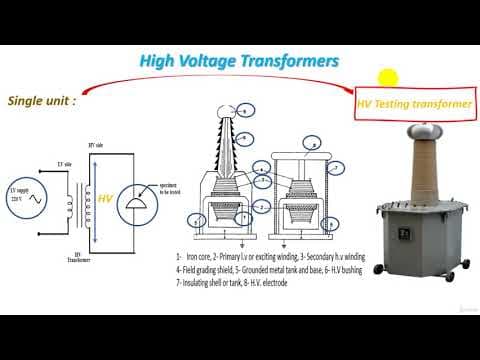
hello everyone now let's take an important comparison between high voltage testing transformer and high voltage power transformer as we explained before high voltage testing transformer is our transformer in our high voltage lab that is only used for testing the insulator but high voltage power transformer this transformer is used in electr... Read More
Key Insights
- High voltage testing transformers are used in labs for testing insulators, while high voltage power transformers are used in power systems to step up voltage for transmission.
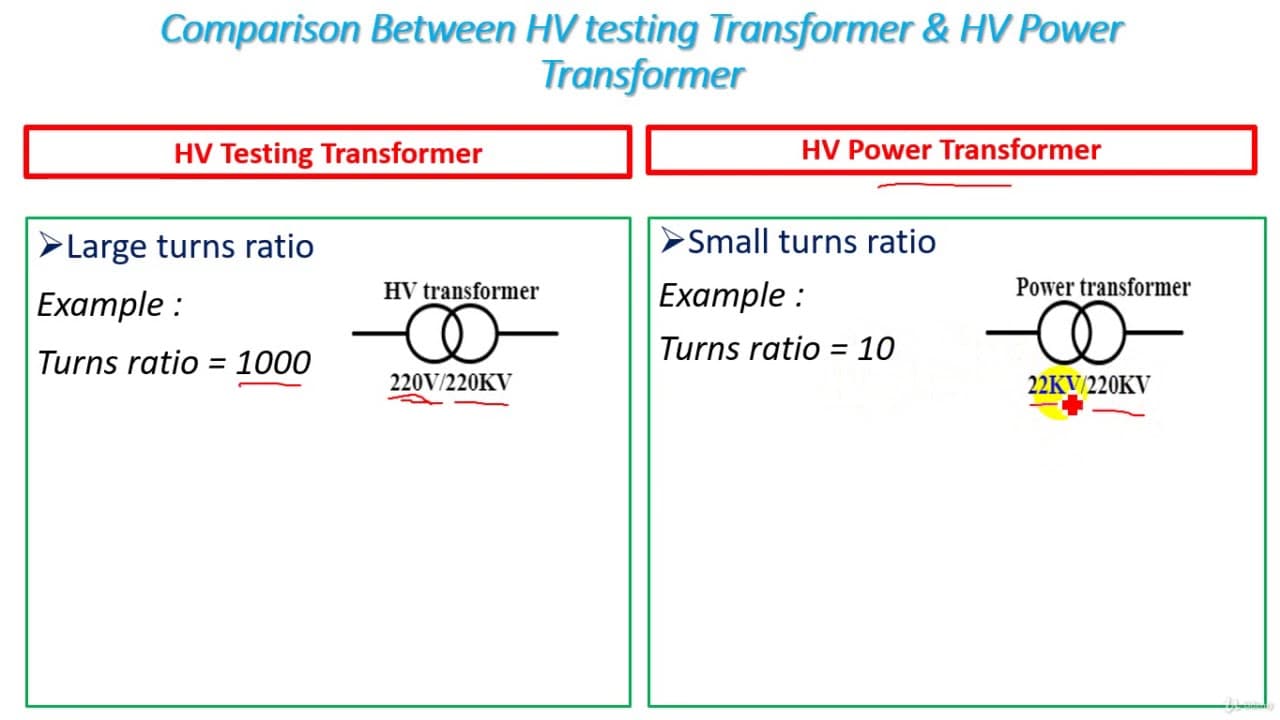
- Testing transformers have a large turns ratio compared to power transformers, which have a smaller turns ratio, due to their different applications.
- The turns ratio for a testing transformer can be as high as 1000, while for a power transformer it is typically around 10.
- Testing transformers have low power ratings because they are used for insulators that absorb minimal current, unlike power transformers which handle bulk power.
- Testing transformers are smaller in size due to their low power ratings, whereas power transformers are larger due to higher power ratings.
- Testing transformers are single-phase as they are used only for testing, while power transformers are three-phase to support generation and transmission systems.
- The primary use of testing transformers is to test equipment in labs, whereas power transformers are integral to electric power systems for voltage stepping.
- The physical construction of testing transformers includes a large turns ratio, single-phase setup, and smaller size, contrasting with the larger, three-phase power transformers.
Install to Summarize YouTube Videos and Get Transcripts
Explore YouTube Video Summarizer or Get YouTube Transcript Extractor
Questions & Answers
Q: What is the main use of high voltage testing transformers?
High voltage testing transformers are primarily used in laboratory settings to test insulators. Their design allows for a large turns ratio, which is crucial for testing the insulator's ability to handle high voltages. These transformers are not used for power transmission but rather for ensuring the reliability and safety of insulators.
Q: How do the turns ratios of testing and power transformers differ?
Testing transformers have a significantly larger turns ratio compared to power transformers. For example, a testing transformer might have a turns ratio of 1000, while a power transformer typically has a turns ratio of about 10. This difference reflects their distinct applications, with testing transformers designed for high voltage testing and power transformers for voltage stepping in power systems.
Q: Why do testing transformers have low power ratings?
Testing transformers have low power ratings because they are used to test insulators, which absorb very little current. The current absorbed by an ideal insulator is effectively zero, known as leakage current. Consequently, the power rating for testing transformers is low, as they are not designed to handle bulk power like power transformers.
Q: What is the significance of the size difference between testing and power transformers?
The size difference between testing and power transformers is significant due to their power ratings. Testing transformers are smaller because they have low power ratings, suitable for lab testing applications. In contrast, power transformers are larger, designed to handle higher power ratings necessary for stepping up voltage in electric power systems for transmission.
Q: Why are testing transformers single-phase?
Testing transformers are single-phase because they are used exclusively for testing insulators, which does not require a three-phase setup. The single-phase design is sufficient for laboratory testing purposes, simplifying the construction and reducing the size of the transformer compared to the three-phase power transformers used in electric power systems.
Q: What role do power transformers play in electric power systems?
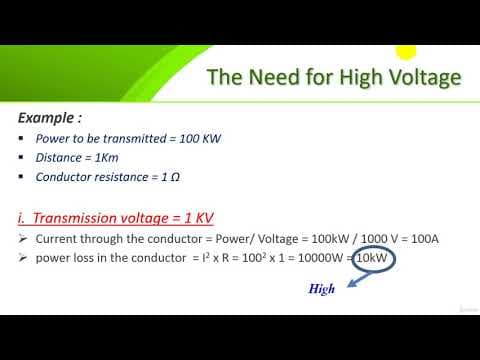
Power transformers play a crucial role in electric power systems by stepping up the voltage from generation levels to transmission levels. This process is essential for efficient long-distance power transmission, minimizing energy losses. Power transformers are three-phase and designed to handle large amounts of power, making them integral to the functioning of power grids.
Q: How does the construction of testing transformers support their function?
The construction of testing transformers supports their function through features like a large turns ratio, which is necessary for testing high voltage insulators. Their single-phase design and smaller size are tailored for laboratory environments, where they simulate high voltage conditions to ensure the reliability and safety of insulators without handling large power loads.
Q: What distinguishes power transformers from testing transformers in terms of application?
Power transformers are distinguished from testing transformers by their application in electric power systems, where they step up voltage for efficient transmission. Unlike testing transformers, which are used in labs to test insulators, power transformers are designed to handle substantial power loads and operate in a three-phase setup, essential for the generation and transmission of electricity.
Summary & Key Takeaways
-
High voltage testing transformers are primarily used in laboratory settings to test insulators, featuring a large turns ratio and low power ratings. Conversely, high voltage power transformers are used in electric power systems to step up voltage for transmission, with smaller turns ratios and higher power ratings.
-
Testing transformers are typically single-phase and smaller in size due to their specific application for testing insulators, which absorb minimal current. In contrast, power transformers are three-phase and larger, designed to handle significant power loads for transmission in electric power systems.
-
The design and function of testing transformers focus on insulator testing, characterized by a large turns ratio and small size. Power transformers, on the other hand, are integral to power systems, facilitating voltage stepping with a three-phase design and higher power capacity.
Read in Other Languages (beta)
Share This Summary 📚
Summarize YouTube Videos and Get Video Transcripts with 1-Click
Try YouTube Summary with ChatGPT & Claude or YouTube Transcript Generator
Explore More Summaries from HVdesc 📚
Summarize YouTube Videos and Get Video Transcripts with 1-Click
Try YouTube Summary with ChatGPT & Claude or YouTube Transcript Generator