5 Insulator Breakdown & Dielectric Strength
TL;DR
Explains insulator breakdown and dielectric strength in high voltage systems.
Transcript
hello everyone this tutorial will be about explaining two important definitions related to the high voltage branch and specifically related to the insulator itself these two concepts or these two definitions are the breakdown or dielectric strains first let's understand what is a breakdown when subjected to a high enough voltage insulators ... Read More
Key Insights
- Electric breakdown occurs when insulators subjected to high voltage lose insulating properties, becoming conductors, leading to short circuits.
- Dielectric strength is the maximum electric field an insulator can withstand without breakdown, crucial for preventing failures.
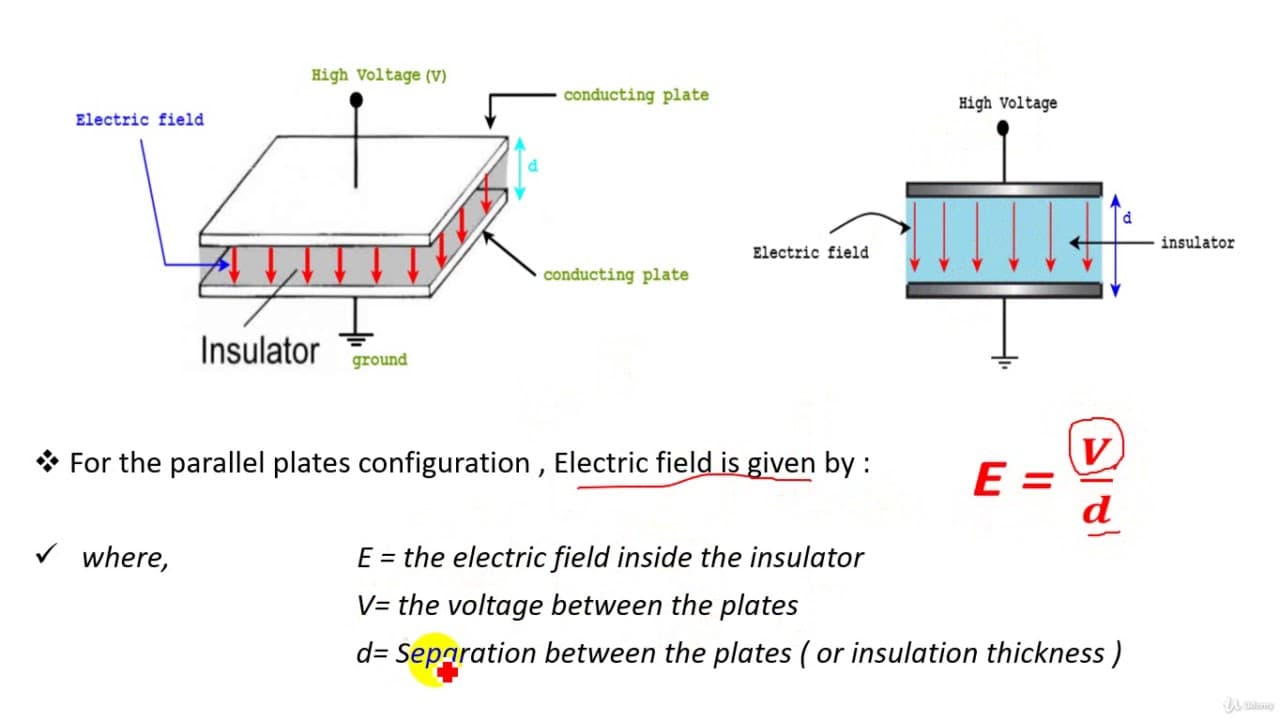
- The electric field in a parallel plate configuration is determined by the voltage and separation distance between plates.
- Dielectric strength is intrinsic to insulators and is measured in kilovolts per centimeter, independent of configuration.
- Factors affecting dielectric strength include insulation thickness, temperature, frequency, and pressure, impacting performance.
- Paschen's Law describes the relationship between gas pressure and breakdown voltage, highlighting pressure's effect on dielectric strength.
- High voltage tests are essential to determine dielectric strength and ensure insulator reliability in power systems.
- Understanding dielectric strength helps in designing insulators that resist breakdown under various operational conditions.
Install to Summarize YouTube Videos and Get Transcripts
Explore YouTube Video Summarizer or Get YouTube Transcript Extractor
Questions & Answers
Q: What happens to an insulator during electric breakdown?
During electric breakdown, an insulator subjected to a high enough voltage loses its insulating properties and becomes a conductor. This results in the flow of short circuit currents through the insulator, which can lead to failures in electrical systems. Understanding this phenomenon is crucial for preventing such occurrences.
Q: What is dielectric strength and why is it important?
Dielectric strength is the maximum electric field an insulator can withstand without undergoing breakdown. It is a crucial property for ensuring an insulator's reliability, as it determines the point at which the insulator loses its insulating capabilities. Knowing the dielectric strength helps in designing systems that prevent failure.
Q: How is the electric field in a parallel plate configuration determined?
In a parallel plate configuration, the electric field is determined by the voltage across the plates and the separation distance between them. The formula for the electric field is E = V/d, where E is the electric field, V is the voltage, and d is the separation. This understanding is vital for calculating field strength in insulators.
Q: What factors affect the dielectric strength of an insulator?
Several factors affect dielectric strength, including insulation thickness, operating temperature, frequency, and pressure. For example, increased insulation thickness and temperature can decrease dielectric strength, while increased pressure can enhance it. These factors must be considered during the design and testing of insulators.
Q: What is Paschen's Law and its significance?
Paschen's Law describes the relationship between gas pressure and breakdown voltage. It shows that breakdown voltage decreases with increasing pressure up to a certain point, after which it increases. This law is significant for understanding how pressure affects the dielectric strength of gases used as insulators in electrical systems.
Q: Why are high voltage tests performed on insulators?
High voltage tests are conducted on insulators to determine their dielectric strength and ensure they can withstand operational stresses without breaking down. These tests help identify the limits of insulating materials and ensure their reliability and safety in electrical power systems, preventing potential failures.
Q: How does insulation thickness impact dielectric strength?
Insulation thickness impacts dielectric strength by influencing the electric field distribution within the insulator. Generally, as insulation thickness increases, the dielectric strength decreases due to the increased distance over which the electric field is applied. This relationship must be considered in the design of insulating systems.
Q: What role does temperature play in dielectric strength?
Temperature plays a significant role in dielectric strength, as increasing temperatures typically decrease the strength. Higher temperatures can cause the insulating material to become more conductive, reducing its ability to withstand electric fields. This factor is crucial in designing insulators for environments with varying temperatures.
Summary & Key Takeaways
-
Electric breakdown in insulators happens when subjected to high voltage, causing them to lose insulating properties and conduct electricity. This leads to short circuit currents and potential failures in electrical systems, emphasizing the importance of understanding breakdown phenomena.
-
Dielectric strength is a critical property of insulators, representing the maximum electric field they can withstand without breakdown. It is independent of the insulator's configuration and is measured in kilovolts per centimeter, essential for ensuring insulation integrity.
-
Various factors influence dielectric strength, including insulation thickness, temperature, frequency, and pressure. Paschen's Law explains how gas pressure affects breakdown voltage, crucial for designing insulators that perform reliably under different environmental conditions.
Read in Other Languages (beta)
Share This Summary 📚
Summarize YouTube Videos and Get Video Transcripts with 1-Click
Try YouTube Summary with ChatGPT & Claude or YouTube Transcript Generator
Explore More Summaries from HVdesc 📚





Summarize YouTube Videos and Get Video Transcripts with 1-Click
Try YouTube Summary with ChatGPT & Claude or YouTube Transcript Generator