What Does Ritual Have to Do with Religion?: Crash Course Religions #15
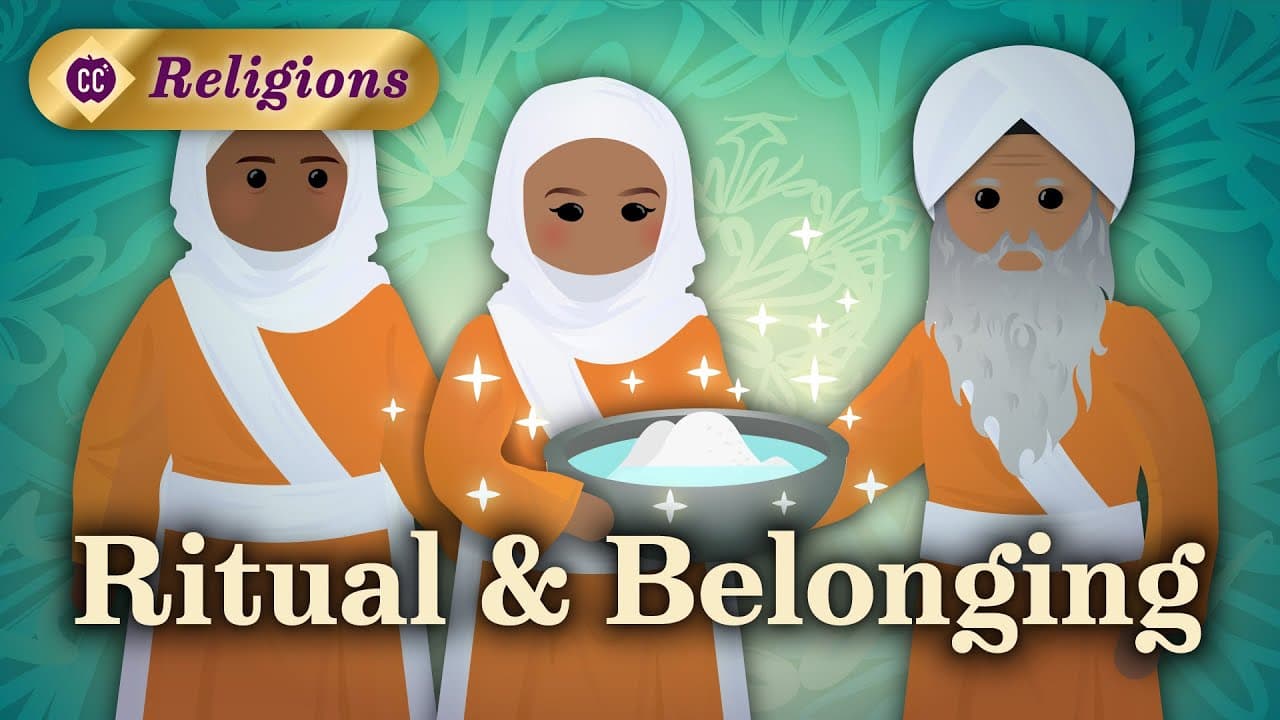
TL;DR
Rituals provide structure, meaning, and connection in religious and secular contexts.
Transcript
Hi, I’m John Green. Welcome to Crash Course Religions. So, before I was a YouTuber, and before I was a novelist, I was a student chaplain at a children’s hospital. And once a week or so, I would spend 24 hours as the hospital’s on-call chaplain, sleeping–in between deaths, traumas, and other chaplain calls–in a small windowless room in the hosp... Read More
Key Insights
- Rituals are actions that gain significance through repetition and intention, distinguishing them from ordinary habits.
- Rituals can be religious or secular, serving to unify communities, mark transitions, or convey authority.
- In Shintō, handwashing is a ritualized process that purifies individuals before entering a shrine, demonstrating how ordinary actions can gain sacred significance.
- Rituals can be used to protest, as seen in Colin Kaepernick's kneeling during the National Anthem to highlight racial injustice.
- Participation in rituals can reinforce shared community identity, even if participants aren't fully engaged in the symbolic meanings.
- Rituals can grant authority, as seen in the Catholic Church's papal selection process and presidential inaugurations.
- Rituals are not inherently religious but are used in daily life to bring comfort, peace, and a sense of connection.
- Rituals can challenge societal norms and provoke discussions on identity, unity, and power dynamics.
Install to Summarize YouTube Videos and Get Transcripts
Explore YouTube Video Summarizer or Get YouTube Transcript Extractor
Questions & Answers
Q: What is the significance of rituals in religious contexts?
Rituals in religious contexts serve to imbue ordinary actions with sacred significance, creating a sense of connection to the divine. They often involve specific procedures and are performed with intention, as seen in Shintō handwashing or the Catholic Eucharist. These rituals help unify communities and mark important spiritual transitions.
Q: How do rituals differ from ordinary habits?
Rituals differ from ordinary habits in that they are performed with intention and often involve repetition and specific procedures. While habits may be performed unconsciously, rituals carry symbolic meaning and are often associated with religious or cultural significance, serving to reinforce community identity and mark transitions.
Q: Can rituals be used for political protest?
Yes, rituals can be powerful tools for political protest. Colin Kaepernick's kneeling during the National Anthem is an example of using ritual to challenge societal norms and highlight issues of racial injustice. Such actions can provoke discussions on identity, unity, and power dynamics, demonstrating the impactful nature of rituals.
Q: What role do rituals play in secular contexts?
In secular contexts, rituals provide structure, comfort, and a sense of connection. They can mark important life transitions, such as graduations or inaugurations, and convey authority. Rituals also help create a shared community identity, even outside of religious frameworks, and are present in daily routines and cultural practices.
Q: How do rituals reinforce community identity?
Rituals reinforce community identity by creating a shared experience and symbolic meaning that unifies participants. Whether in religious ceremonies or secular events, rituals signal belonging and commitment to a group, fostering a sense of connection and solidarity among members, even if participants are not fully engaged with the underlying symbolism.
Q: What is the process of ritualization?
Ritualization is the process by which ordinary actions are imbued with extraordinary significance through repetition, intention, and symbolic meaning. This can involve specific procedures, as seen in Shintō handwashing or Catholic Eucharist, where actions are performed with purpose to create a sense of connection to the divine or community.
Q: How can rituals challenge societal norms?
Rituals can challenge societal norms by breaking established conventions and provoking discussions on identity and power dynamics. Colin Kaepernick's kneeling during the National Anthem is an example of using ritual as a form of protest to highlight issues of racial injustice, demonstrating how rituals can be used to question and redefine societal values.
Q: What are some examples of rituals granting authority?
Rituals can grant authority through structured processes that convey legitimacy and power. In the Catholic Church, the papal selection process involves rituals that establish the new Pope's authority. Similarly, presidential inaugurations involve ceremonial practices that mark the transition of power and officially bestow the title of President upon the elected individual.
Summary & Key Takeaways
-
Rituals are actions that gain extraordinary significance through repetition and intention, distinguishing them from ordinary habits. They can be religious or secular, serving to unify communities, mark transitions, or convey authority. Rituals can also be used in protest, as demonstrated by Colin Kaepernick's kneeling during the National Anthem.
-
In religious contexts, rituals like Shintō handwashing or Catholic Eucharist demonstrate how actions are imbued with sacred meaning. Rituals can also grant authority, as seen in the Catholic Church's papal selection process and presidential inaugurations, highlighting their role in societal structures.
-
Beyond religion, rituals are present in daily life, providing comfort, peace, and a sense of connection. They can challenge societal norms, provoke discussions on identity, and highlight power dynamics, making them powerful tools for personal and collective expression.
Read in Other Languages (beta)
Share This Summary 📚
Summarize YouTube Videos and Get Video Transcripts with 1-Click
Try YouTube Summary with ChatGPT & Claude or YouTube Transcript Generator
Explore More Summaries from CrashCourse 📚

Summarize YouTube Videos and Get Video Transcripts with 1-Click
Try YouTube Summary with ChatGPT & Claude or YouTube Transcript Generator