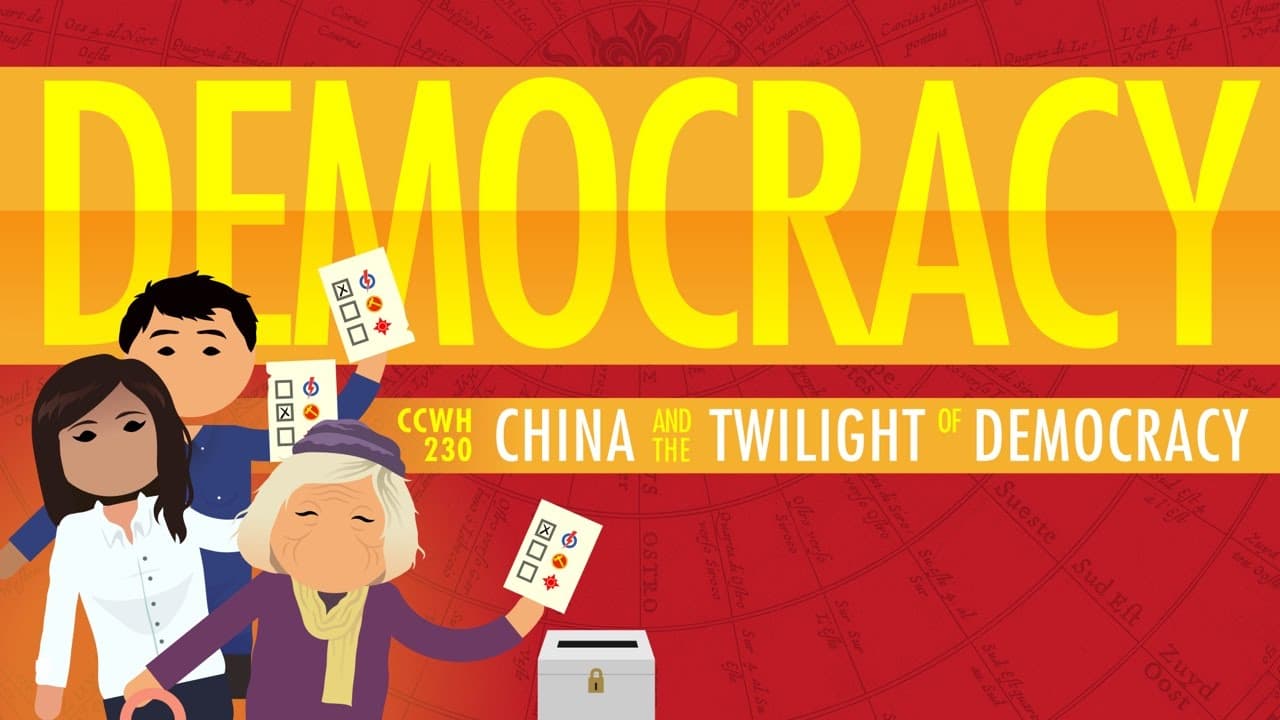
Democracy, Authoritarian Capitalism, and China: Crash Course World History 230
TL;DR
Explores the rise of authoritarian capitalism and its global implications.
Transcript
Hi, I'm John Green, this is Crash Course World History and today in our final episode of this World History series we're going to return to some of our favorite themes, like the rise of the state; maybe the idea of "The West"; and also we're going to speculate a little bit about the future. Mr. Green! Mr. Green! No, no, no...I-I thought you were fr... Read More
Key Insights
- Democracy, historically celebrated, is witnessing a decline as authoritarian capitalism gains traction, particularly in China and Singapore, challenging traditional Western governance models.
- The 20th century marked a peak for democracy, but recent trends show a resurgence of authoritarian regimes, questioning democracy's global dominance.
- Singapore's success is attributed to its authoritarian governance, long-term planning, and meritocratic bureaucracy, contrasting with Western democratic inefficiencies.
- China's economic rise under authoritarian capitalism demonstrates the viability of non-democratic systems in achieving rapid economic growth and global influence.
- Authoritarian capitalism faces challenges like corruption and limited private investment due to close ties between business and government.
- Western democracies struggle with inefficiencies and short-term political promises, while authoritarian models focus on long-term planning and stability.
- China's governance model, inspired by its historical meritocracy, challenges Western notions of democracy and capitalism as the only paths to success.
- Future predictions suggest coexistence between Western democracies and authoritarian capitalism, with potential learnings from each other's governance strategies.
Install to Summarize YouTube Videos and Get Transcripts
Explore YouTube Video Summarizer or Get YouTube Transcript Extractor
Questions & Answers
Q: Why is democracy witnessing a decline globally?
Democracy is witnessing a decline globally due to the rise of authoritarian capitalism in countries like China and Singapore, where non-democratic systems have achieved significant economic growth and stability. This shift challenges the traditional view that democracy is the only successful governance model, especially as some democracies struggle with inefficiencies and short-term political promises.
Q: What factors contribute to Singapore's success under authoritarian capitalism?
Singapore's success under authoritarian capitalism is attributed to its effective governance, long-term planning, and a meritocratic bureaucracy that promotes skilled individuals based on merit. The country's small government size, efficient resource management, and cultural values emphasizing family, education, and saving also play crucial roles in its economic achievements.
Q: How has China's governance model challenged Western ideas of democracy and capitalism?
China's governance model challenges Western ideas of democracy and capitalism by demonstrating that rapid economic growth and global influence can be achieved through authoritarian capitalism. China's state-controlled industries, long-term planning, and merit-based bureaucracy offer an alternative path to success, questioning the necessity of Western-style democratic governance for economic prosperity.
Q: What are the potential drawbacks of authoritarian capitalism?
Potential drawbacks of authoritarian capitalism include the risk of corruption due to close ties between business and government, limited responsiveness to private investors, and challenges in fostering innovation and freedom of expression. State-run industries may rely heavily on government subsidies, raising concerns about their long-term productivity and profitability.
Q: How do Western democracies differ from authoritarian capitalist systems in governance?
Western democracies differ from authoritarian capitalist systems in their focus on representative governance, individual freedoms, and short-term political promises. Democracies often face inefficiencies and are susceptible to interest group pressures, whereas authoritarian models prioritize long-term planning, stability, and centralized decision-making, albeit at the cost of individual freedoms.
Q: What role does meritocracy play in China's governance model?
Meritocracy plays a significant role in China's governance model by promoting skilled individuals based on merit, inspired by historical practices like the Han examination system. This approach is believed to enhance efficiency and focus on long-term problems, contributing to China's rapid economic growth and global influence under its authoritarian capitalist framework.
Q: What future coexistence is predicted between Western democracies and authoritarian capitalism?
Future predictions suggest that Western democracies and authoritarian capitalism will coexist, with each system learning from the other's governance strategies. While authoritarian capitalism may continue to provide economic growth and stability, Western democracies may need to adapt by embracing efficient technologies and long-term planning to remain competitive globally.
Q: How does the video suggest individuals can influence history and the future?
The video suggests that individuals can influence history and the future by making informed choices in their lives, as history is shaped by the perspectives and decisions of people. It emphasizes the importance of understanding different historical narratives and encourages viewers to actively participate in shaping both the present and future through their actions and insights.
Summary & Key Takeaways
-
The video discusses the decline of democracy and the rise of authoritarian capitalism, particularly in China and Singapore, challenging traditional Western governance models.
-
It explores the historical context of democracy's peak in the 20th century and the recent resurgence of authoritarian regimes, questioning democracy's global dominance.
-
The video concludes with predictions about the coexistence of Western democracies and authoritarian capitalism, highlighting potential learnings from each other's governance strategies.
Read in Other Languages (beta)
Share This Summary 📚
Summarize YouTube Videos and Get Video Transcripts with 1-Click
Try YouTube Summary with ChatGPT & Claude or YouTube Transcript Generator
Explore More Summaries from CrashCourse 📚






Summarize YouTube Videos and Get Video Transcripts with 1-Click
Try YouTube Summary with ChatGPT & Claude or YouTube Transcript Generator