How Did Mansa Musa Influence Islam in Africa?
TL;DR
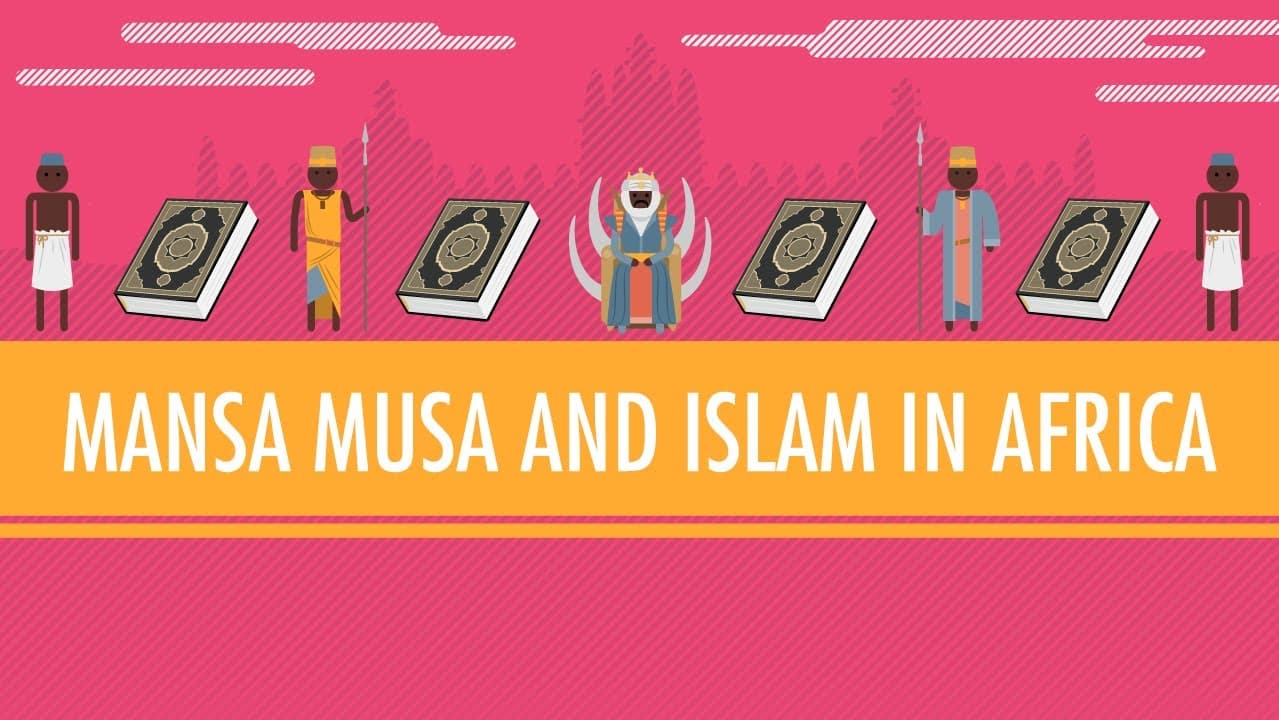
Mansa Musa's pilgrimage to Mecca highlighted the wealth and influence of the Malian Empire, challenging stereotypes about Africa. His journey spread Islam in West Africa, connecting it with the Mediterranean world. The Swahili city-states on Africa's east coast thrived through trade, blending local and Islamic cultures while maintaining autonomy.
Transcript
Hi, my name’s John Green, this is Crash Course: World History, and today we’re gonna talk about Africa. Mr. Green Mr. Green! We’ve already talked about Africa. Egypt is in Africa, and you haven’t shut up about it the entire course
- Yeah that’s true, Me from the Past. But Africa’s big - it’s like, super big - much bigger than it appears on most map... Read More
Key Insights
- Mansa Musa was a wealthy king of the Malian Empire in West Africa, known for his pilgrimage to Mecca in 1324.
- His journey involved an entourage of thousands and vast amounts of gold, causing inflation in cities like Alexandria.
- Mansa Musa's pilgrimage increased the Mediterranean world's interest in West Africa, fostering myths of its wealth.
- Islam spread in West Africa through trade routes, with traders and kings converting for religious and commercial benefits.
- The Swahili civilization on Africa's east coast consisted of city-states linked by language, trade, and religion.
- Swahili city-states were founded before Islam's arrival, with trade flourishing from the 8th century due to Arab merchants.
- Swahili cities exported raw materials and imported luxury goods, showcasing sophisticated trade networks.
- African history, often preserved orally, requires multiple sources for a comprehensive understanding, challenging stereotypes.
Install to Summarize YouTube Videos and Get Transcripts
Explore YouTube Video Summarizer or Get YouTube Transcript Extractor
Questions & Answers
Q: How did Mansa Musa's pilgrimage affect the perception of Africa?
Mansa Musa's pilgrimage to Mecca in 1324 significantly altered the perception of Africa by showcasing the immense wealth and influence of the Malian Empire. His lavish spending and the entourage he traveled with highlighted Africa as a land of riches, challenging European stereotypes of Africa as impoverished and uncivilized.
Q: What role did Islam play in West Africa during Mansa Musa's reign?
During Mansa Musa's reign, Islam played a crucial role in West Africa by connecting the region to the broader Islamic world through trade and religious networks. Mansa Musa's pilgrimage to Mecca underscored the empire's Islamic identity, and his return with scholars and architects helped spread Islamic culture and education in Mali.
Q: What were the main exports of the Swahili city-states?
The Swahili city-states primarily exported raw materials such as ivory, animal hides, timber, and gold. These goods were traded for luxury items like porcelain and books, reflecting a sophisticated trade network. The cities were integral to the Indian Ocean trade, connecting Africa with the Middle East and Asia.
Q: How did Islam spread in the Swahili city-states?
Islam spread in the Swahili city-states through trade interactions with Arab merchants who arrived from the 8th century onward. The religion was initially adopted by the elites for religious and commercial connections, leading to the establishment of Muslim communities and the construction of mosques in major cities.
Q: What was the significance of oral tradition in African history?
Oral tradition in African history is significant because it preserved the rich cultural and historical narratives of African societies in the absence of written records. Oral traditions offer insights into the values, beliefs, and events of African communities, challenging stereotypes of Africa as lacking history and civilization.
Q: What was the impact of Mansa Musa's wealth on cities like Alexandria?
Mansa Musa's wealth had a profound impact on cities like Alexandria, where his lavish spending during his pilgrimage caused significant inflation. The influx of gold devalued the local currency, demonstrating the economic power of the Malian Empire and drawing attention to Africa's richness, which influenced European perceptions.
Q: How did trade influence the development of Swahili city-states?
Trade was central to the development of the Swahili city-states, which became prosperous trade hubs along the East African coast. The cities engaged in the Indian Ocean trade network, exporting raw materials and importing luxury items. This trade facilitated cultural exchanges and the spread of Islam, shaping the region's identity.
Q: What misconceptions about Africa does the video address?
The video addresses misconceptions about Africa by highlighting the continent's historical richness and complexity. It challenges stereotypes of Africa as impoverished and uncivilized by showcasing the wealth of empires like Mali under Mansa Musa and the sophisticated trade networks of the Swahili city-states, emphasizing Africa's integral role in global history.
Summary & Key Takeaways
-
Mansa Musa, a king of Mali, showcased Africa's wealth through his pilgrimage to Mecca, dispelling stereotypes of poverty. His journey spread Islam in West Africa, connecting it with the Mediterranean. Swahili city-states on Africa's east coast thrived through trade, blending local and Islamic cultures while maintaining autonomy.
-
The Malian Empire, under Mansa Musa, was a powerful West African state with a rich Islamic culture. Islam spread through trade, with Berbers introducing it to West Africa. The Swahili city-states on the east coast were autonomous trade hubs linked by language, trade, and Islam.
-
Africa's history, often transmitted orally, is diverse and complex. Mansa Musa's wealth and pilgrimage highlighted Mali's prominence. The Swahili city-states thrived on trade, with Islam adopted by elites for religious and commercial ties. Multiple historical sources reveal Africa's rich past, challenging misconceptions.
Read in Other Languages (beta)
Share This Summary 📚
Summarize YouTube Videos and Get Video Transcripts with 1-Click
Try YouTube Summary with ChatGPT & Claude or YouTube Transcript Generator
Explore More Summaries from CrashCourse 📚




Summarize YouTube Videos and Get Video Transcripts with 1-Click
Try YouTube Summary with ChatGPT & Claude or YouTube Transcript Generator