These Humans Are Teaching Cars to Drive
TL;DR
Autonomous cars learn from expert human drivers at Aurora.
Transcript
Every year, more than a million people in the world die in road traffic accidents. And many of those fatalities are caused by us, by the mistakes we make as drivers. But there's a solution. Okay we're ready. Okay, engaging. And it's to relinquish control of the wheel to a computer. We've dreamed about it for decades, and now we finally have the tec... Read More
Key Insights
- Autonomous vehicles aim to reduce road fatalities caused by human errors by replacing drivers with computers.
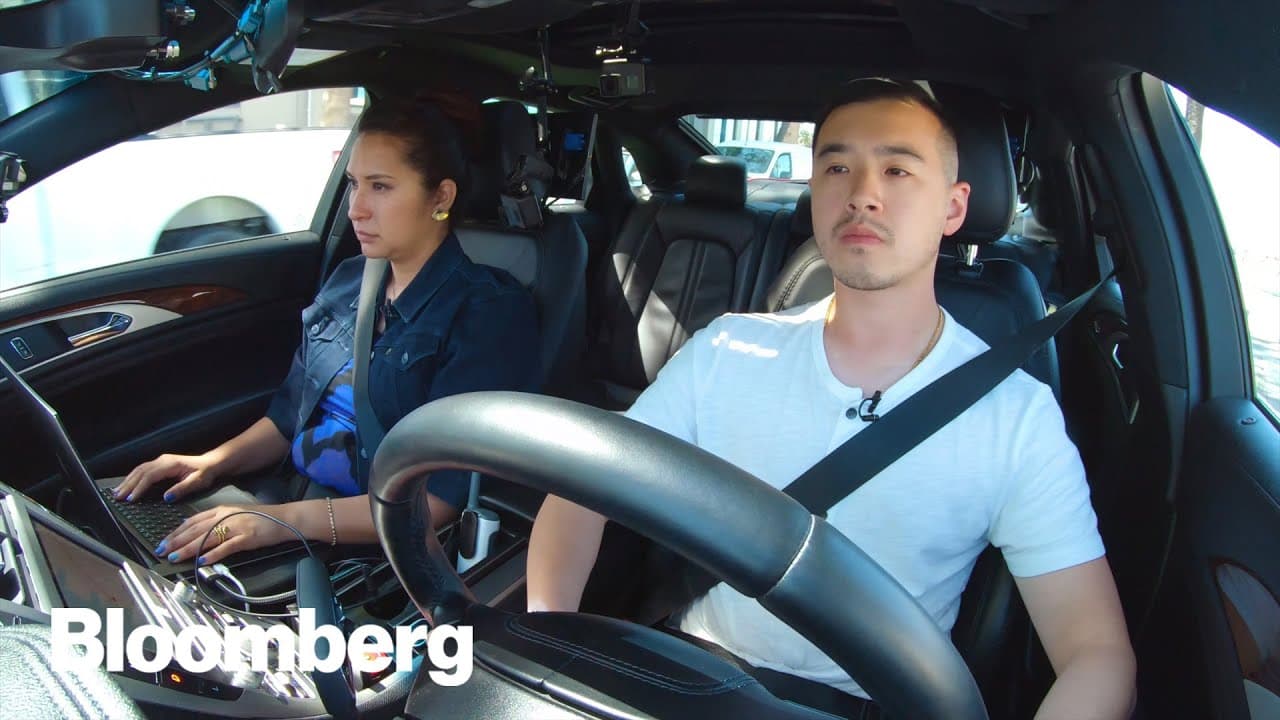
- Aurora, a self-driving car startup, employs expert drivers to train their autonomous systems in real-world conditions.
- Training for autonomous vehicle operators includes emergency braking, high-speed lane changes, and skid recovery.
- The process of teaching autonomous cars involves both virtual simulations and real-life driving experiences.
- Operators like Daniela and Steven work as pilots and copilots, ready to take control if the system fails.
- Aurora's technology recognizes obstacles like pedestrians, cyclists, and other vehicles using advanced detection systems.
- The job of autonomous vehicle operators does not require a specific degree, attracting individuals from diverse backgrounds.
- Despite fears of job loss, the shift to autonomous vehicles is seen as a way to improve road safety and reduce accidents.
Install to Summarize YouTube Videos and Get Transcripts
Explore YouTube Video Summarizer or Get YouTube Transcript Extractor
Questions & Answers
Q: What is the primary goal of autonomous vehicles according to the content?
The primary goal of autonomous vehicles, as discussed in the content, is to reduce road fatalities caused by human errors. By replacing human drivers with computers, the technology aims to eliminate mistakes made by drivers, such as drunk driving and distractions, thus making roads safer for everyone.
Q: What kind of training do Aurora's autonomous vehicle operators undergo?
Aurora's autonomous vehicle operators undergo comprehensive training that includes emergency braking, high-speed lane changes, and skid recovery. This training is designed to ensure that the operators can teach the autonomous systems how to handle unexpected situations on the road, thus improving the system's ability to drive safely in real-world conditions.
Q: How do Aurora's autonomous vehicles recognize obstacles on the road?
Aurora's autonomous vehicles use advanced detection systems to recognize various obstacles on the road. The technology can identify pedestrians, cyclists, and other vehicles by using different colored boxes to differentiate between them. This capability allows the vehicles to make informed decisions and navigate safely through complex driving environments.
Q: What is the role of the copilot in Aurora's autonomous vehicle operations?
In Aurora's autonomous vehicle operations, the copilot plays a crucial role in monitoring the system's performance. The copilot keeps an eye on a laptop that displays what the car sees, alerts the pilot to any potential issues, and takes notes on instances where the pilot needs to intervene. This data is later analyzed to improve the system's performance.
Q: What backgrounds do Aurora's autonomous vehicle operators come from?
Aurora's autonomous vehicle operators come from diverse backgrounds, as the job does not require a specific degree or prior industry experience. For instance, one operator was a surgeon in Mexico and worked for the fire service, while another was a military police sergeant in the army. This diversity brings a wide range of skills and perspectives to the team.
Q: How does Aurora address concerns about job loss due to autonomous vehicles?
Aurora addresses concerns about job loss by highlighting the potential safety benefits of autonomous vehicles. The operators emphasize that, while some jobs like cab driving may be affected, the technology can save millions of lives by eliminating human errors such as drunk driving and distractions. They believe the long-term benefits outweigh the short-term job disruptions.
Q: What are the responsibilities of Aurora's operators outside of driving?
Outside of driving, Aurora's operators have various responsibilities. For example, Steven assigns operators to drive specific routes required by engineers, while Daniela liaises with the team that builds the maps the vehicles rely on. These roles ensure the smooth operation and continuous improvement of the autonomous driving system.
Q: What is the future outlook for jobs in autonomous vehicle operations according to the content?
According to the content, the future outlook for jobs in autonomous vehicle operations remains positive. While the current intensive teaching process will eventually become less necessary, there will still be a need for human experts to vet new features and applications of self-driving technology. This ongoing requirement suggests that the job will not disappear anytime soon.
Summary & Key Takeaways
-
Aurora Innovation Inc. is training autonomous vehicles using expert human drivers to reduce road fatalities caused by human errors. The operators, who come from diverse backgrounds, undergo rigorous training to teach self-driving cars how to handle real-world driving conditions.
-
The training process includes emergency braking, high-speed lane changes, and skid recovery to ensure the autonomous system learns from expert examples. Operators are prepared to take control if the system encounters a situation it cannot handle.
-
Aurora's technology uses advanced detection systems to recognize obstacles like pedestrians, cyclists, and vehicles. Despite concerns about job losses, the shift to autonomous vehicles is seen as a means to improve road safety and reduce accidents.
Read in Other Languages (beta)
Share This Summary 📚
Summarize YouTube Videos and Get Video Transcripts with 1-Click
Try YouTube Summary with ChatGPT & Claude or YouTube Transcript Generator
Explore More Summaries from Bloomberg Originals 📚





Summarize YouTube Videos and Get Video Transcripts with 1-Click
Try YouTube Summary with ChatGPT & Claude or YouTube Transcript Generator