Are there any places on Earth with no bugs? - Charles Wallace
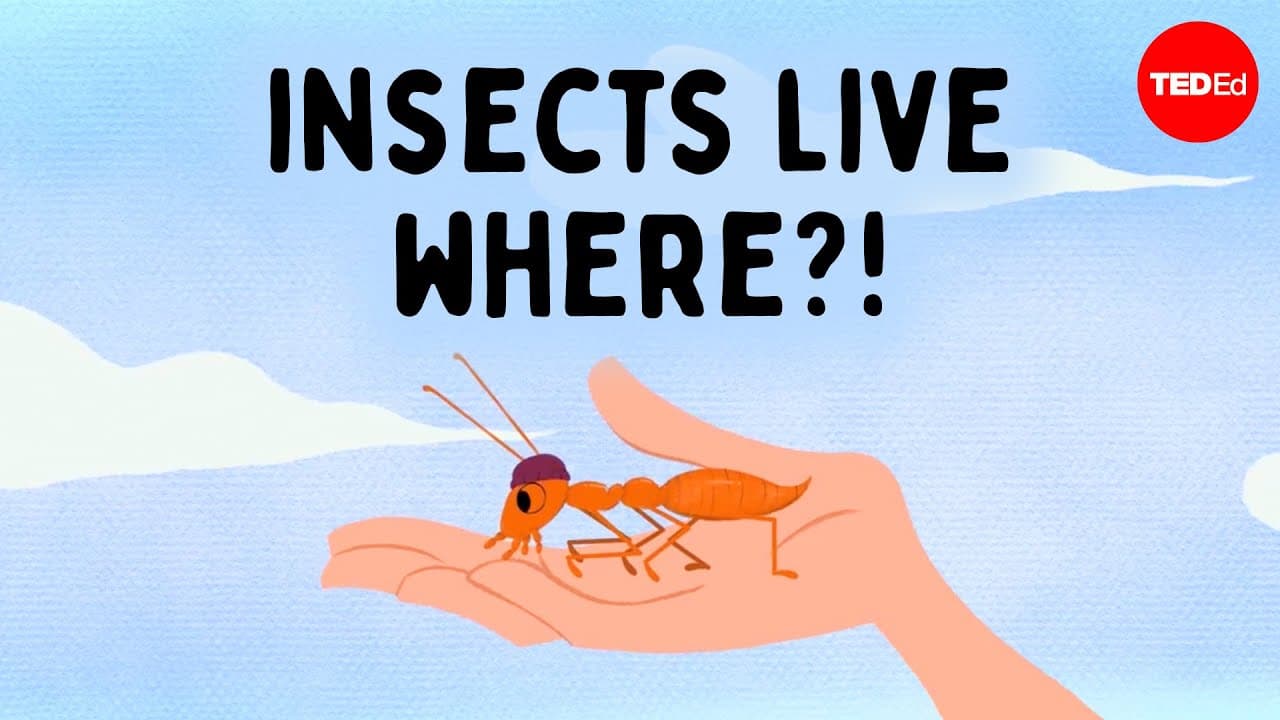
TL;DR
Insects adapt uniquely to survive extreme environments like deserts, glaciers, and oceans.
Transcript
A scalding volcano, parched desert, and frigid glacier— all pretty intense, And also all places where certain insects live. So, how do they do it? Our first stop is one of the hottest places on Earth: the Sahara Desert. Lots of animals here are only active at night— but not all. Sahara silver ant workers brave the desert’s blazing sun and scorching... Read More
Key Insights
- 🥵 Insects like the Sahara silver ant demonstrate exceptional locomotion techniques that enable them to survive extreme heat.
- 👱 The reflective hairs of certain insects are vital for temperature regulation and survival in scorching environments.
- 🪽 Alkali flies’ adaptations highlight the complexities of living in saline ecosystems and their ability to manage buoyancy challenges.
- 🥶 Ice crawlers showcase a specialization in cold adaptations while being vulnerable to temperature fluctuations outside their preferred range.
- 👻 Parasitic lice have evolved unique physiological traits that allow them to thrive in marine environments, showcasing the resilience of insects.
- 🥺 Extreme environments have led to immense diversity in survival strategies among insect species globally.
- ❓ The adaptations of insects in such hostile conditions reveal intricate evolutionary processes that improve their resilience and adaptability.
Install to Summarize YouTube Videos and Get Transcripts
Explore YouTube Video Summarizer or Get YouTube Transcript Extractor
Questions & Answers
Q: How do Sahara silver ants manage to run on extremely hot sand?
Sahara silver ants possess long legs that elevate their bodies above the heated ground, allowing them to attain extraordinary speeds of up to one meter per second. Their silver sheen, a result of densely packed triangular hairs, reflects sunlight and dissipates heat, keeping them about ten degrees cooler than hairless ants, thus enabling them to run effectively during peak daytime temperatures.
Q: What adaptation allows alkali flies to thrive in extremely salty environments?
Alkali flies have specialized kidney-like organs that help excrete excess salt from their bodies. As aquatic larvae, they face challenges due to water's surface tension, but they manage to overcome this by exerting forces many times their weight to submerge themselves. Once underwater, their hydrophobic bodies, coated in wax and hair, create an air bubble that allows them to remain dry and breathe for several minutes.
Q: How do ice crawlers survive in cold climates despite their temperature limitations?
Ice crawlers are adapted to live in cold environments by producing a unique sugar that stabilizes their cell membranes and DNA. This adaptation allows them to function well in consistently cool temperatures, although they are extremely sensitive to higher temperatures, as even the warmth from a human hand can be lethal over time.
Q: What unique features enable parasitic lice to survive at significant ocean depths?
Parasitic lice possess microscopic structures that allow them to completely shut their spiracles, which are used for oxygen intake. This adaptation may prevent water from entering and allows them to trap air for long periods at high pressure. Moreover, lice living on furry pinnipeds can utilize trapped air, while those on less-hairy mammals have evolved scale-like structures to help retain air.
Summary & Key Takeaways
-
Insects exhibit remarkable adaptations to thrive in extreme climates, such as the Sahara Desert's silver ants, which can sprint on scorching sands while keeping cool due to their reflective hair.
-
The alkali fly near California's Mono Lake has specialized organs to manage salt, allowing them to navigate harsh conditions and maintain buoyancy underwater while staying dry.
-
Unique adaptations are observed in parasitic lice living on marine mammals, enabling them to survive the deep ocean's high pressure and long submerged periods, underscoring the diversity of insect survival mechanisms.
Read in Other Languages (beta)
Share This Summary 📚
Summarize YouTube Videos and Get Video Transcripts with 1-Click
Try YouTube Summary with ChatGPT & Claude or YouTube Transcript Generator
Explore More Summaries from TED-Ed 📚






Summarize YouTube Videos and Get Video Transcripts with 1-Click
Try YouTube Summary with ChatGPT & Claude or YouTube Transcript Generator