How Does Wave Power Generate Renewable Energy?
TL;DR
Wave power harnesses ocean wave energy to generate electricity, offering a promising renewable energy source with potential to power significant portions of the world. Despite technological and financial challenges, companies like AW Energy and Eco Wave Power are advancing wave energy technologies, aiming to make them commercially viable and competitive with solar and wind energy.
Transcript
You can imagine that the oceans are actually the largest battery. We're storing huge amounts of energy in the oceans. The wave motion can be very deep. It can extend down several hundred meters, and once it gets to the near shore, from about 50 meters, the whole water column is moving backwards and forwards. As we search for ways to reduce our reli... Read More
Key Insights
- Wave power is a renewable energy source that captures energy from ocean waves to generate electricity.
- The United States' coastlines have the potential to generate over two trillion kilowatt hours of electricity annually from wave power.
- Wave energy offers a smoother power generation curve compared to wind, making it a complementary source of power.
- Technological and financial challenges have historically hindered wave energy development, with many early projects facing bankruptcies.
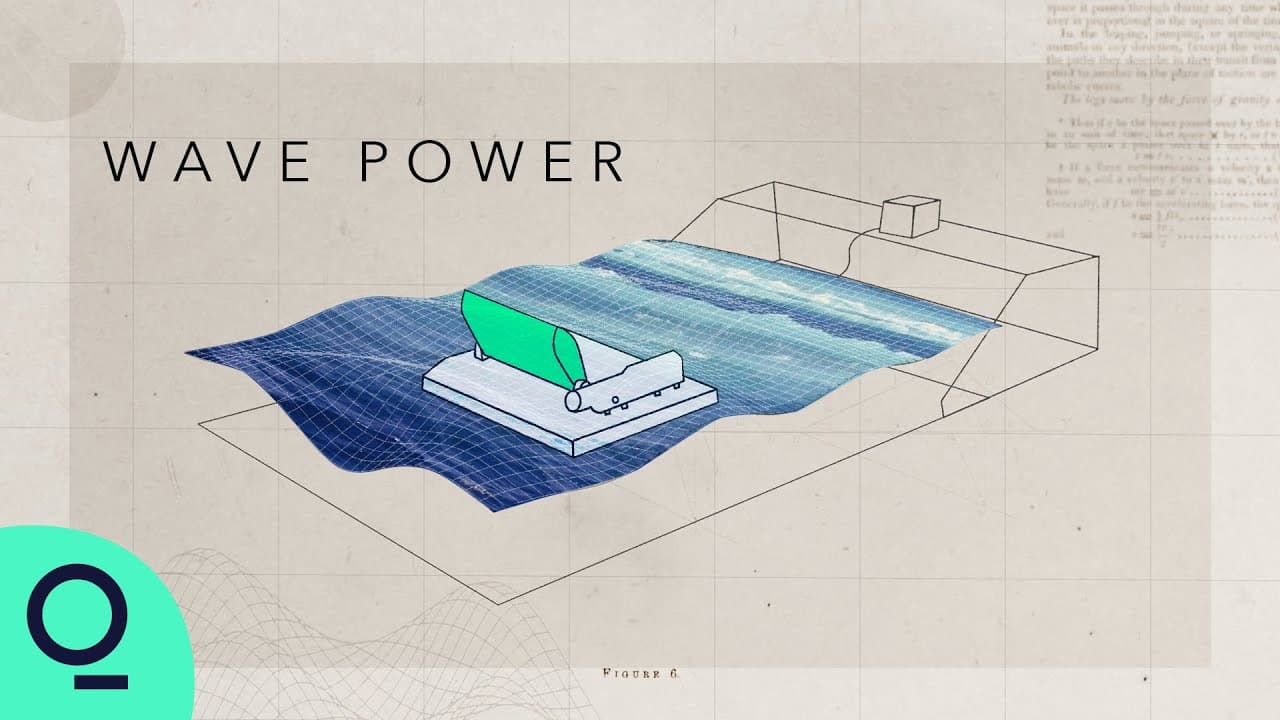
- AW Energy's WaveRoller device captures wave energy using a panel submerged at 15 meters depth, converting it into electricity via hydraulic systems.
- Eco Wave Power attaches devices to existing structures like breakwaters, making the technology cost-efficient by avoiding offshore installations.
- Wave energy is still in its early stages, with only a few hundred kilowatts deployed globally compared to gigawatts of offshore wind.
- Wave energy could become competitive with solar and wind, especially in remote locations or for specialized applications like powering underwater vehicles.
Install to Summarize YouTube Videos and Get Transcripts
Explore YouTube Video Summarizer or Get YouTube Transcript Extractor
Questions & Answers
Q: How does wave power generate electricity?
Wave power generates electricity by capturing the energy from ocean waves. Devices like AW Energy's WaveRoller use submerged panels that move with the waves, converting the motion into hydraulic energy, which is then transformed into electricity using hydraulic motors and generators. This process allows wave energy to be tapped as a renewable power source.
Q: What are the potential benefits of wave energy?
Wave energy offers several benefits, including a smoother power generation curve compared to wind energy, making it a complementary source of power. It has the potential to generate significant amounts of electricity, enough to power large portions of countries like the United States. Additionally, wave energy can be harnessed in remote locations, reducing reliance on expensive diesel power.
Q: What challenges does wave energy face?
Wave energy faces technological and financial challenges, including the harsh marine environment that leads to high maintenance costs and shorter project lifespans. Early projects often faced bankruptcies due to unreliable electricity generation and high costs. The sector also struggles with converging on a single technology design, hindering widespread adoption and investment.
Q: How does AW Energy's WaveRoller device work?
AW Energy's WaveRoller device operates by using a large steel panel fixed to the seabed, which moves with the waves. This motion is captured and converted into hydraulic energy within a machine room beneath the surface. The hydraulic energy is then transformed into electricity using hydraulic accumulators, motors, and a generator, delivering power to the grid.
Q: What is Eco Wave Power's approach to wave energy?
Eco Wave Power attaches its devices to existing manmade structures like breakwaters, jetties, and piers. This approach avoids the need for offshore installations, reducing costs associated with ships, divers, and underwater mooring. The company's technology uses floaters that move with the waves, pushing hydraulic cylinders to generate electricity on land, similar to a regular power station.
Q: What is the current status of wave energy deployment globally?
Globally, wave energy deployment is still in its early stages, with only a few hundred kilowatts installed compared to the gigawatts of offshore wind energy. However, advancements in technology and engineering solutions have improved its viability, and there is growing confidence in its potential to become competitive with more established renewable energy sources.
Q: How can wave energy become competitive with solar and wind energy?
Wave energy can become competitive with solar and wind energy by overcoming technological challenges, reducing costs, and improving reliability. Continued research and development, along with successful pilot projects, can lead to commercial scalability. Additionally, wave energy's unique characteristics, such as its smoother power generation curve, make it a valuable complement to other renewables.
Q: What are the future prospects for wave energy?
The future prospects for wave energy include its potential application in remote locations, such as islands and decommissioning rigs, where it can reduce reliance on expensive diesel power. It could also power underwater autonomous vehicles. With continued technological advancements and investment, wave energy could eventually play a significant role in a 100% renewable energy-friendly world.
Summary & Key Takeaways
-
Wave power harnesses the energy of ocean waves to generate electricity, offering a largely untapped renewable energy source. The potential is significant, with wave energy capable of powering large portions of the world if technological and financial challenges are overcome. Companies like AW Energy and Eco Wave Power are leading advancements in making wave energy commercially viable.
-
AW Energy's WaveRoller device operates by capturing wave motion with a submerged panel, converting it into electricity through hydraulic systems. Eco Wave Power, on the other hand, installs devices on existing structures, reducing costs associated with offshore installations. Both companies aim to scale up their technologies and expand globally.
-
Despite historical challenges, wave energy has progressed significantly, with advancements in engineering solutions making it more competitive with mature renewables like solar and wind. The future of wave energy lies in its potential application in remote areas, decommissioning rigs, and powering underwater vehicles, contributing to a 100% renewable energy-friendly world.
Read in Other Languages (beta)
Share This Summary 📚
Summarize YouTube Videos and Get Video Transcripts with 1-Click
Try YouTube Summary with ChatGPT & Claude or YouTube Transcript Generator
Explore More Summaries from Bloomberg Originals 📚






Summarize YouTube Videos and Get Video Transcripts with 1-Click
Try YouTube Summary with ChatGPT & Claude or YouTube Transcript Generator