Political Ideology: Crash Course Government and Politics #35
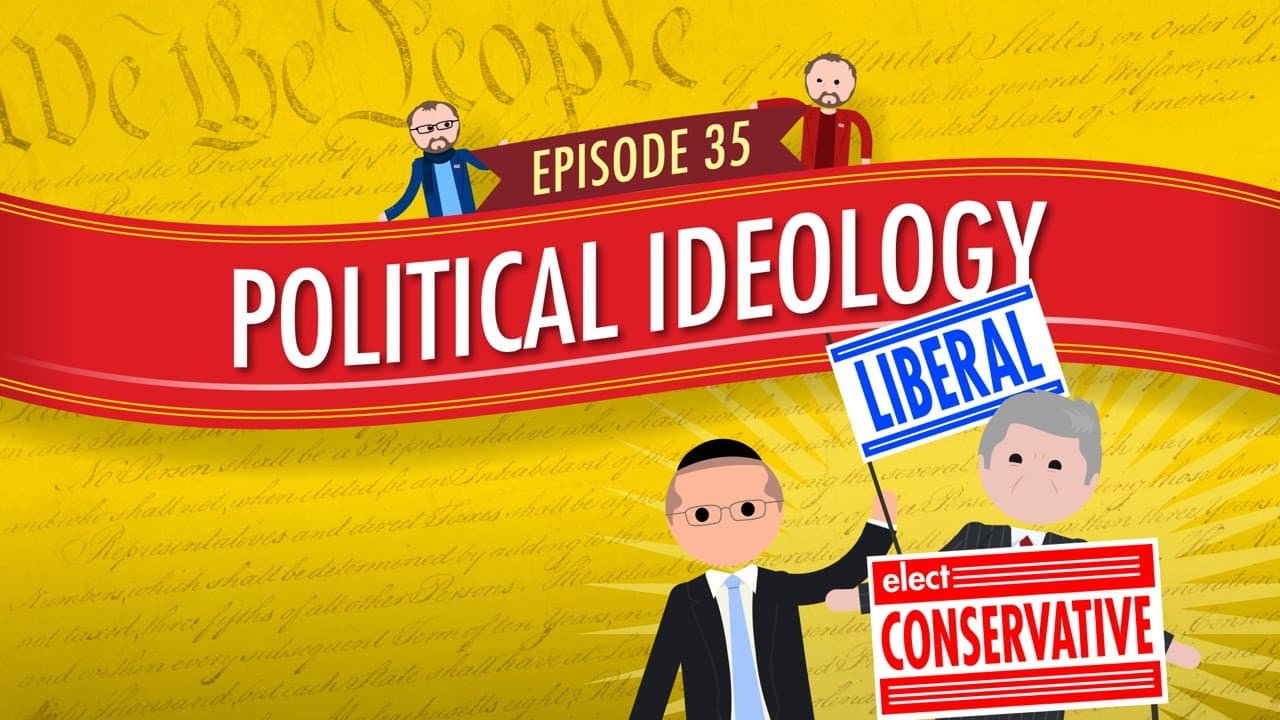
TL;DR
Explains American political ideologies and their influences.
Transcript
Hi, I'm Craig, and this is Crash Course Government and Politics. And today, we're gonna get personal. Not personal in the sense that I'm gonna tell you I'm a bed wetter cause I'm not...gonna tell you that. We're gonna talk about people's personal political views and where they come from. This is what political scientists sometimes call Political So... Read More
Key Insights
- Political ideology in America is often associated with identifying as liberal, conservative, libertarian, or other categories, although this doesn't always align perfectly with political party affiliation.
- American conservatives typically advocate for smaller government, free market principles, and a strong national defense, emphasizing individual liberty above other values.
- American liberals generally support government intervention in the economy to address social inequalities, favoring regulations and higher taxes on the wealthy to promote equality.
- Political socialization is the process by which individuals form their political ideologies, influenced by family, social groups, education, and political conditions experienced during formative years.
- Family is a primary influence on political ideology, with children often adopting the political views of their parents, although rebellion against parental views is also common.
- Social groups, including race, gender, and religion, significantly impact political ideology, with certain demographics historically aligning with liberal or conservative views.
- Education plays a critical role in shaping political views, with higher education levels often correlating with more liberal views on social issues, though not universally.
- Historical and political contexts, such as growing up during the Great Depression or Reagan era, can deeply influence one's political leanings, shaping liberal or conservative ideologies.
Install to Summarize YouTube Videos and Get Transcripts
Explore YouTube Video Summarizer or Get YouTube Transcript Extractor
Questions & Answers
Q: What is political socialization?
Political socialization is the process by which individuals form their political beliefs and ideologies. It is influenced by several factors, including family, social groups, education, and the political conditions they experience during formative years. These influences help shape one's political identity and views over time.
Q: How do American conservatives view government and the economy?
American conservatives typically advocate for a smaller government, believing that a large government poses a threat to individual liberty. They support free market principles, arguing that the market provides the greatest economic opportunity and benefit. Conservatives generally favor lower taxes and reduced government spending, except in areas like national defense.
Q: What are the primary beliefs of American liberals?
American liberals generally believe in government intervention in the economy to address social inequalities and support historically marginalized groups. They advocate for higher taxes on the wealthy, environmental protection, and expanded civil liberties. Liberals prioritize equality and see government as a necessary agent in promoting it, often supporting social programs over military spending.
Q: What role does family play in political socialization?
Family is considered the most significant influence on political socialization. Children often adopt their parents' political views, either through admiration and respect or as a form of rebellion. While liberal parents tend to raise liberal children, and conservative parents raise conservatives, the influence of family can vary depending on individual relationships and dynamics.
Q: How do social groups influence political ideology?
Social groups, such as race, gender, religion, and ethnicity, play a critical role in shaping political ideology. Certain demographics, like African Americans and Jewish people, tend to align with liberal views, while white Catholics often lean conservative. Economic self-interest and cultural factors also contribute to these alignments, although they are generalizations and not universally applicable.
Q: What impact does education have on political views?
Education influences political views through the formal teaching of political values like liberty and equality. Higher education levels often correlate with more liberal views on social issues such as women's rights and abortion. However, education can also lead to more conservative views on topics like government intervention in health insurance, illustrating the complexity of its impact.
Q: How do historical and political contexts shape political ideologies?
Historical and political contexts significantly shape political ideologies. For instance, individuals who grew up during the Great Depression and benefited from FDR's New Deal programs may develop liberal views. Conversely, those who came of age during the Reagan era, which emphasized self-reliance, might lean conservative. These contexts influence how individuals perceive government's role in society.
Q: Why is it important to understand generalizations about political ideologies?
Understanding generalizations about political ideologies is crucial because they are frequently used in discussions of American politics. While they provide a broad framework for understanding political beliefs, it's essential to recognize their limitations and the complexity of individual ideologies, which often fall on a spectrum and evolve over time. This critical understanding aids in more nuanced political discourse.
Summary & Key Takeaways
-
The video discusses the concept of political ideology in America, focusing on the differences between liberals and conservatives. It explains how these ideologies don't always align with political parties and highlights the generalizations often made about them.
-
Political socialization is explored as the process by which individuals develop their political views, influenced by factors such as family, social groups, education, and significant political events during their lifetime.
-
The video emphasizes the complexity and fluidity of political ideologies, noting that while generalizations are common, individual beliefs often fall on a spectrum and change over time.
Read in Other Languages (beta)
Share This Summary 📚
Summarize YouTube Videos and Get Video Transcripts with 1-Click
Try YouTube Summary with ChatGPT & Claude or YouTube Transcript Generator
Explore More Summaries from CrashCourse 📚

Summarize YouTube Videos and Get Video Transcripts with 1-Click
Try YouTube Summary with ChatGPT & Claude or YouTube Transcript Generator