How Floating Wind Turbines Revolutionize Energy
TL;DR
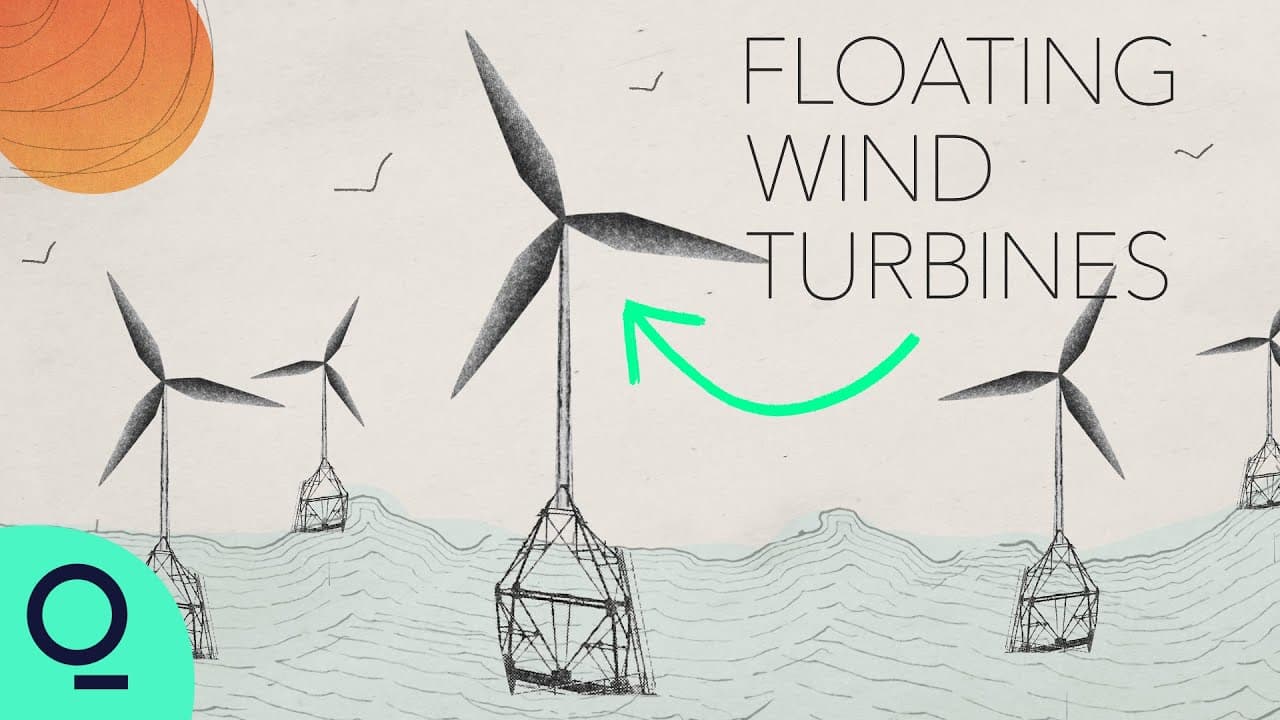
Floating wind turbines offer a solution to harness wind energy in deep waters, where traditional turbines cannot be installed. This innovation could significantly increase global wind power capacity, providing a crucial tool in reducing reliance on fossil fuels and combating climate change. The technology is still developing, but its potential impact on global energy supply and emissions is immense.
Transcript
imagine if by just slightly adapting an existing technology you could supply the world's electricity needs 11 times over now it's really tiny but the potential is huge the results we have seen is kind of is exceeding our expectations developers are taking wind turbines to deep water where previously they couldn't and instead of building them onto t... Read More
Key Insights
- Floating wind turbines enable access to deep-water wind resources, expanding potential energy generation areas.
- The power equation shows that larger turbines capture more wind, increasing efficiency and energy output.
- Traditional offshore wind turbines are limited to shallow waters due to cost constraints of deep-sea foundations.
- Floating platforms use buoyancy to keep turbines stable, similar to boat hulls or floating buoys.
- The TetraSpar design uses modular steel tubes for stability, supporting large turbines in deep waters.
- Industrializing floating wind technology could lead to significant cost reductions, making it competitive with fossil fuels.
- Oil and gas industry expertise and infrastructure can aid the transition to offshore and floating wind energy.
- Equinor's Hywind project demonstrates the viability of floating wind farms, achieving high capacity factors in Scotland.
Install to Summarize YouTube Videos and Get Transcripts
Explore YouTube Video Summarizer or Get YouTube Transcript Extractor
Questions & Answers
Q: How do floating wind turbines work?
Floating wind turbines operate by using buoyant platforms to keep the turbines stable on the ocean surface. These platforms are tethered to the sea floor and designed to withstand ocean conditions while capturing wind energy. The turbines are similar to traditional ones but are supported by structures that allow them to float, enabling access to deep-water wind resources where winds are typically stronger and more consistent.
Q: Why are floating wind turbines important for renewable energy?
Floating wind turbines are crucial because they allow for the exploitation of wind resources in deep waters, which are inaccessible to traditional fixed-bottom turbines. This expands the potential areas for wind energy generation, particularly in regions with deep coastal waters like California and Japan. By harnessing these untapped resources, floating turbines can significantly increase renewable energy capacity and contribute to reducing global carbon emissions.
Q: What challenges do floating wind turbines face?
Floating wind turbines face several challenges, including high costs of construction and deployment, engineering complexities in ensuring stability and durability, and the need for industrial-scale production to achieve cost-effectiveness. Additionally, there are logistical challenges in transporting and installing these large structures in deep ocean waters, as well as regulatory and environmental considerations that must be addressed.
Q: How does the TetraSpar design enhance floating wind turbines?
The TetraSpar design enhances floating wind turbines by using a modular steel tube structure that provides stability and support for large turbines. This design leverages the principles of buoyancy and gravity, using a tetrahedral shape to distribute forces and maintain balance. The modular approach allows for easier construction and assembly, potentially reducing costs and simplifying deployment in deep-water locations.
Q: What role does the oil and gas industry play in floating wind energy?
The oil and gas industry plays a significant role in floating wind energy by providing expertise and infrastructure that can be adapted for renewable energy applications. Skills and technologies developed for offshore oil platforms, such as marine operations and deep-water construction, are directly applicable to floating wind projects. Companies like Equinor are leveraging their experience to lead in the development and deployment of floating wind farms.
Q: How does industrialization impact the cost of floating wind turbines?
Industrialization impacts the cost of floating wind turbines by enabling mass production, which reduces the per-unit cost of components and construction. By standardizing designs and manufacturing processes, economies of scale can be achieved, making floating wind technology more economically viable. This approach has been successful in other industries, such as solar panels and electric vehicles, and is seen as a key factor in making floating wind competitive with traditional energy sources.
Q: What is the potential energy output of floating wind turbines?
The potential energy output of floating wind turbines is substantial, with the capability to meet global electricity demands multiple times over. By accessing deep-water wind resources, these turbines can capture stronger and more consistent winds, leading to higher energy yields. The scalability of floating wind farms allows for significant expansion of renewable energy capacity, contributing to a sustainable and low-carbon energy future.
Q: How does Equinor's Hywind project demonstrate floating wind viability?
Equinor's Hywind project demonstrates floating wind viability by achieving high capacity factors and proving the technology's effectiveness in real-world conditions. Located off the coast of Scotland, the Hywind farm has shown that floating turbines can operate efficiently and reliably, even in challenging ocean environments. The project highlights the potential for floating wind to provide significant renewable energy output, supporting the transition away from fossil fuels.
Summary & Key Takeaways
-
Floating wind turbines are poised to revolutionize renewable energy by enabling the use of deep-water wind resources. By adapting existing technologies, these turbines can be stabilized on floating platforms, making them viable in areas previously inaccessible to traditional offshore turbines. This innovation could significantly increase global wind power capacity, offering a sustainable alternative to fossil fuels and aiding in climate change mitigation efforts.
-
The development of floating wind technology hinges on industrialization to reduce costs and increase efficiency. Designs like the TetraSpar and Equinor's Hywind show promise, using principles of buoyancy and modular construction to maintain stability. As the technology matures, it could provide a crucial bridge in the transition to low-carbon energy, leveraging oil and gas industry expertise for deployment.
-
The potential of floating wind turbines is vast, with the capability to meet global electricity demands multiple times over. However, the success of this technology depends on overcoming economic and engineering challenges, as well as fostering competition and innovation within the industry. If achieved, floating wind could play a pivotal role in reducing global reliance on fossil fuels and achieving climate goals.
Read in Other Languages (beta)
Share This Summary 📚
Summarize YouTube Videos and Get Video Transcripts with 1-Click
Try YouTube Summary with ChatGPT & Claude or YouTube Transcript Generator
Explore More Summaries from Bloomberg Originals 📚



Summarize YouTube Videos and Get Video Transcripts with 1-Click
Try YouTube Summary with ChatGPT & Claude or YouTube Transcript Generator