You're Wrong About The 1st Amendment
TL;DR
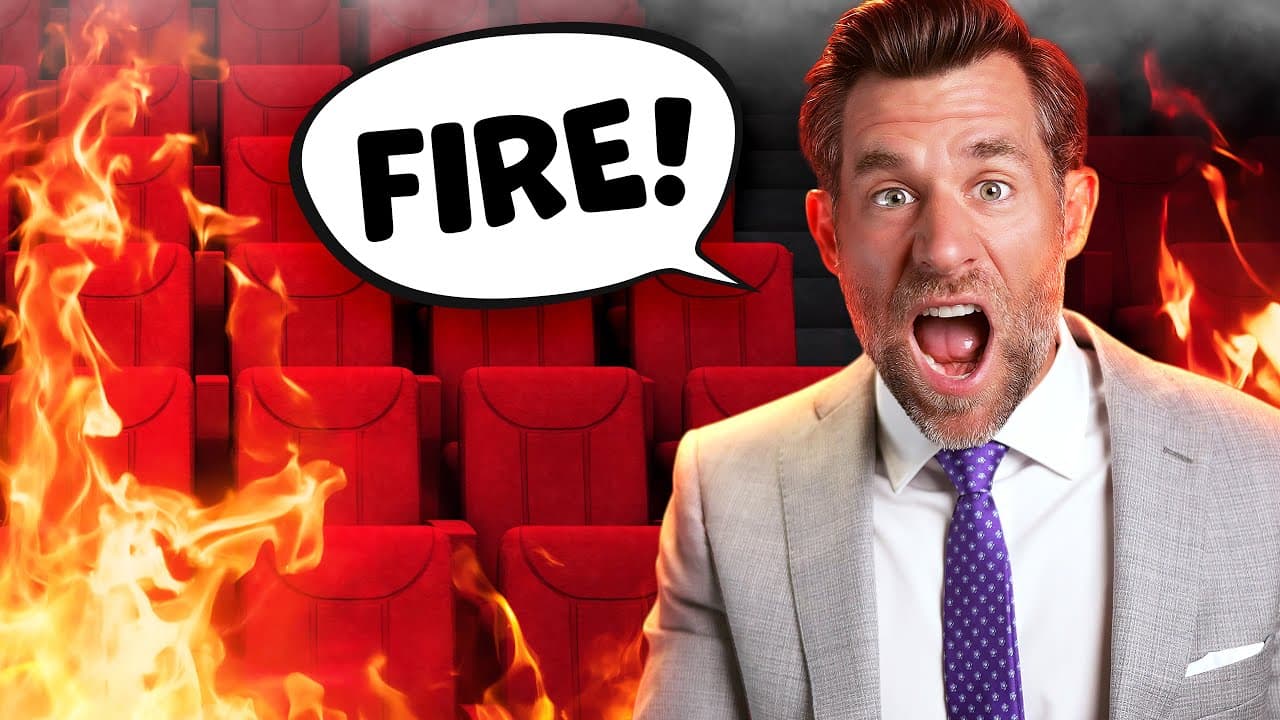
Despite common beliefs, yelling "fire" in a crowded theater is generally legal, hate speech is protected by the First Amendment, and private corporations can censor speech.
Transcript
- I have a confession to make. I am a convicted felon. I once went to the movies and I saw fire on screen and in my excitement I yelled out, "Fire." Fire! And the theater was crowded. I knew it was wrong. I knew I had no First Amendment right to say it. - [Police] We have you surrounded. - The police immediately came and arrested me under Californi... Read More
Key Insights
- ❤️🔥 Yelling "fire" in a crowded theater is generally legal under the First Amendment.
- 😯 Hate speech, while offensive, is protected by the First Amendment.
- 😯 Private corporations have the right to censor speech on their platforms.
- 😯 The First Amendment only restricts government interference with speech.
- 😯 European countries have stricter hate speech laws compared to the U.S.
- ❓ Historical context is crucial in understanding First Amendment protections.
- 😯 Flag desecration is protected speech under the First Amendment.
Install to Summarize YouTube Videos and Get Transcripts
Explore YouTube Video Summarizer or Get YouTube Transcript Extractor
Questions & Answers
Q: Why do many people believe that yelling "fire" in a crowded theater is illegal?
Many misconceptions stem from Justice Holmes' statement, which was meant to address a specific scenario of causing a panic, not a blanket ban on speech.
Q: How does the Supreme Court view hate speech?
The Supreme Court has consistently ruled that hate speech, even when offensive or repugnant, is protected by the First Amendment.
Q: Can private corporations censor speech?
Yes, private corporations have the right to censor speech on their platforms, as the First Amendment only applies to government interference with speech.
Q: Why do people often confuse hate speech laws in the U.S. with those in European countries?
European countries have stricter laws on hate speech due to historical reasons, leading to misconceptions about the legality of hate speech in the U.S.
Summary & Key Takeaways
-
Yelling "fire" in a crowded theater was a response to deadly fires in the early 1900s, not a general restriction on speech.
-
Hate speech, although repugnant, is protected by the First Amendment, as seen in cases like Westboro Baptist Church protests.
-
Private corporations can censor speech, as the First Amendment only restricts government interference.
Read in Other Languages (beta)
Share This Summary 📚
Summarize YouTube Videos and Get Video Transcripts with 1-Click
Try YouTube Summary with ChatGPT & Claude or YouTube Transcript Generator
Explore More Summaries from LegalEagle 📚
Summarize YouTube Videos and Get Video Transcripts with 1-Click
Try YouTube Summary with ChatGPT & Claude or YouTube Transcript Generator