Problem 3 Two Cavity Kystron - Microwave Linear Beam Tubes O Type - Microwave Engineering
TL;DR
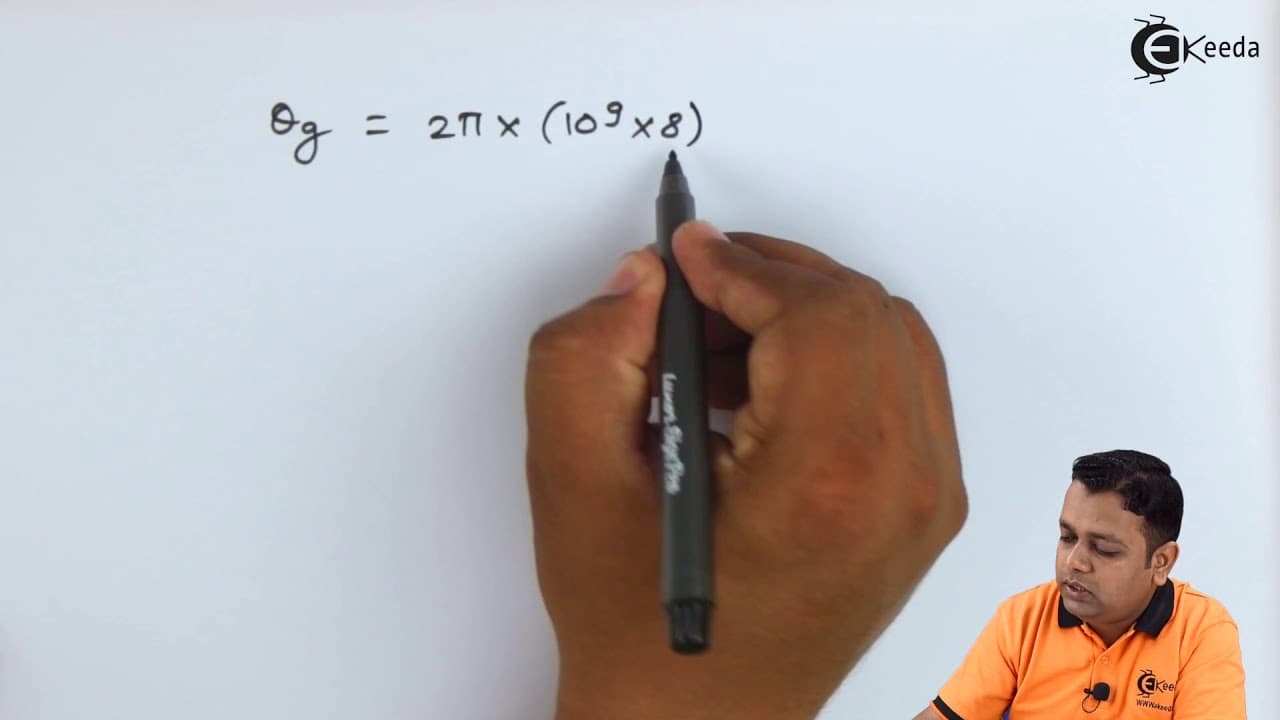
Solving problem 3 for Two Cavity Klystron Amplifier specifications through detailed calculations.
Transcript
click the bell icon to get latest videos from akira hello friends I welcome you all to this video here we are with chapter number 2 of microwave engineering so here microbio linear beam tubes we are introduced to we are using here the 3 in front cavities and the very popular microwave tube to work as amplifier is to capitalist wrong now we are fini... Read More
Key Insights
- ❓ Understanding the specifications and components of a Two Cavity Klystron.
- ⌛ Importance of electron velocity and DC transit time in amplifier performance.
- ⚡ Calculation steps for determining input voltage and voltage gain in microwave engineering problems.
- 😁 Significance of beam coupling coefficient and bunching parameter for amplifier efficiency.
- ❓ Utilizing formulas and values to solve complex engineering problems accurately.
- 🈸 Practical application of microwave engineering principles in analyzing amplifier performance.
- ⚡ Implications of maximum output voltage on input voltage calculations in amplifiers.
Install to Summarize YouTube Videos and Get Transcripts
Explore YouTube Video Summarizer or Get YouTube Transcript Extractor
Questions & Answers
Q: What are the key specifications provided for solving Problem 3?
The specifications include V0, f, D, L, and RSH values crucial for determining the amplifier's performance.
Q: How is the electron velocity calculated in Part A of Problem 3?
The electron velocity is determined using a formula involving the square root of the DC potential V0, resulting in a specific value in meters per second.
Q: What is the significance of the DC transit time in Part B of Problem 3?
The DC transit time, calculated using the drift space length and electron velocity, is essential for analyzing the behavior of electrons within the amplifier.
Q: How is the input voltage for maximum output voltage computed in Part C of Problem 3?
The input voltage V1 at the maximum output voltage is determined using the bunching parameter X, beam coupling coefficient, and DC transit angle values outlined in the problem statement.
Summary & Key Takeaways
-
Introduction to Two Cavity Klystron with specifications for problem-solving.
-
Determining electron velocity, DC transit time, input voltage, and voltage gain for the amplifier.
-
Detailed calculations for each part of Problem 3 in Microwave Engineering Chapter 2.
Read in Other Languages (beta)
Share This Summary 📚
Summarize YouTube Videos and Get Video Transcripts with 1-Click
Try YouTube Summary with ChatGPT & Claude or YouTube Transcript Generator
Explore More Summaries from Ekeeda 📚




Summarize YouTube Videos and Get Video Transcripts with 1-Click
Try YouTube Summary with ChatGPT & Claude or YouTube Transcript Generator