Lecture 10
TL;DR
Explores probability distributions, sampling, and statistical inference.
Transcript
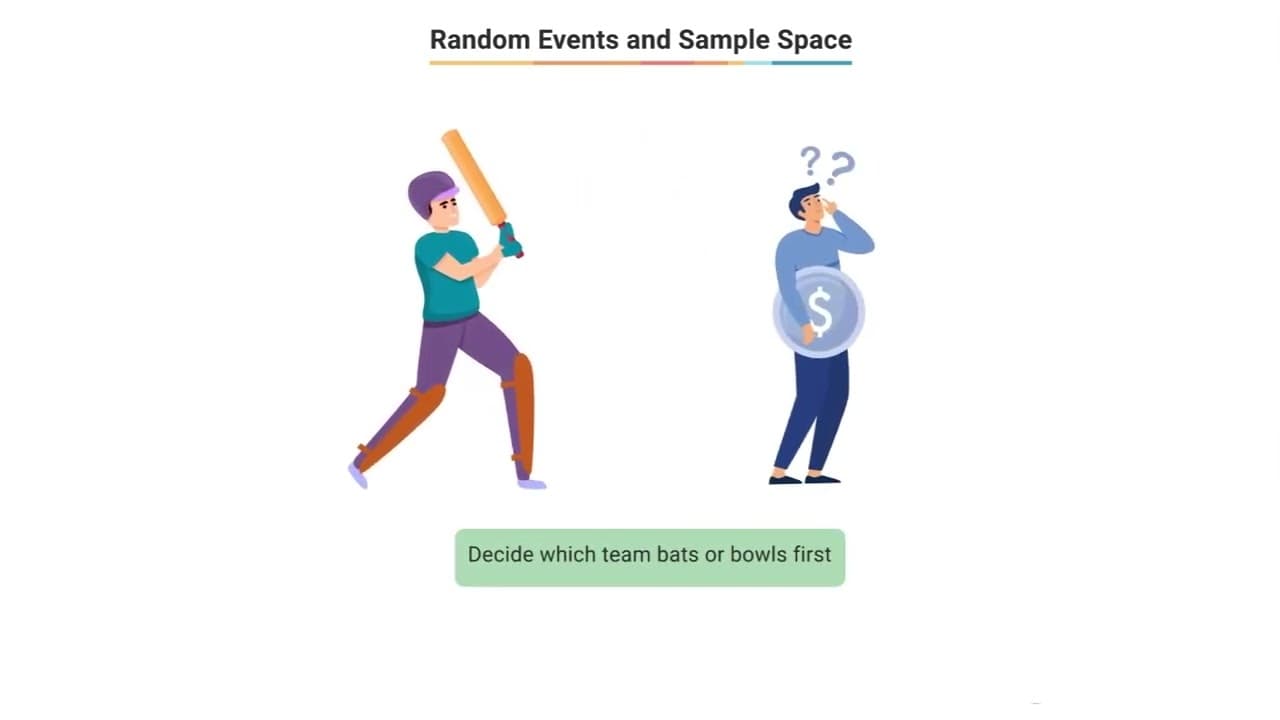
thank you in this lesson we'll discuss probability distributions and different types of probability distribution namely binomial distribution and normal distribution probability distributions such as normal distribution are often employed to draw inferences from the sample data for example how does one make the following inference what is t... Read More
Key Insights
- Probability distributions, such as binomial and normal distributions, are essential for drawing inferences from sample data, enabling the calculation of probabilities for specific outcomes.
- Basic probability rules, including single and multiple events, addition and multiplication rules, as well as joint and marginal probabilities, form the foundation for understanding complex probability concepts.
- Conditional probability and Bayes' theorem provide powerful tools for calculating probabilities of interdependent events, enhancing statistical inference capabilities.
- Random variables, expected values, variance, and cumulative probabilities are critical components of probability models, aiding in the understanding of statistical inference.
- Sampling and statistical inference allow for the estimation of population parameters, such as the average salary of a data scientist, using sample data and confidence intervals.
- Python and R are prominent tools in the industry for applying statistical techniques, offering a wide range of modeling capabilities and visualization options.
- Probability is a measure of uncertainty, with values ranging from 0 to 1, and is used in various fields, including sports, business, and medicine, to assess the likelihood of events.
- Understanding the difference between independent, mutually exclusive, and compound events is crucial for accurately calculating probabilities in complex scenarios.
Install to Summarize YouTube Videos and Get Transcripts
Explore YouTube Video Summarizer or Get YouTube Transcript Extractor
Questions & Answers
Q: What is the role of probability distributions in statistical inference?
Probability distributions, such as binomial and normal distributions, are crucial in statistical inference as they allow statisticians to draw conclusions from sample data. By understanding how probabilities are distributed across possible values, statisticians can estimate the likelihood of specific outcomes and make informed decisions based on sample data. This is particularly useful in fields like finance, healthcare, and social sciences.
Q: How do conditional probability and Bayes' theorem enhance statistical analysis?
Conditional probability and Bayes' theorem are powerful tools in statistical analysis. Conditional probability helps in understanding the probability of an event given that another event has occurred, which is essential in scenarios where events are interdependent. Bayes' theorem provides a mathematical framework for updating the probability of a hypothesis based on new evidence, making it invaluable for decision-making processes and inferential statistics.
Q: What is the significance of random variables in probability models?
Random variables are fundamental to probability models as they represent numerical outcomes of random phenomena. They allow statisticians to quantify uncertainty and variability in data. By analyzing random variables, one can calculate expected values, variances, and cumulative probabilities, which are essential for understanding the distribution and behavior of data. These concepts are crucial for making predictions and drawing inferences from sample data.
Q: Why are sampling and statistical inference important in statistics?
Sampling and statistical inference are vital because they enable statisticians to make estimates about a population based on a sample. This is especially important when it's impractical or impossible to collect data from an entire population. Through sampling, statisticians can create sampling distributions and use techniques like the central limit theorem to make inferences about population parameters, such as means and proportions, with a known degree of confidence.
Q: What tools are commonly used in the industry for statistical analysis?
In the industry, Python and R are widely used tools for statistical analysis due to their versatility and extensive libraries for statistical modeling and data visualization. These tools support a range of statistical techniques, including linear and non-linear modeling, hypothesis testing, and data visualization, making them suitable for various applications in data science, research, and analytics. Their open-source nature and community support further enhance their popularity.
Q: How is probability used to measure uncertainty in real life?
Probability is used to measure uncertainty by assigning a numerical value between 0 and 1 to an event, indicating its likelihood of occurrence. In real life, probability is applied in various domains, such as weather forecasting, where probabilities are assigned to different weather outcomes, and in finance, where probabilities help assess investment risks. It is also used in medicine to evaluate the likelihood of treatment outcomes and in business to predict customer behavior.
Q: What is the difference between independent and mutually exclusive events?
Independent events are those whose occurrence does not affect each other, meaning the probability of one event occurring is not influenced by the occurrence of the other. In contrast, mutually exclusive events cannot occur simultaneously; the occurrence of one event precludes the occurrence of the other. Understanding these distinctions is crucial for accurately calculating probabilities, especially in complex scenarios involving multiple events.
Q: How does the multiplication rule apply to dependent events?
The multiplication rule for dependent events involves adjusting the probability calculation to account for the dependency between events. When two events are dependent, the probability of both events occurring is calculated by multiplying the probability of the first event by the conditional probability of the second event, given that the first event has occurred. This approach ensures that the interdependence of events is accurately reflected in the probability calculation.
Summary & Key Takeaways
-
This content introduces probability distributions, focusing on binomial and normal distributions, and their role in statistical inference. It covers basic probability rules, including single and multiple events, addition and multiplication rules, and joint and marginal probabilities.
-
The lesson explores conditional probability, Bayes' theorem, random variables, expected values, variance, and cumulative probabilities. These concepts are crucial for understanding advanced topics like sampling, statistical inference, and hypothesis testing.
-
The content emphasizes the importance of sampling and statistical inference in estimating population parameters. It highlights the use of Python and R for statistical modeling and visualization, and explains the difference between independent, mutually exclusive, and compound events.
Read in Other Languages (beta)
Share This Summary 📚
Summarize YouTube Videos and Get Video Transcripts with 1-Click
Try YouTube Summary with ChatGPT & Claude or YouTube Transcript Generator
Explore More Summaries from IIT KANPUR-NPTEL 📚




Summarize YouTube Videos and Get Video Transcripts with 1-Click
Try YouTube Summary with ChatGPT & Claude or YouTube Transcript Generator