How to Use Momentum Oscillators in Trading
TL;DR
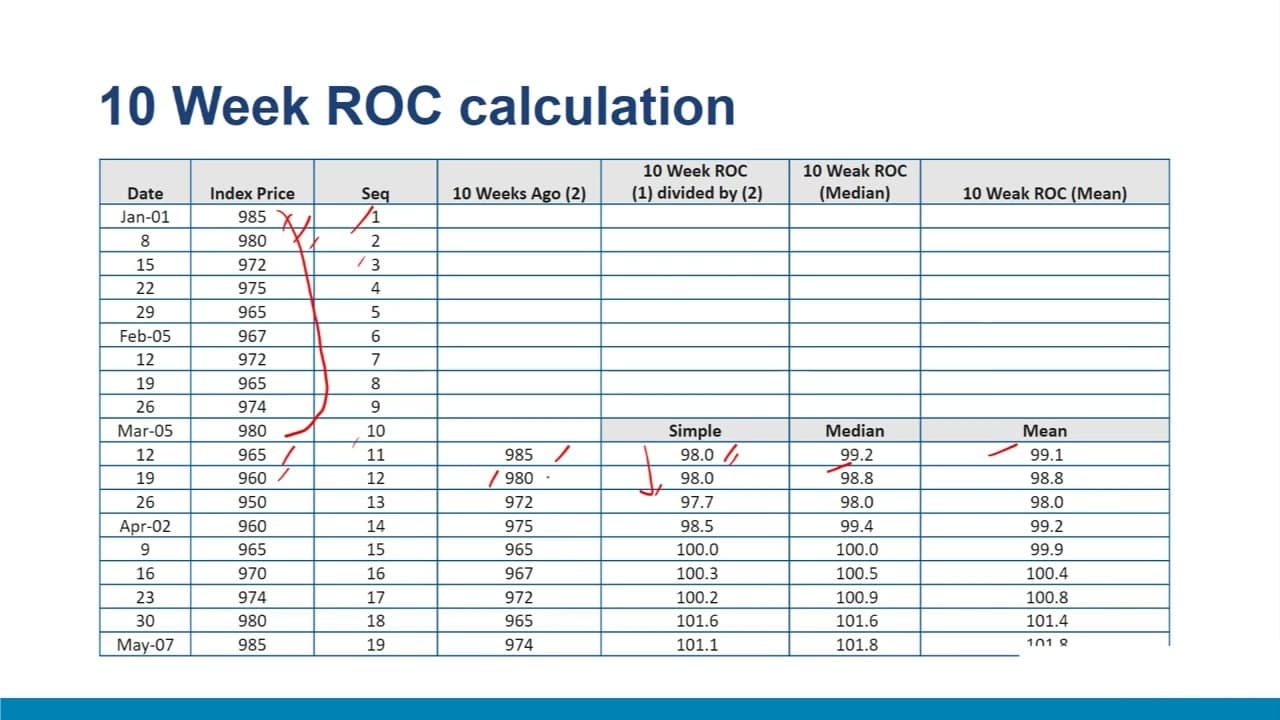
Momentum oscillators are tools used to gauge the strength and potential reversal of price trends in financial markets. By analyzing indicators like the Rate of Change (ROC), Relative Strength Indicator (RSI), and stochastic oscillators, traders can identify overbought or oversold conditions and potential trend reversals. These oscillators provide early signals of market sentiment shifts, though confirmation from price action is crucial.
Transcript
thank you in this lesson we'll discuss the application of momentum oscillators in determining Trend and its oscillation we'll discuss rate of change that is Roc indicator as an example of momentum indicators and how to employ it in identifying Trend and their reversals we'll discuss overbought and oversold levels momentum os... Read More
Key Insights
- Momentum oscillators measure the rate of price changes and help predict trend reversals.
- The Rate of Change (ROC) indicator compares current prices to past prices to identify momentum.
- Relative Strength Indicator (RSI) is bounded between 0 and 100, indicating overbought and oversold conditions.
- Stochastic oscillators use percent K and percent D lines to predict price movements based on closing prices.
- Overbought and oversold levels suggest potential reversals but require confirmation from price action.
- Divergences between price and momentum indicators can signal weakening trends.
- Momentum indicators are more effective when used alongside trend lines and moving averages.
- In Bull markets, oscillators may remain overbought, while in Bear markets, they may stay oversold.
Install to Summarize YouTube Videos and Get Transcripts
Explore YouTube Video Summarizer or Get YouTube Transcript Extractor
Questions & Answers
Q: How do momentum oscillators help in trading?
Momentum oscillators help traders identify the strength and potential reversals of price trends by measuring the rate of price changes. They highlight overbought and oversold conditions, signaling when a trend may be losing momentum and potentially reversing. These indicators, like the Rate of Change (ROC) and Relative Strength Indicator (RSI), provide early warnings of market sentiment shifts, aiding traders in making informed decisions.
Q: What is the Rate of Change (ROC) indicator?
The Rate of Change (ROC) indicator is a momentum oscillator that compares the current price of a security to its price a certain number of periods ago. It helps traders identify the speed at which prices are changing, indicating the strength of a trend. A rising ROC suggests increasing momentum and a bullish trend, while a falling ROC indicates declining momentum and a potential bearish trend.
Q: How does the Relative Strength Indicator (RSI) work?
The Relative Strength Indicator (RSI) is a momentum oscillator that measures the speed and change of price movements. It fluctuates between 0 and 100, with levels above 70 indicating overbought conditions and below 30 suggesting oversold conditions. The RSI helps traders identify potential trend reversals by highlighting when a security's price may have moved too far, too quickly, in either direction.
Q: What role do stochastic oscillators play in trading?
Stochastic oscillators analyze the position of a security's closing price relative to its price range over a specific period. They consist of two lines, percent K and percent D, which help identify potential trend reversals. When the percent K line crosses the percent D line, it signals a possible change in trend. Stochastic oscillators are useful for spotting overbought and oversold conditions, aiding traders in decision-making.
Q: Why is confirmation from price action important when using oscillators?
Confirmation from price action is crucial when using oscillators because these indicators can provide false signals. While oscillators like the RSI or stochastic indicators can suggest overbought or oversold conditions, actual price movements confirm whether a trend reversal is genuinely occurring. Relying solely on oscillators without price confirmation can lead to premature or incorrect trading decisions.
Q: How can divergences between price and momentum indicators signal trend changes?
Divergences occur when the price of a security moves in the opposite direction of a momentum indicator. A negative divergence, where the price makes a new high but the indicator does not, suggests weakening momentum and a potential trend reversal. Conversely, a positive divergence, where the price makes a new low but the indicator does not, indicates strengthening momentum and a possible trend reversal to the upside.
Q: What are overbought and oversold levels in momentum analysis?
Overbought and oversold levels in momentum analysis indicate when a security's price may have moved too far in one direction and is due for a correction. Overbought levels suggest a security is overpriced and may soon decline, while oversold levels indicate it is undervalued and may rise. These levels are often set at 70/30 or 80/20 for indicators like the RSI, helping traders anticipate potential trend reversals.
Q: How do oscillators behave differently in Bull and Bear markets?
In Bull markets, oscillators tend to move into overbought conditions quickly and may remain there for extended periods as prices rise. In Bear markets, they often stay in oversold territory as prices decline. Understanding these behaviors helps traders anticipate market movements, as overbought conditions in Bull markets may not lead to immediate reversals, while oversold conditions in Bear markets may persist longer.
Summary & Key Takeaways
-
Momentum oscillators, such as the Rate of Change (ROC) and Relative Strength Indicator (RSI), are vital tools in financial trading for identifying potential trend reversals. These indicators measure the rate of price changes and help traders spot overbought or oversold conditions, signaling possible shifts in market trends.
-
The ROC indicator compares current prices with those from a set period ago, providing insights into market momentum. The RSI, on the other hand, fluctuates between 0 and 100, with readings above 70 indicating overbought conditions and below 30 suggesting oversold markets. These indicators can warn traders of potential reversals before they occur.
-
Stochastic oscillators use percent K and percent D lines to analyze closing price patterns, offering further insights into market trends. By combining these oscillators with other analysis tools, such as trend lines and moving averages, traders can improve the accuracy of their predictions and make more informed trading decisions.
Read in Other Languages (beta)
Share This Summary 📚
Summarize YouTube Videos and Get Video Transcripts with 1-Click
Try YouTube Summary with ChatGPT & Claude or YouTube Transcript Generator
Explore More Summaries from IIT KANPUR-NPTEL 📚



Summarize YouTube Videos and Get Video Transcripts with 1-Click
Try YouTube Summary with ChatGPT & Claude or YouTube Transcript Generator