Products
Features
YouTube Video Summarizer
Summarize YouTube videos
Web & PDF Highlighter
Highlight web pages & PDFs
Chat with PDF
Ask any PDF questions with AI
Ask AI Clone
Chat with your highlights & memories
Audio Transcriber
Transcribe audio files to text
Glasp Reader
Read and highlight articles
Kindle Highlight Export
Export your Kindle highlights
Idea Hatch
Hatch ideas from your highlights
Integrations
Obsidian Plugin
Notion Integration
Pocket Integration
Instapaper Integration
Medium Integration
Readwise Integration
Snipd Integration
Hypothesis Integration
Apps & Extensions
Chrome Extension
Safari Extension
Edge Add-ons
Firefox Add-ons
iOS App
Android App
Discover
Discover
Ideas
Discover new ideas and insights
Articles
Curated articles and insights
Books
Book recommendations by great minds
Posts
Essays and notes from readers
Quotes
Inspiring quotes collection
Videos
Curated videos and summaries
Explore Glasp
Glasp Newsletter
Weekly insights and updates
Glasp Talk
Interview series with great minds
Glasp Blog
Latest news and articles
Glasp Use Cases
Learn how others use Glasp
Build & Support
Glasp API
Access Glasp's API for developers
MCP Connector
Connect Glasp to Claude & ChatGPT
Community
Glasp Reddit Community
Students
Student discount and benefits
FAQs
Frequently Asked Questions
AboutPricing
DashboardLog inSign up

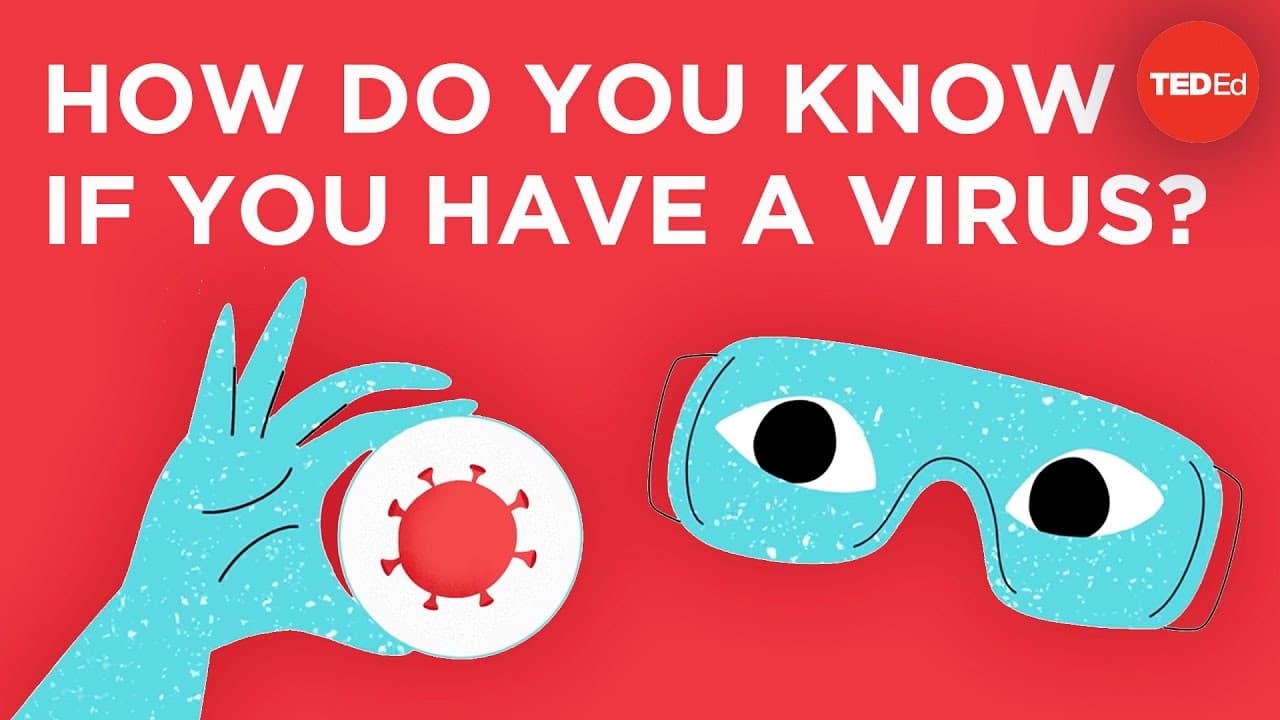
How do you know if you have a virus? - Cella Wright
519.9K views
•
May 18, 2020
by
TED-Ed
YouTube video player
How do you know if you have a virus? - Cella Wright

TL;DR

PCR and immunoassays are essential for diagnosing and identifying previous virus infections accurately.

Transcript

A new virus emerges and spreads like wildfire. In order to contain it, researchers must first collect data about who’s been infected. Two main viral testing techniques are critical: one tells you if you have the virus and the other shows if you’ve already had it. So, how exactly do these tests work? PCR, or polymerase chain reaction testing, t... Read More

Key Insights

  • ❓ PCR amplifies viral genetic material for accurate diagnosis.
  • 🕵️ Immunoassays detect antibodies for past virus exposure.
  • 🖐️ PCR and immunoassays play vital roles in diagnosing and containing viral infections.
  • ❓ PCR and immunoassay technologies continue to advance for better accuracy and efficiency.
  • 🍝 Immunoassays are crucial for retroactively identifying past virus infections.
  • ❓ PCR and immunoassays have significant implications for virus treatment and outbreak management.
  • ❓ Innovations like digital PCR enhance testing accuracy.

Install to Summarize YouTube Videos and Get Transcripts

Explore YouTube Video Summarizer or Get YouTube Transcript Extractor

Questions & Answers

Q: How does PCR testing work to detect current virus infections?

PCR testing targets and amplifies the genetic material of a virus to accurately diagnose current infections by detecting specific segments unique to the virus through complementary primers and enzymes.

Q: What is the role of immunoassays in identifying past virus exposure?

Immunoassays target antibodies produced by the immune system during past virus infections to determine if an individual has previously been exposed to a particular virus, providing valuable information for retrospective diagnosis.

Q: What are the applications of PCR and immunoassays in different types of viral samples?

PCR can be used on various samples like blood, feces, or nasal/throat swabs to detect a virus’s genetic material, while immunoassays require a blood sample to identify virus-specific antibodies.

Q: How do PCR and immunoassay results help in managing viral outbreaks?

Early and accurate diagnosis through PCR and immunoassays is crucial in containing viral outbreaks, saving lives, and potentially using immune individuals' blood plasma for treatment.

Summary & Key Takeaways

  • Polymerase chain reaction (PCR) testing amplifies genetic material to detect current virus infections.

  • Immunoassays target antibodies to identify past virus exposure.

  • Both PCR and immunoassays are crucial tools in diagnosing and containing viral infections.


Read in Other Languages (beta)

English

Share This Summary 📚

Summarize YouTube Videos and Get Video Transcripts with 1-Click

Download browser extensions on:

Try YouTube Summary with ChatGPT & Claude or YouTube Transcript Generator

Explore More Summaries from TED-Ed 📚
The benefits of a good night's sleep - Shai Marcu thumbnail
The benefits of a good night's sleep - Shai Marcu
TED-Ed
How do carbohydrates impact your health? - Richard J. Wood thumbnail
How do carbohydrates impact your health? - Richard J. Wood
TED-Ed
How a wound heals itself - Sarthak Sinha thumbnail
How a wound heals itself - Sarthak Sinha
TED-Ed
The myth of Sisyphus - Alex Gendler thumbnail
The myth of Sisyphus - Alex Gendler
TED-Ed
The science of attraction - Dawn Maslar thumbnail
The science of attraction - Dawn Maslar
TED-Ed
Does your vote count? The Electoral College explained - Christina Greer thumbnail
Does your vote count? The Electoral College explained - Christina Greer
TED-Ed

Summarize YouTube Videos and Get Video Transcripts with 1-Click

Download browser extensions on:

Try YouTube Summary with ChatGPT & Claude or YouTube Transcript Generator

Apps & Extensions

  • Chrome Extension
  • Safari Extension
  • Edge Add-ons
  • Firefox Add-ons
  • iOS App
  • Android App

Key Features

  • YouTube Video Summarizer
  • Web & PDF Summarizer
  • Web & PDF Highlighter
  • Chat with PDF
  • Ask AI Clone
  • Audio Transcriber
  • Glasp Reader
  • Kindle Highlight Export
  • Idea Hatch

Integrations

  • Obsidian Plugin
  • Notion Integration
  • Pocket Integration
  • Instapaper Integration
  • Medium Integration
  • Readwise Integration
  • Snipd Integration
  • Hypothesis Integration

More Features

  • APIs
  • MCP Connector
  • Blog & Post
  • Embed Links
  • Image Highlight
  • Personality Test
  • Quote Shots

Company

  • About us
  • Blog
  • Community
  • FAQs
  • Job Board
  • Newsletter
  • Pricing
Terms

•

Privacy

•

Guidelines

© 2026 Glasp Inc. All rights reserved.