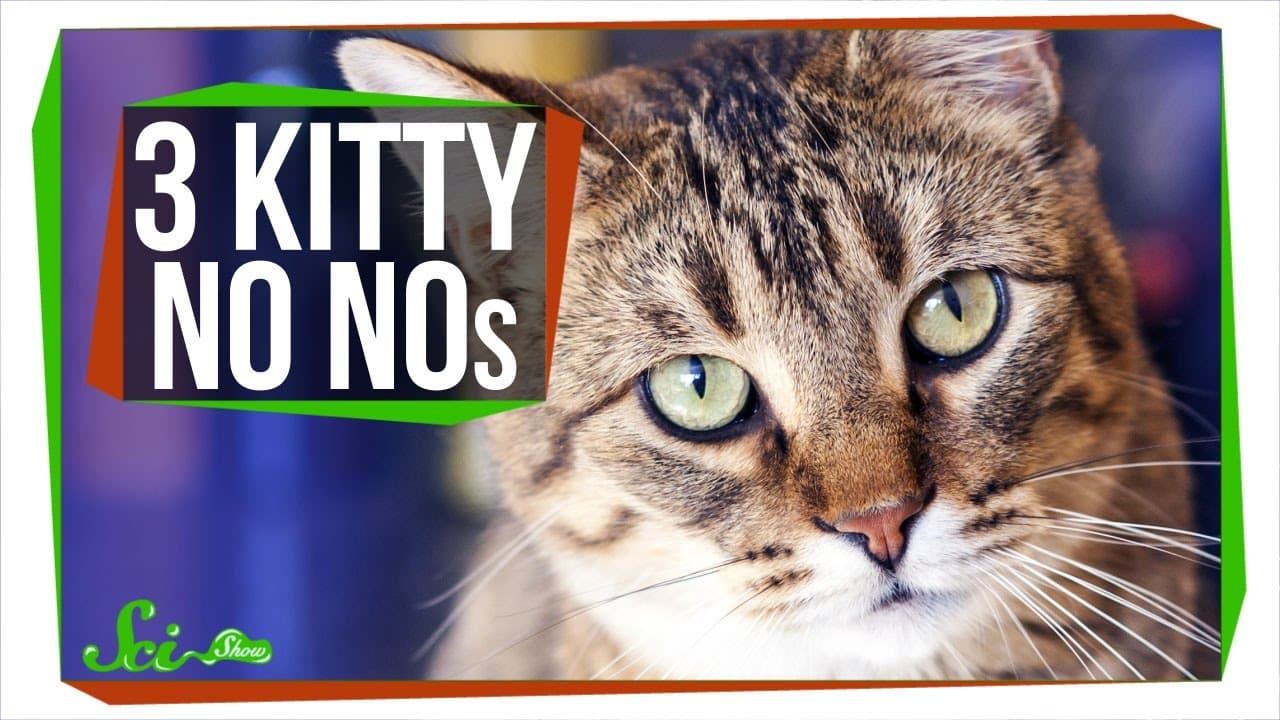
3 Things Your Cat Should Not Be Doing
TL;DR
Cats getting into alcohol or toothpaste and excessive shedding may have serious health consequences.
Transcript
Cats love to do things they’re not supposed to do, from jumping on counters to scratching up your couch. And yeah, that stuff is annoying, but most of the time, it’s not that big a deal. In some cases, though, a cat’s behavior can have serious consequences for their health. Like if they get into your liquor cabinet, or your toothpaste. Or even if t... Read More
Key Insights
- 😺 Alcohol is incredibly dangerous for cats, causing serious symptoms even in small amounts.
- 😘 Toothpaste containing xylitol is toxic to both cats and dogs, leading to low blood sugar and severe symptoms.
- 😺 Excessive shedding in cats may be a sign of underlying health issues, such as hyperthyroidism.
- 😺 Hyperthyroidism in cats can have dangerous side effects and requires prompt treatment.
- 👻 Cats should not be allowed to ingest alcohol or toothpaste containing xylitol.
- 🙃 Regular veterinary check-ups are important to catch and treat potential health problems in cats.
- 😺 Cats' behaviors may be strange, but there are certain things they should not be doing for their own health and safety.
Install to Summarize YouTube Videos and Get Transcripts
Explore YouTube Video Summarizer or Get YouTube Transcript Extractor
Questions & Answers
Q: What are the potential consequences of cats ingesting alcohol?
Alcohol can cause decreased coordination, difficulty breathing, comas, or even death in cats, as they are much smaller compared to humans.
Q: Why is toothpaste toxic to cats?
Toothpaste often contains xylitol, which is extremely toxic to both cats and dogs. Ingesting xylitol can result in hypoglycemia, leading to weakness, vomiting, seizures, and comas.
Q: What could be causing excessive shedding in cats?
Excessive shedding in cats can be caused by allergies, stress, a poor diet, fleas, or potentially more serious underlying conditions such as hyperthyroidism.
Q: How can hyperthyroidism affect cats and how is it treated?
Hyperthyroidism can cause hair and weight loss, increased appetite and thirst, hyperactivity, vomiting, diarrhea, and increased urination. It can lead to heart problems. Treatment typically involves medication, such as methimazole, to decrease hormone production.
Summary & Key Takeaways
-
Cats should not be allowed to ingest alcohol as it can cause serious symptoms such as decreased coordination, difficulty breathing, comas, or even death.
-
Toothpaste containing xylitol is toxic to both cats and dogs and can lead to hypoglycemia, causing weakness, vomiting, seizures, and comas.
-
Excessive shedding in cats can be caused by allergies, stress, poor diet, fleas, or more seriously, hyperthyroidism, which can have dangerous side effects.
Read in Other Languages (beta)
Share This Summary 📚
Summarize YouTube Videos and Get Video Transcripts with 1-Click
Try YouTube Summary with ChatGPT & Claude or YouTube Transcript Generator
Explore More Summaries from SciShow 📚



Summarize YouTube Videos and Get Video Transcripts with 1-Click
Try YouTube Summary with ChatGPT & Claude or YouTube Transcript Generator