What Happens When the Sun Dies?
TL;DR
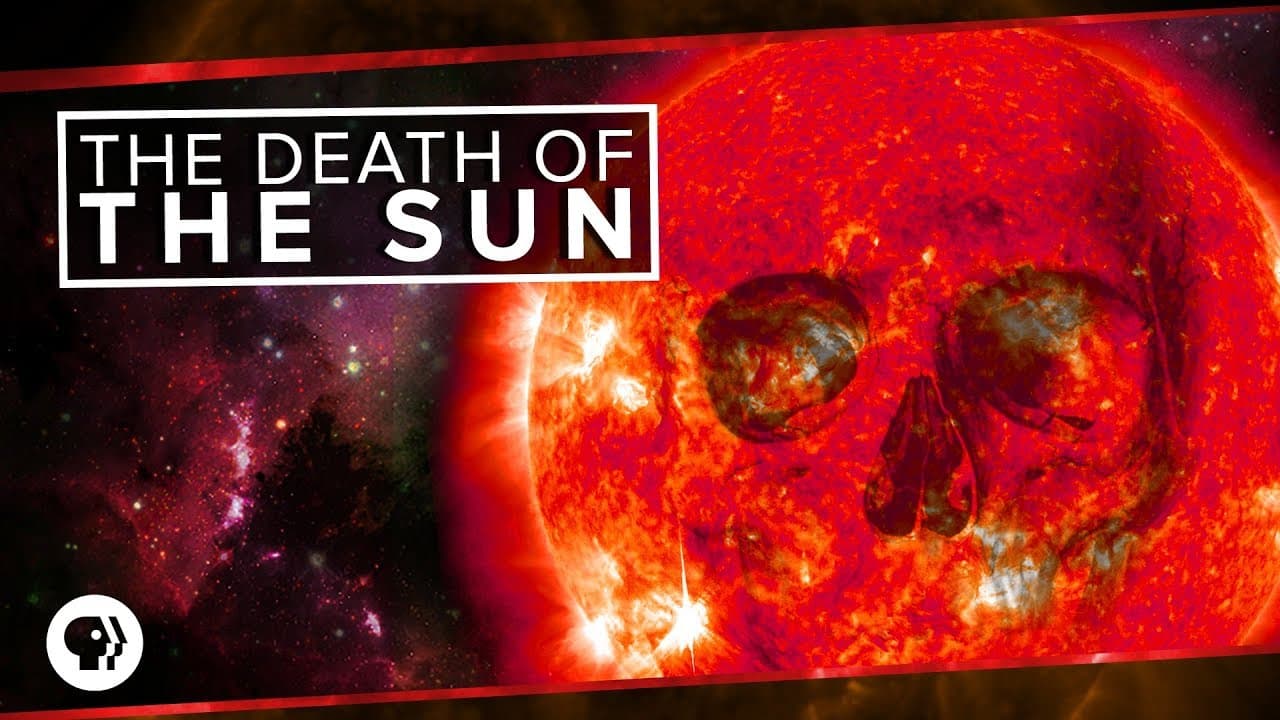
The Sun will eventually exhaust its hydrogen fuel, leading to a series of transformations. It will expand into a red giant, potentially engulfing Earth, before shedding its outer layers and becoming a white dwarf. This process highlights the life cycle of stars, which varies based on their mass.
Transcript
The year is 5.4 billion. Earth is lifeless. What was once a pale blue dot is now a desolate brown rock. The Sun has inflated to around 1.5 times its original size and shines brighter than ever before. But something new is about to happen. In just a moment, our star will fuse the last of the hydrogen in its core, triggering a cataclysmic sequence of... Read More
Key Insights
- Stars, like the Sun, have life cycles that end when they exhaust their hydrogen fuel.
- The Sun will expand into a red giant, potentially engulfing Earth within its outer layers.
- As the Sun becomes a red giant, its core will collapse and trigger helium fusion.
- Helium fusion in the Sun will eventually lead to the formation of a carbon-oxygen core.
- The Sun will lose mass through stellar winds, affecting the orbits of nearby planets.
- The final stage of the Sun's life is as a white dwarf, a dense remnant of its core.
- The habitable zone of the solar system will shift during the Sun's red giant phase.
- Theoretical models vary on whether Earth will survive the Sun's red giant phase.
Install to Summarize YouTube Videos and Get Transcripts
Explore YouTube Video Summarizer or Get YouTube Transcript Extractor
Questions & Answers
Q: What happens when the Sun runs out of hydrogen fuel?
When the Sun exhausts its hydrogen fuel, it will undergo a transformation into a red giant. The core will collapse, triggering helium fusion, and the outer layers will expand significantly. This process will eventually lead to the Sun becoming a white dwarf, a dense remnant of its core, after shedding its outer layers.
Q: Will Earth be engulfed by the Sun during its red giant phase?
There's a possibility that Earth could be engulfed by the Sun during its red giant phase. As the Sun expands, its outer layers may reach Earth's orbit. However, mass loss from the Sun's stellar winds could also cause Earth's orbit to expand, potentially allowing it to escape engulfment. The outcome remains uncertain.
Q: What is a white dwarf, and how does the Sun become one?
A white dwarf is the dense core remnant of a star like the Sun after it has shed its outer layers. The Sun will become a white dwarf after it exhausts its helium fuel, forming a carbon-oxygen core. It will then lose its outer layers through stellar winds, leaving behind a glowing, dense core that will cool over billions of years.
Q: How does the Sun's transformation affect the solar system's habitable zone?
During the Sun's red giant phase, the solar system's habitable zone will temporarily expand beyond Neptune's current orbit. This shift could make the moons of outer planets temporarily habitable. However, as the Sun becomes a white dwarf, the habitable zone will contract, leaving the solar system a much colder and less hospitable place.
Q: What causes the Sun to expand into a red giant?
The Sun expands into a red giant when it exhausts the hydrogen in its core, causing the core to collapse and heat up. This triggers hydrogen shell burning around the core, leading to the expansion of the Sun's outer layers. The increased energy output causes the Sun to grow significantly in size and luminosity.
Q: How long does the Sun's red giant phase last?
The Sun's red giant phase will last for a few hundred million years. Initially, the Sun will expand slowly over a few hundred million years, but the process will accelerate as it approaches the red giant stage. The final red giant phase, where the Sun reaches its maximum size, lasts only a few tens of millions of years before it sheds its outer layers.
Q: What is the helium flash, and why is it significant?
The helium flash is a sudden ignition of helium fusion in the Sun's core once it reaches a critical temperature of about 100 million kelvin. This event is significant because it marks the transition from hydrogen shell burning to helium fusion, providing the Sun with a new energy source and temporarily stabilizing the core before it eventually becomes a white dwarf.
Q: What are the potential outcomes for Earth after the Sun's red giant phase?
Earth's fate after the Sun's red giant phase is uncertain. It may be engulfed by the Sun, leading to its vaporization, or it might escape engulfment due to the expansion of its orbit caused by the Sun's mass loss. If Earth survives, it could end up as a desolate world orbiting the Sun's white dwarf remnant, or its iron core may continue to orbit the white dwarf.
Summary & Key Takeaways
-
The Sun's life cycle will culminate in its expansion into a red giant, potentially engulfing Earth. This occurs as the Sun exhausts its hydrogen fuel, leading to helium fusion and the formation of a carbon-oxygen core. The Sun will eventually shed its outer layers and become a white dwarf, a dense remnant of its former self.
-
As the Sun expands into a red giant, its gravitational hold weakens due to mass loss from stellar winds. This may cause Earth's orbit to expand, though it's uncertain if Earth will escape the Sun's engulfing outer layers. The Sun's transformation highlights the varied life cycles of stars, dependent on their mass.
-
The Sun's red giant phase will temporarily expand the solar system's habitable zone beyond Neptune's orbit. This shift provides a brief refuge for potential life on the moons of outer planets. Ultimately, the Sun will become a white dwarf, and the solar system will be left with a glowing ember of its former star.
Read in Other Languages (beta)
Share This Summary 📚
Summarize YouTube Videos and Get Video Transcripts with 1-Click
Try YouTube Summary with ChatGPT & Claude or YouTube Transcript Generator
Explore More Summaries from PBS Space Time 📚





Summarize YouTube Videos and Get Video Transcripts with 1-Click
Try YouTube Summary with ChatGPT & Claude or YouTube Transcript Generator