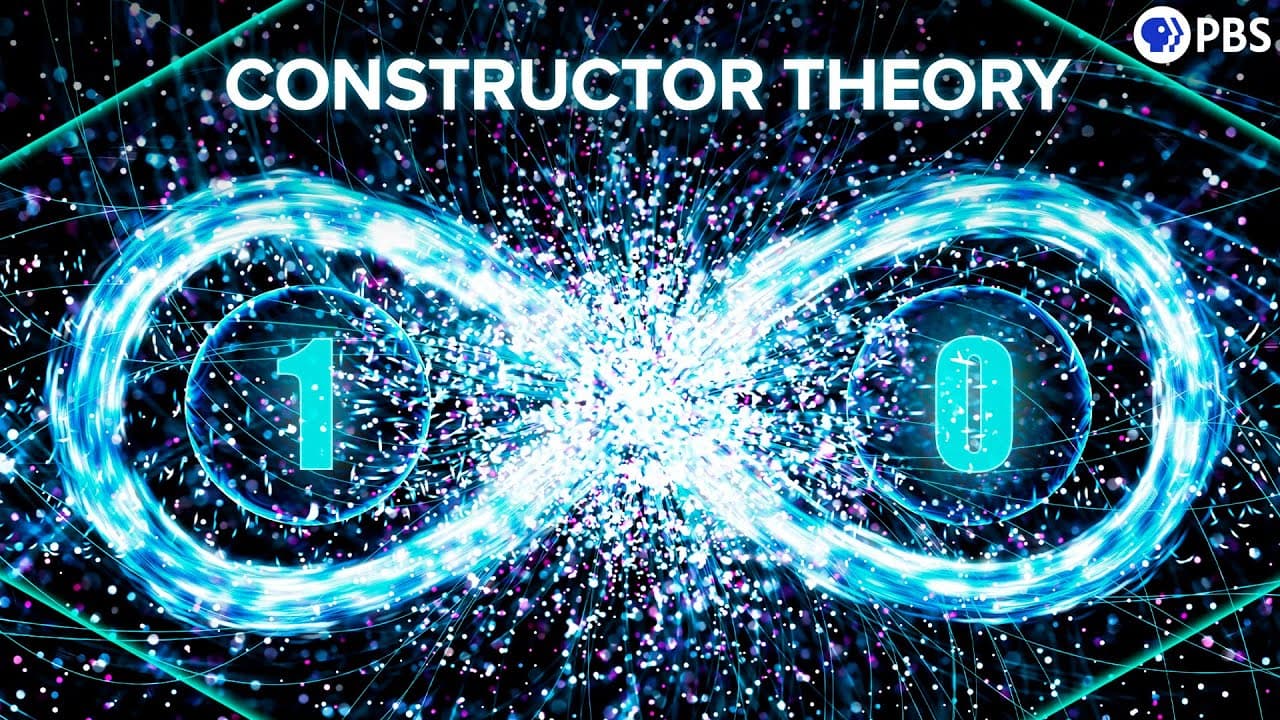
How Does Constructor Theory Redefine Physics?
TL;DR
Constructor theory proposes a new framework for physics, focusing on what processes are possible or impossible rather than on dynamical equations. It aims to unify existing theories by defining tasks that can be performed by a system, providing insights into areas like quantum gravity without needing detailed equations.
Transcript
The people behind the greatest leaps in physics
- Einstein, Newton, Heisenberg, all had the uncanny ability to see the fundamentals - see the deepest, underlying facts about the world, and from simple statements about reality they built up their incredible theories. Well what if we all had a recipe book for doing exactly this. Well, one might be ju... Read More
Key Insights
- Constructor theory focuses on binary facts about process possibilities rather than detailed equations.
- It uses principles from information theory and quantum computation to explore physics.
- Tasks are transformations between input and output states, determined by constructors.
- Counterfactuals, or meta-facts about task possibilities, are central to constructor theory.
- The theory aims to unify quantum mechanics and general relativity by focusing on possibilities.
- Constructor theory offers a way to explore physics without knowing all dynamical laws.
- It provides a framework for testing concepts like quantum gravity through task possibilities.
- Constructor theory may represent the most fundamental way to describe reality, aiming to derive all physics from it.
Install to Summarize YouTube Videos and Get Transcripts
Explore YouTube Video Summarizer or Get YouTube Transcript Extractor
Questions & Answers
Q: What is constructor theory?
Constructor theory is a framework in physics that focuses on what processes are possible or impossible, rather than relying on detailed dynamical equations. Developed by David Deutsch and Chiara Marletto, it aims to unify existing theories like quantum mechanics and general relativity by defining tasks that systems can perform, emphasizing counterfactuals or meta-facts about task possibilities.
Q: How does constructor theory differ from traditional physics?
Constructor theory differs from traditional physics by focusing on binary facts about process possibilities instead of detailed equations. While traditional physics uses dynamical laws to predict outcomes from initial states, constructor theory defines tasks based on whether they can be performed, using principles from information theory and quantum computation to explore physical possibilities.
Q: What are counterfactuals in constructor theory?
In constructor theory, counterfactuals are meta-facts concerning whether a given task is possible or impossible for a specific constructor. They are central to the theory, as they allow for the exploration of physics by applying general rules about possibilities, rather than relying solely on detailed dynamical equations. Counterfactuals help in understanding aspects of nature where dynamical laws are unknown.
Q: How does constructor theory aim to unify quantum mechanics and general relativity?
Constructor theory aims to unify quantum mechanics and general relativity by focusing on what is possible and impossible, rather than detailed equations. It provides a framework to explore the union of these theories by defining tasks that can be performed by a system, allowing for insights into areas like quantum gravity without needing a full mechanistic theory.
Q: What role does information theory play in constructor theory?
Information theory plays a crucial role in constructor theory by providing tools to focus on what can and can't be done with information. It allows the theory to be applied even when dynamical laws are unknown, using concepts like information media and superinformation media to explore possibilities in systems, such as testing quantum properties of gravity through task possibilities.
Q: Can constructor theory test quantum gravity?
Yes, constructor theory can provide a framework for testing quantum gravity by focusing on task possibilities rather than detailed equations. Chiara Marletto has used constructor theory to propose a scenario for testing whether gravity is quantum in nature, offering an experimental test that does not rely on a specific theory of quantum gravity, but rather on the interaction of informational elements.
Q: What is the significance of tasks in constructor theory?
In constructor theory, tasks represent transformations between input and output states, determined by whether a system, or constructor, can perform them. Tasks are central to the theory as they define what is possible or impossible, providing a new way to explore physics by focusing on possibilities rather than detailed dynamical equations, potentially unifying existing theories.
Q: How might constructor theory redefine the understanding of reality?
Constructor theory might redefine the understanding of reality by offering a fundamental framework that describes all of physics based on what is possible and impossible. It aims to derive existing theories from simple facts about task possibilities, similar to how previous great theories emerged from deductive reasoning and simple facts, potentially providing a more unified and fundamental description of the universe.
Summary & Key Takeaways
-
Constructor theory offers a new perspective in physics by focusing on what processes are possible or impossible, rather than relying on dynamic equations. This approach, developed by David Deutsch and Chiara Marletto, aims to unify existing theories like quantum mechanics and general relativity by defining tasks that can be performed by a system.
-
The theory is inspired by information theory and quantum computation, emphasizing counterfactuals, or meta-facts about task possibilities. By applying general rules about possibilities, constructor theory can explore areas of physics where dynamical laws are unknown, like quantum gravity, offering a new framework for understanding the universe.
-
Constructor theory's potential lies in its ability to describe reality at a fundamental level, possibly allowing all of physics to be derived from it. This ambitious goal is reminiscent of past great theories, which emerged from deductive reasoning and simple facts about the world, aiming to formalize logical deductions from the barest facts of possibility and impossibility.
Read in Other Languages (beta)
Share This Summary 📚
Summarize YouTube Videos and Get Video Transcripts with 1-Click
Try YouTube Summary with ChatGPT & Claude or YouTube Transcript Generator
Explore More Summaries from PBS Space Time 📚
Summarize YouTube Videos and Get Video Transcripts with 1-Click
Try YouTube Summary with ChatGPT & Claude or YouTube Transcript Generator