NASA Celebrates 15 Years on the ISS
TL;DR
NASA reflects on 15 years of progress and future prospects on the ISS.
Transcript
let's talk about space you were on Expedition 630 and 31 over 15 years how has life on the ISS changed the first time I was on Space Station it was under construction it's like living in your house while you're still building it and you have a a bucket where the kitchen sink is supposed to be and then you find out that you have to entertain the bos... Read More
Key Insights
- The ISS has evolved significantly over 15 years, transitioning from a construction site to a fully operational research facility, highlighting the complexities of building and living in space simultaneously.
- NASA no longer uses astronaut ice cream due to its messiness in microgravity, illustrating the unique challenges of food consumption in space environments.
- The ISS technology has advanced from Pentium processors to more sophisticated systems, though core functions rely on radiation-hardened 486 processors to withstand cosmic radiation.
- NASA's funding remains heavily reliant on federal budgets, with future exploration increasingly dependent on partnerships with private companies like SpaceX and Blue Origin.
- The emergence of commercial spaceflight is seen as crucial for the future of space exploration, providing increased robustness and diversity in spacecraft development.
- Astronauts on the ISS engage in various activities during off-duty time, such as watching movies, reading, and conducting personal science experiments to maintain mental well-being.
- The involvement of private companies in space exploration is compared to the barnstorming days of aviation, suggesting a new era of innovation and expansion in the space industry.
- The ISS serves as a platform for international cooperation and technological advancement, with private and public sectors working together to enhance human space exploration capabilities.
Install to Summarize YouTube Videos and Get Transcripts
Explore YouTube Video Summarizer or Get YouTube Transcript Extractor
Questions & Answers
Q: How has life on the ISS changed over the years?
Life on the ISS has evolved from a construction-focused environment to a fully operational research facility. Initially, astronauts had to manage living in a space still under construction, similar to residing in a house being built. Over time, the station has become more equipped with advanced technology, allowing for more efficient scientific research and daily living activities.
Q: Why is astronaut ice cream no longer used on the ISS?
Astronaut ice cream is no longer used on the ISS because it created a mess in the microgravity environment. The crumbs from the ice cream would float around, becoming hygroscopic and sticking to surfaces, which posed challenges for maintaining a clean and functional space station environment. This decision reflects the need for practical and manageable food options in space.
Q: What technological upgrades have been made on the ISS?
The ISS has seen significant technological upgrades over the years. Initially equipped with Pentium processors, the station now uses more advanced systems. However, the core computers running the station are still based on 486 processors due to their radiation-hardened design, which is crucial for withstanding cosmic radiation and ensuring operational reliability in space.
Q: How does NASA's funding affect its operations and future plans?
NASA's operations and future plans are heavily influenced by federal funding, which is crucial for maintaining and expanding its space exploration initiatives. The agency's reliance on government budgets means that changes in political priorities and economic conditions can impact its ability to pursue long-term projects. Additionally, partnerships with private companies are becoming increasingly important for future missions.
Q: What is the role of private companies in space exploration?
Private companies play a vital role in the future of space exploration by providing additional resources, innovation, and competition. Companies like SpaceX and Blue Origin are developing commercial spacecraft, contributing to a more robust and diverse space program. This collaboration between public and private sectors is essential for advancing human space exploration capabilities and ensuring a sustainable presence in space.
Q: How do astronauts spend their off-duty time on the ISS?
Astronauts on the ISS have scheduled off-duty time, which they use to engage in various activities for relaxation and mental well-being. They can watch DVD movies, read books, or conduct personal science experiments. This time is crucial for maintaining their psychological health, as living in a confined space environment can be challenging over extended periods.
Q: What is the significance of commercial spaceflight for NASA?
Commercial spaceflight is significant for NASA as it enhances the agency's capabilities and provides additional avenues for innovation and exploration. By partnering with private companies, NASA can leverage their expertise and resources, resulting in more diverse and resilient space missions. This collaboration is seen as a key factor in the future success of human space exploration.
Q: How does the ISS contribute to international cooperation in space?
The ISS serves as a platform for international cooperation, bringing together space agencies from different countries to work on shared goals. This collaboration fosters technological advancement and cultural exchange, strengthening diplomatic ties and promoting peaceful use of outer space. The ISS exemplifies how nations can work together to achieve significant scientific and exploratory milestones.
Summary & Key Takeaways
-
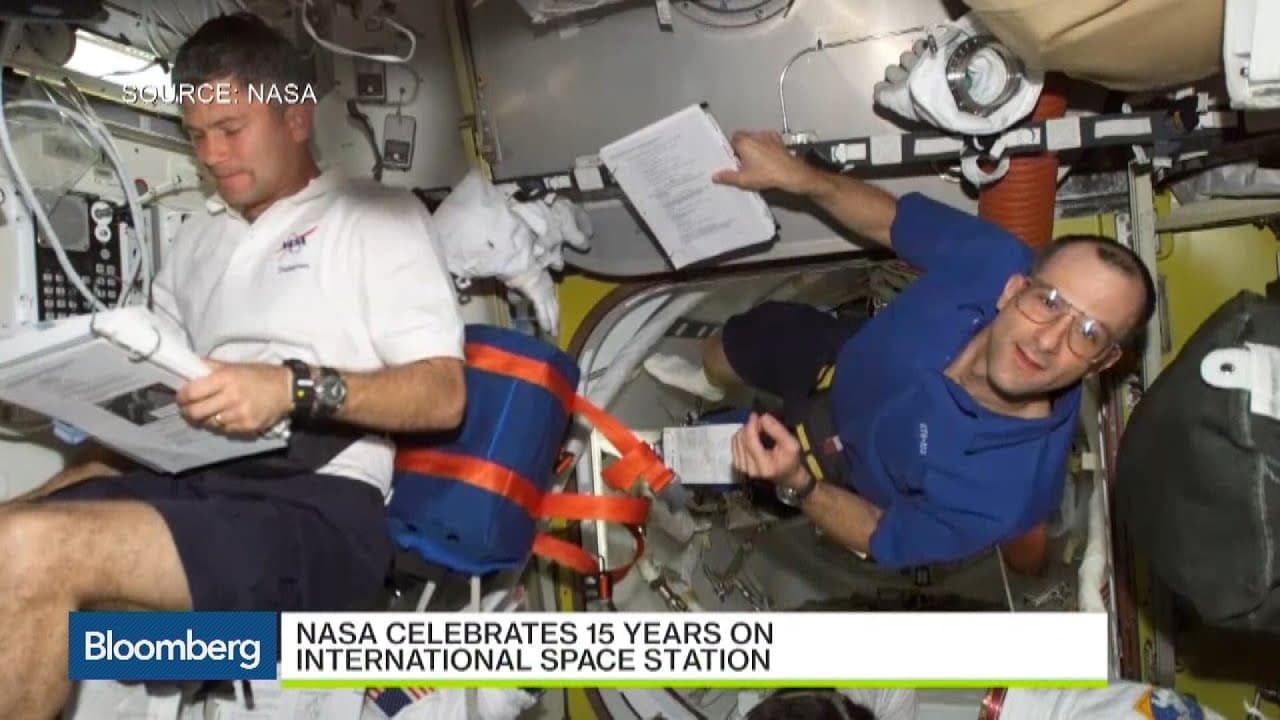
NASA celebrates 15 years of continuous human presence on the International Space Station, reflecting on its transformation from a construction site to a research hub. The discussion highlights technological upgrades and the shift towards private sector involvement in space exploration.
-
Astronaut Don Pettit shares his experiences on the ISS, noting the evolution of technology and daily life in space. He emphasizes the importance of commercial partnerships and the potential for a robust future in space exploration.
-
The conversation touches on funding challenges and the excitement surrounding private space ventures. Pettit also describes how astronauts spend their off-duty time, engaging in activities to maintain their mental well-being while living in space.
Read in Other Languages (beta)
Share This Summary 📚
Summarize YouTube Videos and Get Video Transcripts with 1-Click
Try YouTube Summary with ChatGPT & Claude or YouTube Transcript Generator
Explore More Summaries from Bloomberg Originals 📚






Summarize YouTube Videos and Get Video Transcripts with 1-Click
Try YouTube Summary with ChatGPT & Claude or YouTube Transcript Generator