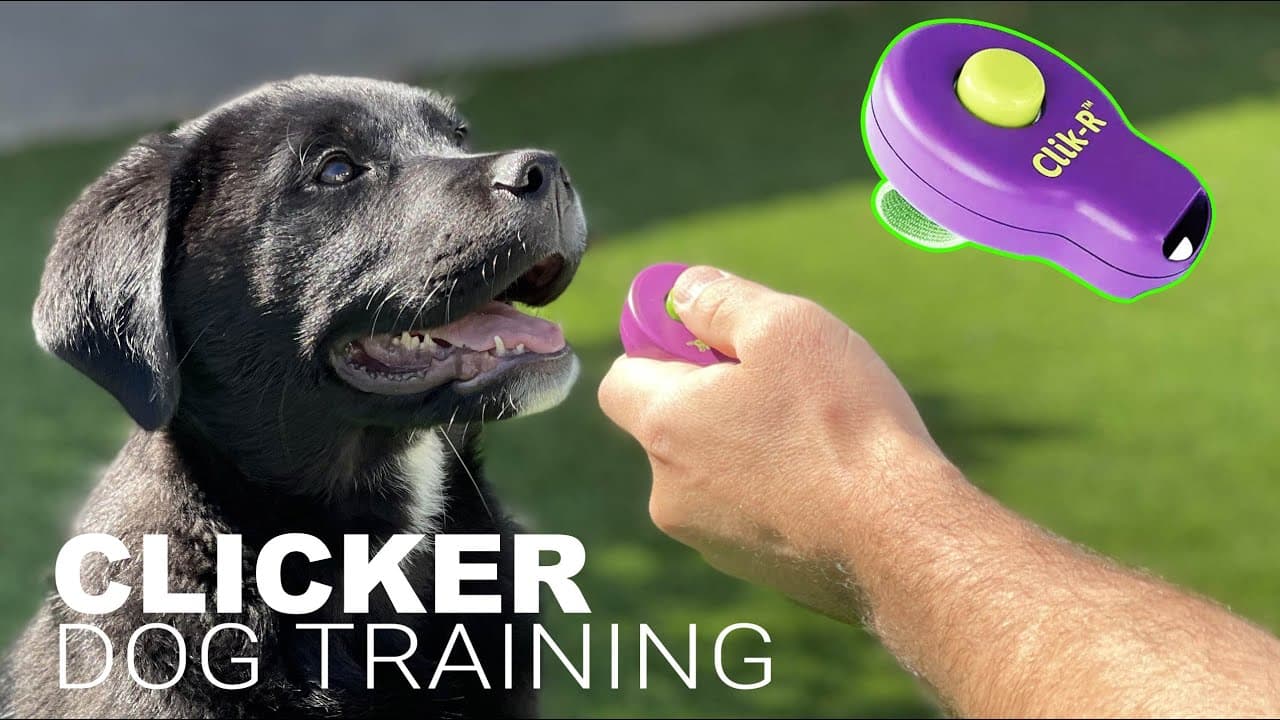
How to Train Your Dog with a CLICKER.
TL;DR
Learn effective clicker training methods for puppies.
Transcript
normally when i train a dog i use verbal markers meaning i say yes which means the dog's going to receive a reward or i say free which means a dog is released and they're going to receive a reward but i'm often asked by people how can they do the training by using a clicker a clicker is a very common tool that's used in the dog training industry so... Read More
Key Insights
- Clicker training uses the click as a terminal marker, signaling the dog to receive a reward and be released from a position.
- Verbal praise can replace the continuation marker in clicker training, especially when working on duration-based commands like stay.
- Effective clicker training involves timing the click precisely when the dog completes the desired behavior.
- The clicker serves as a paycheck for the dog; it has value because it consistently predicts a reward.
- Using a combination of leash pressure and luring can aid in teaching commands effectively with a clicker.
- Incorporating a variety of commands makes training more engaging and enjoyable for the dog, improving performance.
- Teaching a negative reinforcement marker like 'wrong' helps the dog understand what actions to avoid without punishment.
- Conditioning a dog to a clicker involves repeated sessions where the click precedes the reward, ensuring the dog associates the sound with positive outcomes.
Install to Summarize YouTube Videos and Get Transcripts
Explore YouTube Video Summarizer or Get YouTube Transcript Extractor
Questions & Answers
Q: How does clicker training differ from verbal marker training?
Clicker training uses a click sound as a terminal marker, signaling the dog to receive a reward and be released from a position. Unlike verbal markers, which may use different words for continuation and terminal markers, the clicker simplifies the process by serving as a consistent signal for reward, making it easier for dogs to understand and respond.
Q: What is the significance of timing in clicker training?
Timing is crucial in clicker training because the click must occur immediately after the dog completes the desired behavior. This precise timing helps the dog clearly associate the click with the specific action, reinforcing the behavior effectively. Delayed clicks can confuse the dog, weakening the association and reducing training effectiveness.
Q: Why is a clicker compared to a paycheck for dogs?
A clicker is compared to a paycheck because it consistently predicts a reward, similar to how a paycheck represents compensation for work. The click's value lies in its reliability; it always signals an impending reward, reinforcing the dog's behavior and making the training process more effective and motivating for the dog.
Q: What role does verbal praise play in clicker training?
In clicker training, verbal praise can replace continuation markers, especially for duration-based commands like stay. While the click serves as a terminal marker, verbal praise provides ongoing feedback and encouragement, helping to maintain the dog's engagement and focus during training, particularly when working on commands requiring sustained behavior.
Q: How can negative reinforcement be incorporated into clicker training?
Negative reinforcement can be incorporated into clicker training by using a specific marker, such as 'wrong,' to signal the dog when an undesirable action occurs. This helps the dog understand what actions to avoid without resorting to positive punishment. The marker predicts leash pressure, guiding the dog back to the desired behavior, enhancing learning.
Q: What are the benefits of using a variety of commands in training?
Using a variety of commands in training keeps the process engaging and interesting for the dog, preventing boredom and enhancing learning. Incorporating diverse commands like sit, down, spin, and heel makes training sessions dynamic and fun, improving the dog's overall performance and responsiveness, as they enjoy the varied and stimulating activities.
Q: How can you test if a dog is conditioned to a clicker?
To test if a dog is conditioned to a clicker, observe for behavioral changes after the click, such as salivating, licking lips, or moving paws, without offering a reward. These responses indicate the dog associates the click with a reward. A lack of response, like a blank stare, suggests the dog hasn't yet made the connection.
Q: What common mistakes should be avoided in clicker training?
Common mistakes in clicker training include using the clicker to get the dog's attention, which can inadvertently reward inattentiveness. Additionally, failing to deliver the primary reinforcer after the click undermines the clicker's value. It's crucial to ensure the click precedes the reward and is used to reinforce desired behaviors, not to redirect attention.
Summary & Key Takeaways
-
Clicker training is an effective method for dog training, using the click as a terminal marker to signal reward and release. The timing of the click is crucial, occurring immediately after the desired behavior is completed. This method makes training engaging and fun, improving the dog's overall performance.
-
In clicker training, verbal praise replaces continuation markers, especially for duration-based commands. A combination of leash pressure and luring aids in command teaching. Incorporating various commands keeps training interesting, enhancing the dog's engagement and enjoyment, which leads to better performance.
-
Conditioning a dog to a clicker involves ensuring the click consistently predicts a reward. A negative reinforcement marker like 'wrong' helps the dog learn what actions to avoid. The clicker serves as a valuable tool, akin to a paycheck, due to its consistent reward prediction.
Read in Other Languages (beta)
Share This Summary 📚
Summarize YouTube Videos and Get Video Transcripts with 1-Click
Try YouTube Summary with ChatGPT & Claude or YouTube Transcript Generator
Explore More Summaries from Nate Schoemer 📚




Summarize YouTube Videos and Get Video Transcripts with 1-Click
Try YouTube Summary with ChatGPT & Claude or YouTube Transcript Generator