Should We Colonize Venus Instead of Mars?
TL;DR
Venus may be a better colonization option than Mars.
Transcript
[MUSIC PLAYING] There's a lot of talk about sending humans to Mars. But no one talks about Venus. Why not? And could Venus actually be the better option for a human colony? [MUSIC PLAYING] Going to Mars has been a fixture in our collective cultural consciousness for a very long time. It's inspired more sci-fi movies and stories than I can count, a ... Read More
Key Insights
- Venus is closer to Earth than Mars, potentially reducing travel time and costs for manned missions by 30% to 50%.
- Mars has inspired more cultural interest and media compared to Venus, affecting space policy decisions.
- Venus offers four times more solar power due to its proximity to the sun, unlike Mars.
- The thick atmosphere of Venus provides better protection from radiation and meteorites compared to Mars.
- Venus has a gravity of 0.9 Earth g's, closer to Earth's, making it potentially better for human health than Mars' 0.4 g's.
- Surface conditions on Venus are extreme, with temperatures over 450 degrees Celsius and pressure over 90 Earth atmospheres.
- At 50 kilometers above Venus' surface, conditions become more Earth-like, with temperatures around 70 degrees Celsius and Earth-like atmospheric pressure.
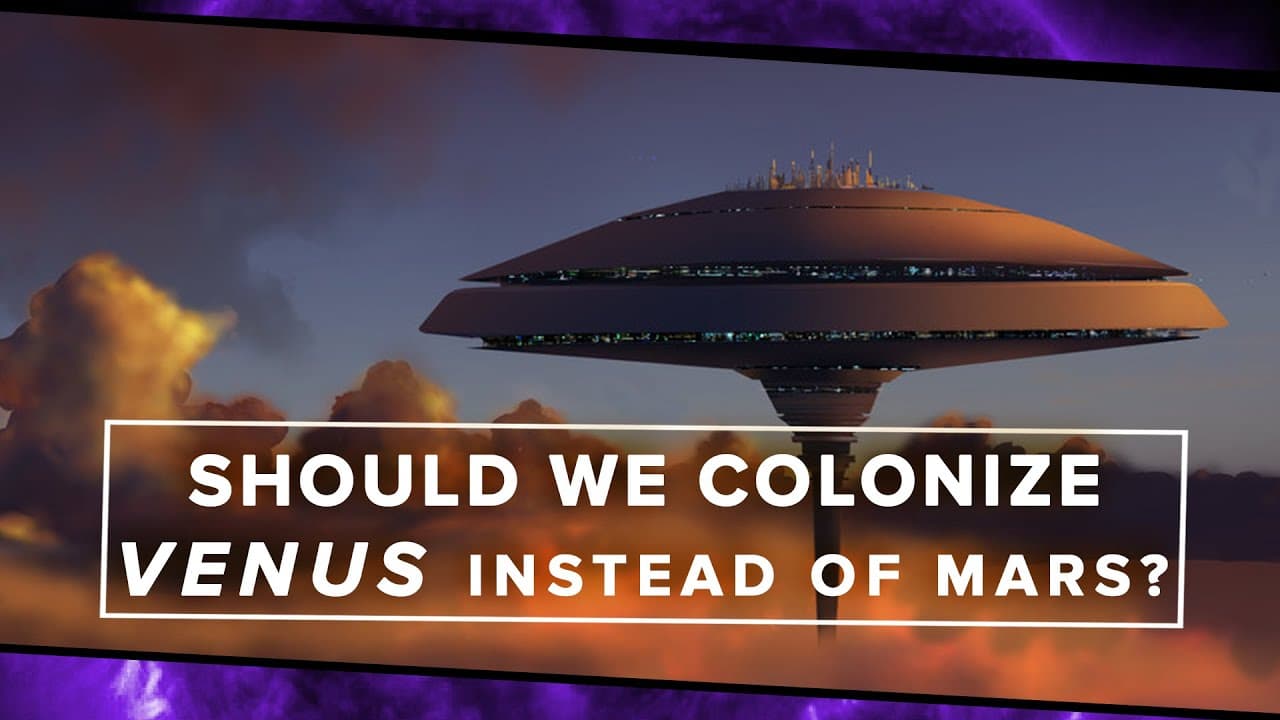
- NASA's HAVOC project proposes colonizing Venus with floating cloud cities, utilizing the upper atmosphere's more hospitable conditions.
Install to Summarize YouTube Videos and Get Transcripts
Explore YouTube Video Summarizer or Get YouTube Transcript Extractor
Questions & Answers
Q: Why is Venus considered a viable option for colonization?
Venus is considered a viable option for colonization because it is closer to Earth, which reduces travel time and costs. Additionally, it provides more solar power, a protective atmosphere, and gravity closer to Earth's, which are advantageous for long-term human habitation compared to Mars.
Q: What are the challenges of colonizing the surface of Venus?
The surface of Venus presents extreme challenges for colonization due to its high temperatures, exceeding 450 degrees Celsius, and immense atmospheric pressure, over 90 times that of Earth. These conditions make landing on and living on the surface impractical with current technology.
Q: How does Venus' atmosphere benefit potential colonization efforts?
Venus' thick atmosphere offers significant benefits for colonization efforts, including protection from space radiation and meteorites. At about 50 kilometers above the surface, the atmosphere has Earth-like pressure, making it a potential site for floating habitats, reducing the need for spacesuits.
Q: What is NASA's HAVOC project, and what does it propose?
NASA's HAVOC (High Altitude Venus Operational Concept) project proposes the idea of colonizing Venus using floating cloud cities in the upper atmosphere. This concept leverages the more hospitable conditions found at about 50 kilometers above the surface, where temperatures and pressure are more Earth-like.
Q: How does the gravity on Venus compare to that on Mars and Earth?
Venus has a gravity of about 0.9 Earth g's, which is much closer to Earth's gravity than Mars' gravity, which is less than 0.4 g's. This similarity to Earth's gravity makes Venus a potentially better option for long-term human health and habitation.
Q: Why has Mars received more attention than Venus for colonization?
Mars has received more attention for colonization due to cultural factors, such as its prominence in science fiction and media, leading to a focus on Mars in space policy. This bias, termed 'surfacism,' prioritizes landing on solid surfaces, despite Venus' potential advantages.
Q: What makes the upper atmosphere of Venus similar to Earth's environment?
The upper atmosphere of Venus, around 50 kilometers above the surface, offers conditions similar to Earth's environment, with temperatures around 70 degrees Celsius and pressure close to one Earth atmosphere. These factors make it a more viable location for human habitation than the surface.
Q: How might Venus' proximity to the sun be advantageous for colonization?
Venus' proximity to the sun provides about four times more solar power than Mars, which is advantageous for energy generation and sustainability of a colony. This increased solar energy availability could support various technological and life-support systems necessary for long-term habitation.
Summary & Key Takeaways
-
Venus, despite less cultural attention than Mars, offers several advantages for colonization, including proximity to Earth and more solar energy. Its thick atmosphere provides better protection from space hazards, and its gravity is closer to Earth's, potentially benefiting human health.
-
Mars has dominated space exploration discussions due to cultural fascination, but Venus presents a viable alternative with its shorter travel time and reduced costs. The surface of Venus is inhospitable, but the upper atmosphere offers conditions more similar to Earth.
-
NASA's HAVOC project explores the potential for cloud cities in Venus' upper atmosphere, where conditions are more manageable. This approach could make Venus a more practical option for long-term colonization than Mars, despite the cultural bias towards landing on solid surfaces.
Read in Other Languages (beta)
Share This Summary 📚
Summarize YouTube Videos and Get Video Transcripts with 1-Click
Try YouTube Summary with ChatGPT & Claude or YouTube Transcript Generator
Explore More Summaries from PBS Space Time 📚


Summarize YouTube Videos and Get Video Transcripts with 1-Click
Try YouTube Summary with ChatGPT & Claude or YouTube Transcript Generator