What Led to the Irish Civil War?
TL;DR
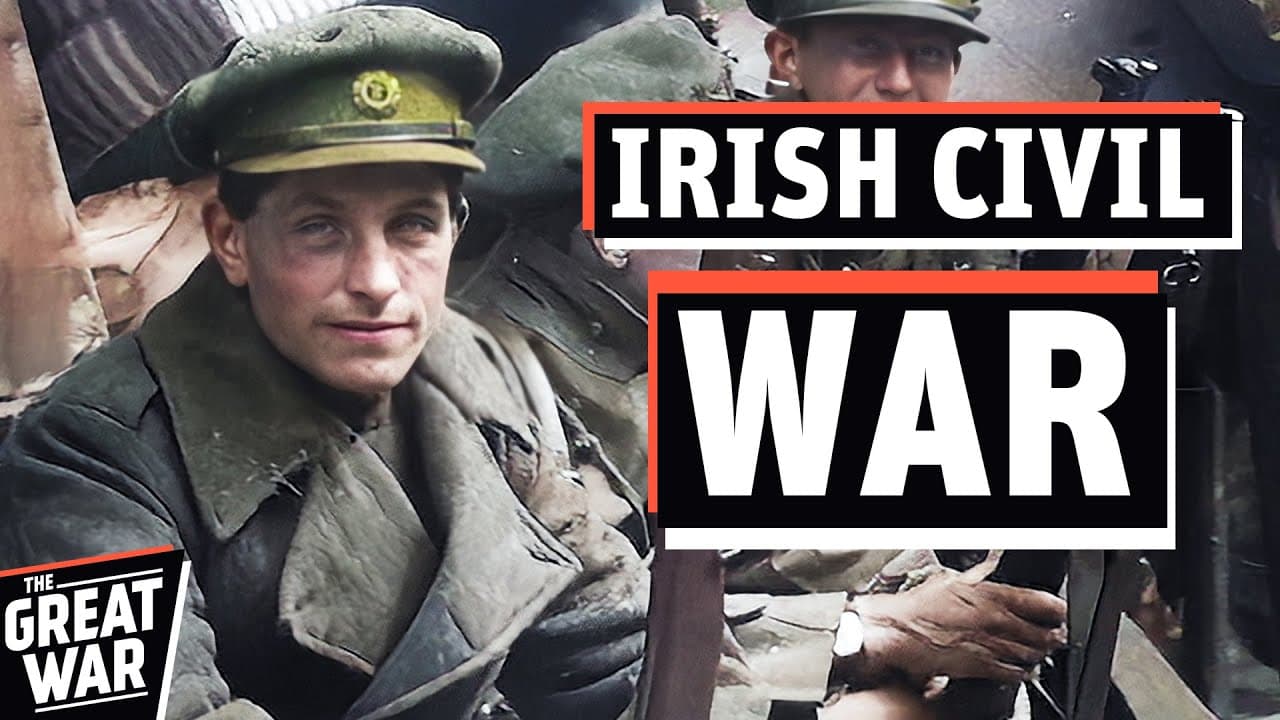
The Irish Civil War erupted due to divisions over the Anglo-Irish Treaty, which granted partial independence but kept Ireland within the British Empire. Pro- and anti-treaty factions emerged, leading to a bitter conflict. The pro-treaty Irish Free State eventually quelled the anti-treaty IRA, aided by British support and a lack of popular backing for the IRA.
Transcript
The long and bloody guerrilla war in Ireland between the Irish Republican Army and the British Army finally came to an end in January 1922. But the peace treaty’s division of the island proved more than controversial: the new Irish state is only a few months old when it descends into civil war. The Anglo-Irish War of 1919-1921 saw the Irish Republi... Read More
Key Insights
- The Anglo-Irish Treaty of 1922 divided Ireland into pro- and anti-treaty factions.
- Eamon De Valera opposed the treaty, while Michael Collins supported it as a step towards full independence.
- The pro-treaty side formed the Provisional Government, while the anti-treaty side rejected its authority.
- The Irish Civil War began with the occupation of the Four Courts by anti-treaty forces in April 1922.
- Michael Collins was assassinated during the conflict, a significant blow to the pro-treaty side.
- The National Army, supported by Britain, ultimately defeated the IRA due to superior firepower and lack of public support for the IRA.
- The civil war ended in 1923, leaving a legacy of division and violence in Ireland.
- Public support was crucial; the Free State was seen as the legitimate government capable of ensuring stability.
Install to Summarize YouTube Videos and Get Transcripts
Explore YouTube Video Summarizer or Get YouTube Transcript Extractor
Questions & Answers
Q: Why did the Irish Civil War start?
The Irish Civil War began due to deep divisions over the Anglo-Irish Treaty, signed in 1922. The treaty offered Ireland partial independence as a Free State within the British Empire, but required an oath of allegiance to the British crown and partitioned six counties in the north. This led to a split between pro-treaty forces, who saw it as a stepping-stone to full independence, and anti-treaty forces, who viewed it as a betrayal of the Irish Republic declared in 1916.
Q: What was the outcome of the Irish Civil War?
The Irish Civil War concluded with a victory for the pro-treaty forces, establishing the Irish Free State as the legitimate government. The National Army, supported by British military resources, defeated the anti-treaty IRA, which lacked sufficient public support and resources. The conflict resulted in approximately 1,500 deaths, widespread destruction, and a lasting legacy of political division and bitterness in Ireland.
Q: How did the Anglo-Irish Treaty affect Ireland?
The Anglo-Irish Treaty, signed in 1922, had profound effects on Ireland. It ended the Anglo-Irish War and established the Irish Free State, granting limited self-governance while remaining part of the British Empire. The treaty's terms, including the partition of Northern Ireland and the oath of allegiance to the British crown, sparked controversy and division, leading to the Irish Civil War between pro- and anti-treaty factions.
Q: What role did Michael Collins play in the Irish Civil War?
Michael Collins was a central figure in the Irish Civil War, leading the pro-treaty forces as Chairman of the Provisional Government. He supported the Anglo-Irish Treaty, viewing it as a pragmatic step towards full independence. Collins' leadership was pivotal in organizing the National Army and securing British support. His assassination in 1922 was a significant blow to the pro-treaty side, but the National Army continued to advance, ultimately defeating the anti-treaty forces.
Q: What were the main tactics used by the IRA during the Irish Civil War?
During the Irish Civil War, the anti-treaty IRA initially attempted to hold strategic positions, such as the Four Courts in Dublin. However, as the conflict progressed, they reverted to guerrilla tactics similar to those used against the British during the Anglo-Irish War. This included ambushes, sabotage, and hit-and-run attacks. Despite some successes, these tactics were less effective against the well-armed and organized National Army, which had superior resources and public support.
Q: How did public opinion influence the outcome of the Irish Civil War?
Public opinion played a crucial role in the outcome of the Irish Civil War. The pro-treaty Irish Free State was seen by many as the legitimate government capable of providing stability and rebuilding the country. In contrast, the anti-treaty IRA's actions, including attacks on infrastructure and perceived obstruction of peace, led to a loss of popular support. This lack of public backing weakened the IRA's position and contributed to their eventual defeat by the National Army.
Q: What were the consequences of the Irish Civil War?
The Irish Civil War had significant and lasting consequences for Ireland. It solidified the establishment of the Irish Free State and marked the beginning of a new political order. However, the conflict left deep political and social divisions, with lingering bitterness between pro- and anti-treaty factions. The war also resulted in significant loss of life and economic disruption. These divisions persisted for decades, influencing Irish politics and contributing to ongoing tensions in Northern Ireland.
Q: How did the British government influence the Irish Civil War?
The British government played a significant role in the Irish Civil War by supporting the pro-treaty Irish Free State. They provided the National Army with military resources, including rifles, artillery, and armored vehicles, which were crucial in countering the anti-treaty IRA. British pressure also influenced key decisions, such as the ultimatum to the Four Courts occupiers. This support helped the Free State to establish itself as the legitimate government and ultimately defeat the IRA.
Summary & Key Takeaways
-
The Irish Civil War stemmed from the contentious Anglo-Irish Treaty, which split Ireland into pro- and anti-treaty factions. Pro-treaty forces, supported by Britain, established the Irish Free State, while the anti-treaty IRA resisted, leading to a brutal conflict. The National Army's superior resources and the IRA's lack of public support resulted in a pro-treaty victory.
-
Eamon De Valera led the opposition to the treaty, while Michael Collins supported it, believing it was a step towards full independence. The pro-treaty side formed a government, but the anti-treaty IRA occupied the Four Courts, igniting the civil war. The conflict was marked by significant violence and the assassination of Collins.
-
Despite initial setbacks, the National Army, bolstered by British military aid, gained the upper hand. The IRA's guerrilla tactics, effective against the British, failed against the Free State due to a lack of public support. The civil war ended in 1923, but its legacy of division persisted in Ireland for decades.
Read in Other Languages (beta)
Share This Summary 📚
Summarize YouTube Videos and Get Video Transcripts with 1-Click
Try YouTube Summary with ChatGPT & Claude or YouTube Transcript Generator
Explore More Summaries from The Great War 📚
Summarize YouTube Videos and Get Video Transcripts with 1-Click
Try YouTube Summary with ChatGPT & Claude or YouTube Transcript Generator