Despair And Mutiny On The Italian Front I THE GREAT WAR - Week 73
TL;DR
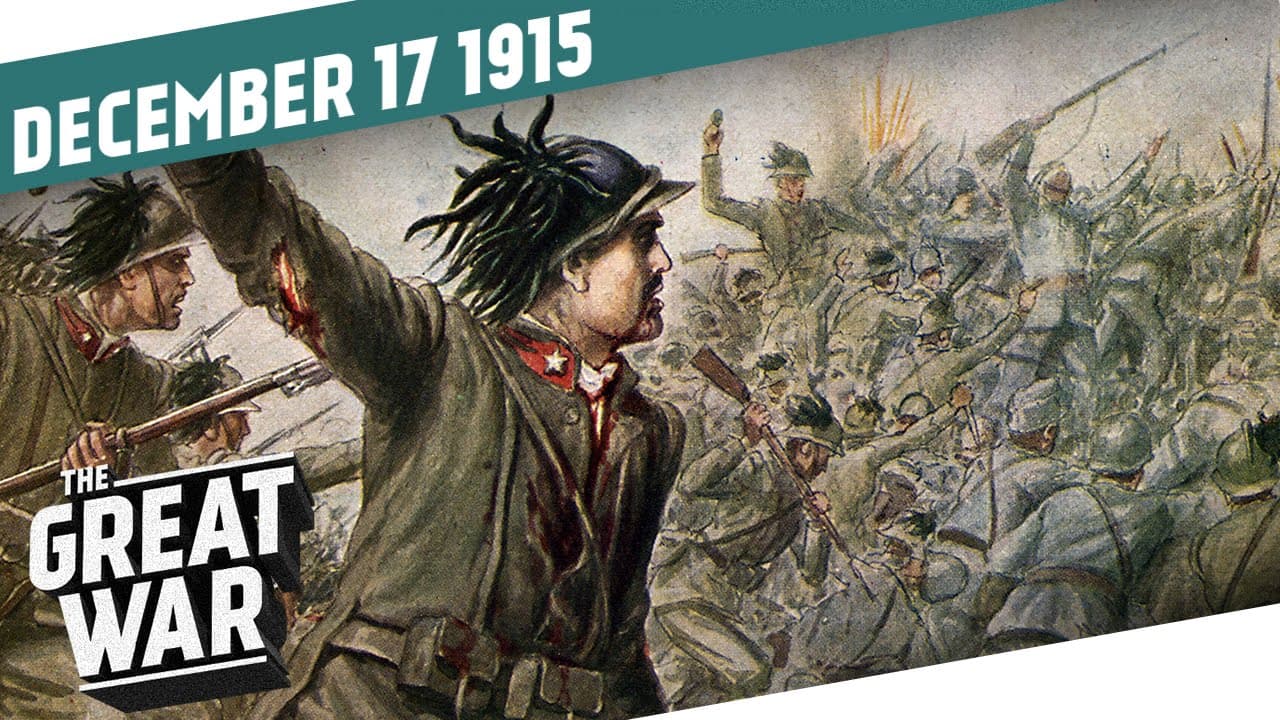
Italian army morale plummets amid defeats and harsh conditions.
Transcript
We’ve seen the Central Powers on top most of the year, taking enormous chunks of land on the Eastern Front, overrunning Serbia, beating back the Allies at Gallipoli, and holding their own on the Italian and Western Fronts, and this week sees one more victory; this week the Bulgarian army drives the British and French out of Macedonia. I’m Indy Neid... Read More
Key Insights
- The Italian army faced severe morale issues due to catastrophic defeats, unsanitary conditions, and lack of supplies, leading to the first mutinies.
- Italian soldiers suffered from inadequate clothing, food, and shelter, with many experiencing malnutrition and exposure to harsh weather conditions.
- General Luigi Cadorna's leadership style was harsh, with no organized recreation for soldiers and a focus on callousness, further damaging morale.
- The Bulgarian army successfully drove British and French forces out of Macedonia, marking another victory for the Central Powers.
- The Allies began planning the evacuation of Gallipoli, facing challenges such as enemy fire and harsh weather conditions.
- The retreat from Macedonia was well-managed by French General Maurice Sarrail, allowing the Allies to minimize casualties and maintain their supplies.
- Bulgaria celebrated its victories over the British and French, claiming to have taught the 'great powers' a lesson in warfare.
- The week ended with a sense of despair across various fronts, as soldiers faced the harsh realities of war and the upcoming holiday season.
Install to Summarize YouTube Videos and Get Transcripts
Explore YouTube Video Summarizer or Get YouTube Transcript Extractor
Questions & Answers
Q: What were the conditions like for Italian soldiers on the Isonzo Front?
Italian soldiers faced dire conditions on the Isonzo Front, with inadequate clothing, food, and shelter. They often slept in mud or on wet hay, wore thin uniforms and shoes with wooden soles, and suffered from malnutrition. The lack of proper equipment and training further exacerbated their struggles, leading to low morale.
Q: How did General Luigi Cadorna's leadership affect the Italian army?
General Luigi Cadorna's leadership was characterized by harshness and a lack of concern for soldier welfare. He discouraged any form of recreation, leading to low morale among troops. His demand for callousness from officers and the poor conditions faced by soldiers contributed to the first mutinies in the Italian forces.
Q: What was the outcome of the Bulgarian army's actions in Macedonia?
The Bulgarian army successfully drove British and French forces out of Macedonia, marking another victory for the Central Powers. This victory was celebrated by Bulgaria as a significant achievement, with claims of having taught the 'great powers' of Britain and France a lesson in warfare.
Q: What challenges did the Allies face in planning the evacuation of Gallipoli?
The Allies faced significant challenges in planning the evacuation of Gallipoli, including the need to move 83,000 men, 186 big guns, and numerous supplies under enemy fire. The harsh weather conditions, such as snow and storms, further complicated the evacuation plans, necessitating a strategic and well-coordinated effort.
Q: How was the retreat from Macedonia managed by the Allies?
The retreat from Macedonia was managed effectively by French General Maurice Sarrail. Despite tough terrain and limited infrastructure, the Allies successfully moved their guns and supplies, minimizing casualties. The retreat was well-coordinated, allowing the Allies to establish a defensive line south of the Greek border.
Q: What was the significance of December 12th, 1915, for Bulgaria?
December 12th, 1915, was significant for Bulgaria as it marked the occupation of the last Macedonian towns held by the enemy. This victory was celebrated as a historical achievement, highlighting Bulgaria's military success against the British, French, and Serbians in the region.
Q: What were the broader implications of the week's events for the war?
The week's events highlighted the ongoing struggles of the Allied forces, with retreats and evacuations being planned in multiple theaters. The Central Powers continued to gain ground, and the despair among soldiers on various fronts underscored the harsh realities of the war as it dragged on beyond initial expectations.
Q: How did the Italian mutinies reflect the overall morale on the front?
The Italian mutinies were a direct reflection of the low morale among troops, driven by catastrophic defeats, harsh conditions, and inadequate leadership. The lack of basic necessities, combined with the psychological toll of continuous losses, led to unrest and a breakdown in discipline among soldiers.
Summary & Key Takeaways
-
The Italian army on the Isonzo Front faced severe hardships, including a lack of supplies, inadequate clothing, and poor living conditions, leading to low morale and the first mutinies.
-
The Central Powers continued their successes, with the Bulgarian army driving British and French forces out of Macedonia, further strengthening their position in the region.
-
Despite challenges, the Allies managed a strategic retreat from Macedonia and began planning the evacuation of Gallipoli, highlighting the ongoing difficulties faced by the Entente powers.
Read in Other Languages (beta)
Share This Summary 📚
Summarize YouTube Videos and Get Video Transcripts with 1-Click
Try YouTube Summary with ChatGPT & Claude or YouTube Transcript Generator
Explore More Summaries from The Great War 📚

Summarize YouTube Videos and Get Video Transcripts with 1-Click
Try YouTube Summary with ChatGPT & Claude or YouTube Transcript Generator