The Day Television Went Global
TL;DR
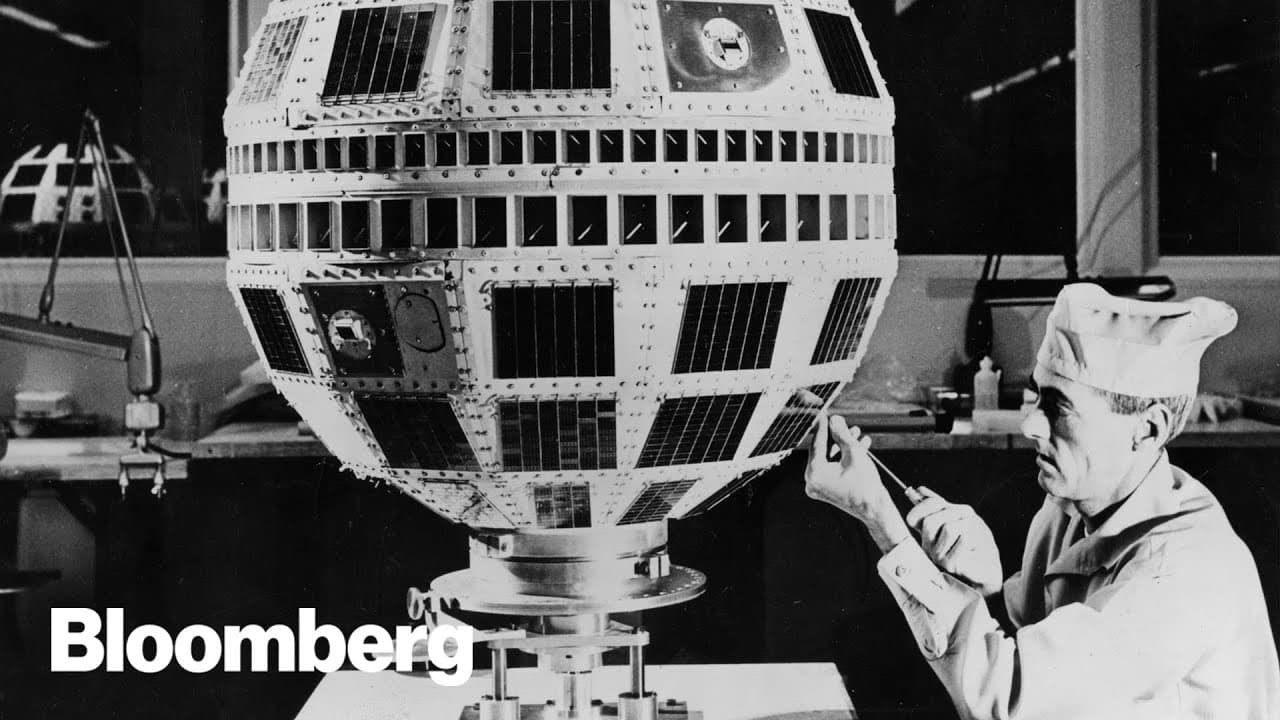
Telstar satellite enabled the first global live TV broadcast.
Transcript
One small step for man, one giant leap for mankind. Many of history's most iconic moments have something in common. They were broadcast to the world live by satellite. But this technical feat that we take for granted was not even possible all that long ago. In fact, the entire era can be traced back to July 10th, 1962, the day TV went global. And h... Read More
Key Insights
- The Telstar satellite, launched on July 10, 1962, marked the beginning of global live television broadcasting, connecting the U.S. and Europe for the first time via satellite.
- Telstar's launch was a pivotal moment in the Space Race, showcasing the U.S.'s capability after being outpaced by the Soviet Union in early space achievements.
- The project was a collaboration between AT&T and various scientific communities, introducing new technologies like solar cells and transistors, which were cutting-edge at the time.
- Despite its short lifespan due to radiation damage, Telstar demonstrated the feasibility of live satellite communication, paving the way for future advancements in global broadcasting.
- Telstar's success initiated a new era of competitive cooperation between the U.S. government and private industry in space technology development, a trend that continues today.
- The project was the first privately sponsored space mission, costing AT&T about $25 million per launch in today's money, highlighting the role of private investment in space exploration.
- The legacy of Telstar is seen in the modern commercial space race, with companies like SpaceX and Blue Origin expanding satellite capabilities for various applications.
- Today, thousands of satellites orbit Earth, providing services ranging from internet access to environmental monitoring, a direct evolution from the Telstar project.
Install to Summarize YouTube Videos and Get Transcripts
Explore YouTube Video Summarizer or Get YouTube Transcript Extractor
Questions & Answers
Q: What was the significance of the Telstar satellite launch?
The Telstar satellite launch on July 10, 1962, was significant because it enabled the first global live television broadcast, connecting the U.S. and Europe. It marked a pivotal moment in the Space Race, demonstrating the feasibility of satellite communication and paving the way for future advancements in global broadcasting technology.
Q: How did Telstar contribute to the Space Race?
Telstar contributed to the Space Race by showcasing the United States' capability to achieve live satellite communication, a significant technological feat at the time. It was an early victory for the U.S., which had been trailing the Soviet Union in space achievements, such as launching the first satellite and sending the first human into space.
Q: What technologies did Telstar introduce?
Telstar introduced several cutting-edge technologies for its time, including solar cells, transistors, and a telemetry system for data collection. These innovations were crucial in enabling the satellite to function effectively, transmitting signals across the Atlantic and demonstrating the feasibility of live satellite communication.
Q: Why was Telstar's lifespan short?
Telstar's lifespan was short because it was damaged by residual radiation from a thermonuclear bomb test conducted the day before its launch. This radiation affected the satellite's components, leading to its early demise within a few months. Despite this, Telstar successfully demonstrated the potential of satellite communication.
Q: How did Telstar influence future satellite developments?
Telstar influenced future satellite developments by proving the feasibility of live communication via satellite. It paved the way for more advanced communication satellites, such as the Hughes Syncom, which offered 24/7 global TV coverage. Telstar's success also encouraged collaboration between the government and private industry in space technology.
Q: What was the role of private industry in the Telstar project?
Private industry played a crucial role in the Telstar project, with AT&T funding the mission as the first privately sponsored space mission carrying a commercial payload. This investment highlighted the potential for private sector involvement in space exploration, a trend that continues today with companies like SpaceX and Blue Origin.
Q: How has the commercial space race evolved since Telstar?
Since Telstar, the commercial space race has evolved significantly, with numerous companies developing satellite networks for various applications. The cost to build and launch satellites has decreased, enabling entrepreneurs like Elon Musk and Jeff Bezos to provide services such as global internet access and environmental monitoring, expanding the role of private industry in space.
Q: What is the legacy of the Telstar project today?
The legacy of the Telstar project today is seen in the vast network of satellites that provide a wide range of services, from internet access to environmental monitoring. Telstar demonstrated the feasibility of satellite communication, paving the way for technological advancements and fostering ongoing collaboration between government and private industry in space exploration.
Summary & Key Takeaways
-
On July 10, 1962, the Telstar satellite was launched, marking the first successful global live television broadcast. This event connected the U.S. and Europe, demonstrating the feasibility of satellite communication and beginning a new era in global broadcasting.
-
Telstar's launch was a significant achievement in the Space Race, occurring during a time when the U.S. was striving to catch up with Soviet advancements. It showcased new technologies and the potential for live communication via satellite.
-
The success of Telstar paved the way for future developments in satellite technology and space exploration, fostering cooperation between the U.S. government and private industry. This collaboration continues today, with numerous satellites providing diverse services globally.
Read in Other Languages (beta)
Share This Summary 📚
Summarize YouTube Videos and Get Video Transcripts with 1-Click
Try YouTube Summary with ChatGPT & Claude or YouTube Transcript Generator
Explore More Summaries from Bloomberg Originals 📚





Summarize YouTube Videos and Get Video Transcripts with 1-Click
Try YouTube Summary with ChatGPT & Claude or YouTube Transcript Generator