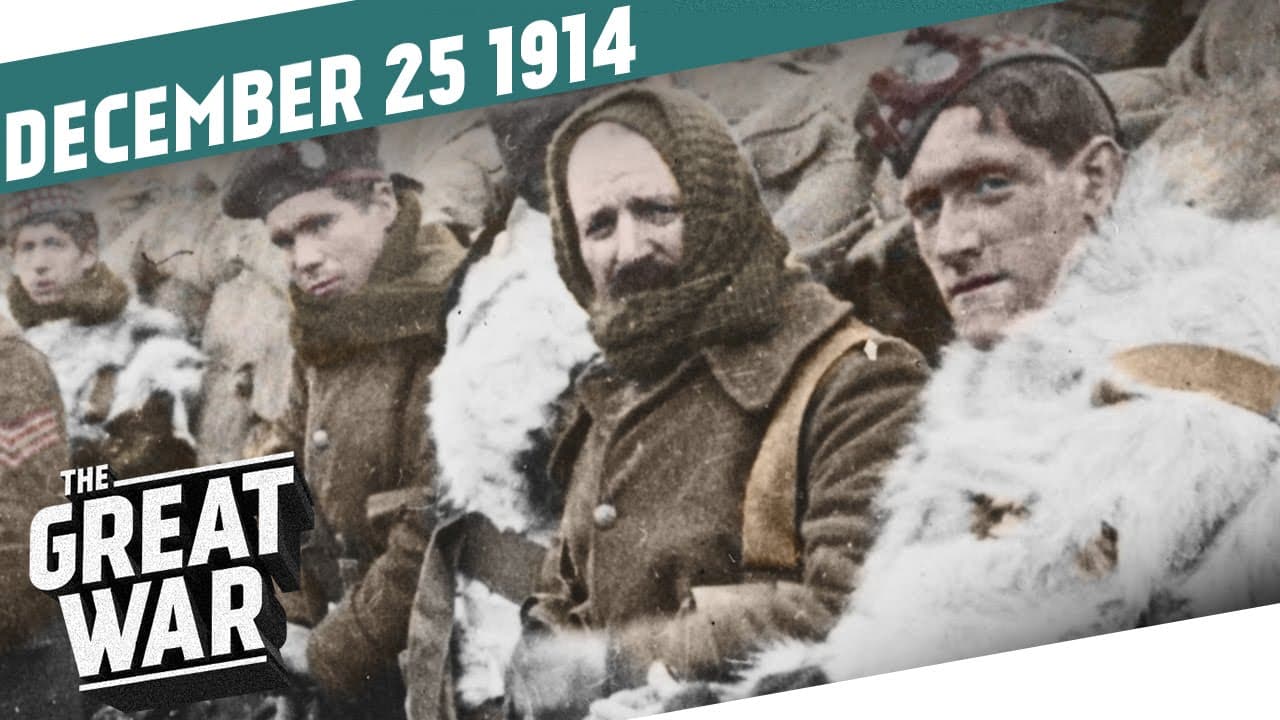
The First Battle of Champagne - Dying In Caucasus Snow I THE GREAT WAR Week 22
TL;DR
The Christmas Truce briefly halted the grim Champagne Offensive.
Transcript
When the war began, nearly five months ago, it was to be glorious, and the warring nations all saw a war that would be over by Christmas. And now, hundreds of thousands of men had been butchered- civilians too- and many more horribly wounded or maimed. The war was anything but over and today it’s Christmas. I’m Indy Neidell; welcome to the Great Wa... Read More
Key Insights
- The war, expected to end by Christmas, instead dragged on with significant casualties, marking a grim reality for all involved.
- The Champagne Offensive marked the first major Allied attack on the Western Front since trench warfare began, highlighting the challenges of winter warfare.
- Trench conditions were dire, with mud and rain causing trench foot and making military operations extremely difficult for the soldiers.
- The Christmas Truce of 1914 saw soldiers from opposing sides fraternize, exchange gifts, and play football, a rare moment of peace in the war.
- In the Caucasus, Turkish forces struggled with harsh winter conditions, suffering from frostbite and hypothermia before even engaging in battle.
- The Ottoman Empire's strategy involved a large envelopment of Russian forces, but logistical challenges and poor equipment hampered their efforts.
- The brief respite on Christmas Day did not occur on all fronts, with battles continuing in places like Alsace and the Caucasus.
- The war's trajectory shifted to attritional fighting, with both sides unable to secure a quick victory, leading to prolonged suffering and loss.
Install to Summarize YouTube Videos and Get Transcripts
Explore YouTube Video Summarizer or Get YouTube Transcript Extractor
Questions & Answers
Q: What was the significance of the Christmas Truce?
The Christmas Truce of 1914 was a significant event as it represented a rare moment of peace and humanity amidst the horrors of World War I. Soldiers from opposing sides laid down their weapons, exchanged gifts, and even played football. This spontaneous truce highlighted the shared humanity of the soldiers and provided a brief respite from the relentless fighting.
Q: What challenges did soldiers face during the Champagne Offensive?
During the Champagne Offensive, soldiers faced numerous challenges, including harsh winter weather, which turned trenches into quagmires and caused widespread trench foot. The mud and rain made military operations extremely difficult, with soldiers unable to fire their rifles due to clogged barrels. The offensive was characterized by a pattern of give and take, with minimal gains achieved at great human cost.
Q: How did the trench conditions affect the soldiers?
Trench conditions during World War I were abysmal, with constant rain turning the ground into thick mud, making trenches nearly uninhabitable. Soldiers suffered from trench foot, often leading to amputations, and the mud made it difficult to maintain any defensive structures. These conditions not only affected the soldiers' physical health but also their morale, as they faced the constant threat of enemy fire and the harsh elements.
Q: What were the strategic challenges faced by the Ottoman Empire in the Caucasus?
The Ottoman Empire faced significant strategic challenges in the Caucasus, primarily due to the harsh winter conditions and logistical difficulties. The region's high altitude and cold temperatures led to many soldiers suffering from frostbite and hypothermia. Additionally, the Ottoman forces were poorly equipped, lacking winter clothing, and the mountainous terrain made troop movements and supply lines difficult to maintain, hindering their ability to effectively engage Russian forces.
Q: Why was the Champagne Offensive important?
The Champagne Offensive was important as it marked the first major Allied attack on the Western Front since trench warfare had begun. It demonstrated the challenges of conducting large-scale offensives in trench warfare conditions, particularly in winter. Despite having numerical superiority, the Allies struggled to make significant gains against well-entrenched German positions, highlighting the difficulties of breaking the stalemate on the Western Front.
Q: How did the war's trajectory change by the end of 1914?
By the end of 1914, the trajectory of World War I had shifted from expectations of a quick victory to a prolonged conflict characterized by attritional fighting. The initial strategies of swift victory had failed, and the war became a battle of resources and manpower, with both sides digging in for a long and grueling struggle. This change set the stage for years of trench warfare and massive casualties.
Q: What were the consequences of the Christmas Truce for military command?
The Christmas Truce had significant consequences for military command, as it highlighted the potential for fraternization between opposing forces, which could undermine military discipline and objectives. Commanders on both sides issued orders to prevent such truces from occurring again, emphasizing the need to maintain hostility and prevent any actions that could lead to a reduction in combat effectiveness or morale. The truce was seen as a threat to the war effort by military leadership.
Q: What role did the Armenian volunteers play in the Caucasus campaign?
Armenian volunteers played a significant role in the Caucasus campaign by bolstering the Russian forces, which had been depleted as troops were redirected to the Eastern Front. These volunteers viewed service with the Russians as an opportunity to secure territory and gain political favor in the event of a Russian victory. However, their involvement also heightened tensions with the Ottoman Empire, which viewed the Armenian population as a potential threat, leading to increased persecution and violence against Armenians.
Summary & Key Takeaways
-
The war, initially expected to end by Christmas, continued with heavy casualties and prolonged suffering for soldiers and civilians alike. The Christmas Truce provided a brief moment of peace amidst the ongoing Champagne Offensive and harsh winter conditions.
-
The Champagne Offensive was the first major Allied attack on the Western Front, characterized by dire trench conditions and the challenges of winter warfare. Despite numerical advantages, the Allied forces faced significant difficulties in gaining ground against the Germans.
-
In the Caucasus, Turkish forces faced logistical challenges and harsh winter conditions, leading to significant losses even before engaging the Russians. The Ottoman strategy of enveloping Russian forces was hindered by poor equipment and the harsh environment.
Read in Other Languages (beta)
Share This Summary 📚
Summarize YouTube Videos and Get Video Transcripts with 1-Click
Try YouTube Summary with ChatGPT & Claude or YouTube Transcript Generator
Explore More Summaries from The Great War 📚

Summarize YouTube Videos and Get Video Transcripts with 1-Click
Try YouTube Summary with ChatGPT & Claude or YouTube Transcript Generator