Why Does Solvay Discharge Waste on Italian Beaches?
TL;DR
Solvay, a multinational chemical company, has been discharging industrial waste onto Italian beaches for over a century. This discharge, primarily limestone particles, has transformed the landscape but raised environmental concerns due to heavy metals like mercury. Despite legal challenges and public scrutiny, Solvay continues its operations with regulatory approval, sparking debates on environmental and legal accountability.
Transcript
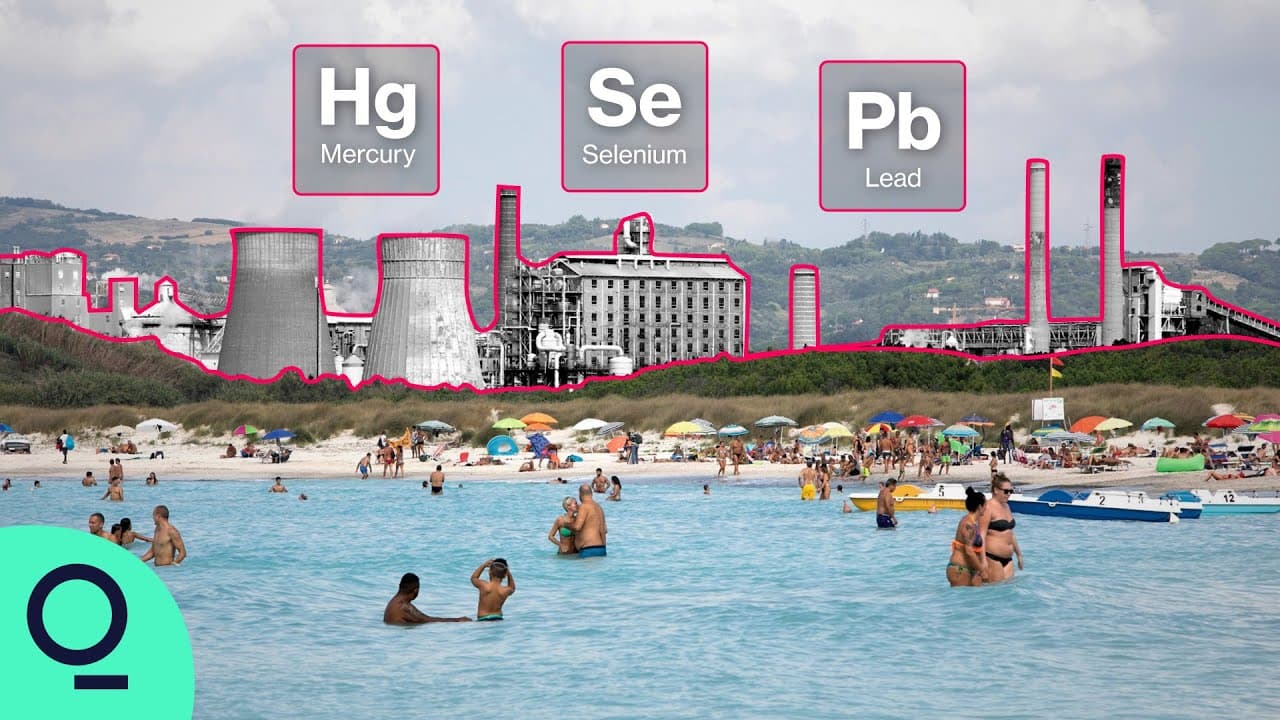
If you were here in August and you were sitting on the beach, on a blanket facing the sea, you would think you were in the Turks and Caicos in the Caribbean. The beaches have been renamed Spiagge Bianche in Italian, which literally means "the white beaches" and you'll see hundreds of beachgoers flocking to that destination in the summers. Vogue Ita... Read More
Key Insights
- Solvay is a multinational chemical company based in Brussels, Belgium, with a market value exceeding 10 billion euros.
- The company has been discharging waste onto the beaches of Tuscany, Italy, for over 100 years, transforming the landscape to a stark white color.
- The discharge consists of limestone particles mixed with seawater, which includes heavy metals like arsenic, mercury, zinc, and lead.
- Italian law requires Solvay to meet specific heavy metal concentration limits in its discharge, which the company has previously exceeded.
- Solvay has not reduced the amount of heavy metals in its discharge but has altered water accounting methods to meet legal standards.
- Activists and residents have raised concerns about the health impact of the discharge, with elevated disease levels reported in the local community.
- The Italian government has renewed Solvay's operating license, allowing the company to continue its discharge practices.
- Activist investors and environmental groups are challenging Solvay's practices, seeking greater transparency and accountability.
Install to Summarize YouTube Videos and Get Transcripts
Explore YouTube Video Summarizer or Get YouTube Transcript Extractor
Questions & Answers
Q: How does Solvay's discharge impact the Italian beaches?
Solvay's discharge has transformed the Italian beaches of Tuscany into a bright white landscape due to limestone particles mixed with seawater. This industrial waste also contains heavy metals like mercury, arsenic, zinc, and lead, raising environmental and health concerns. Despite its striking appearance, the discharge poses potential risks to the local ecosystem and community health.
Q: What are the legal challenges faced by Solvay regarding its waste discharge?
Solvay has faced legal challenges due to exceeding the legal concentration limits of heavy metals in its discharge. In 2013, the company exceeded these limits and resolved the issue through a plea bargain without a trial. Despite this, Solvay continues operations by altering its water accounting methods, raising questions about regulatory compliance and environmental accountability.
Q: What is the composition of the waste discharged by Solvay?
The waste discharged by Solvay primarily consists of pulverized limestone particles mixed with seawater. This discharge also contains heavy metals such as arsenic, mercury, zinc, and lead, which are released during the pulverization process. These substances contribute to the environmental impact on the beaches and raise concerns about potential health risks for the local community.
Q: How has the local community responded to Solvay's discharge practices?
The local community's response to Solvay's discharge practices has been mixed, with some residents expressing indifference and others raising health concerns. Elevated disease levels have been reported in the area, though causality is difficult to prove. Activists continue to challenge Solvay's operations, highlighting the environmental and health implications of the discharge.
Q: What actions have environmental activists taken against Solvay?
Environmental activists have launched campaigns to raise awareness about Solvay's discharge practices and their environmental impact. They have highlighted the health risks associated with heavy metal exposure and called for greater transparency and accountability. Activist investor groups have also targeted Solvay, questioning its environmental practices and regulatory compliance.
Q: What role does the Italian government play in Solvay's operations?
The Italian government plays a crucial role in Solvay's operations by regulating and granting licenses for its discharge practices. Despite environmental concerns, the government recently renewed Solvay's operating license, allowing the company to continue its waste discharge. This decision has sparked debates about regulatory oversight and environmental responsibility.
Q: How has Solvay altered its operations to comply with legal standards?
Solvay has not reduced the amount of heavy metals in its discharge but has altered its water accounting methods to comply with legal standards. By increasing the denominator in the concentration calculation, Solvay meets regulatory limits without changing the actual discharge composition. This approach has been criticized for circumventing environmental accountability.
Q: What is the significance of Solvay's discharge for its global business?
Solvay's discharge practices in Italy are significant for its global business, as the Italian plant represents 17% of its operations. Maintaining regulatory compliance and public image is crucial for Solvay's business viability and stock value. The company's response to legal and activist challenges will impact its reputation and potentially influence its global business strategy.
Summary & Key Takeaways
-
Solvay's chemical plant in Tuscany discharges limestone particles and heavy metals into the sea, transforming beaches to a bright white color. Despite exceeding legal heavy metal limits, Solvay continues operations by altering water accounting methods. Activists and residents express health concerns, while the Italian government renews Solvay's license.
-
The discharge from Solvay's plant includes arsenic, mercury, zinc, and lead, raising environmental and health concerns. Legal and public scrutiny intensifies as activists and investors push for accountability. The Italian government's recent license renewal allows Solvay to continue its controversial practices.
-
Solvay faces challenges from activist investors and environmental groups over its waste discharge practices in Italy. Despite legal breaches, the company maintains operations by adjusting regulatory compliance methods. The situation highlights tensions between environmental responsibility and industrial operations.
Read in Other Languages (beta)
Share This Summary 📚
Summarize YouTube Videos and Get Video Transcripts with 1-Click
Try YouTube Summary with ChatGPT & Claude or YouTube Transcript Generator
Explore More Summaries from Bloomberg Originals 📚




Summarize YouTube Videos and Get Video Transcripts with 1-Click
Try YouTube Summary with ChatGPT & Claude or YouTube Transcript Generator