The Architects Designing Future Cities With Mud
TL;DR
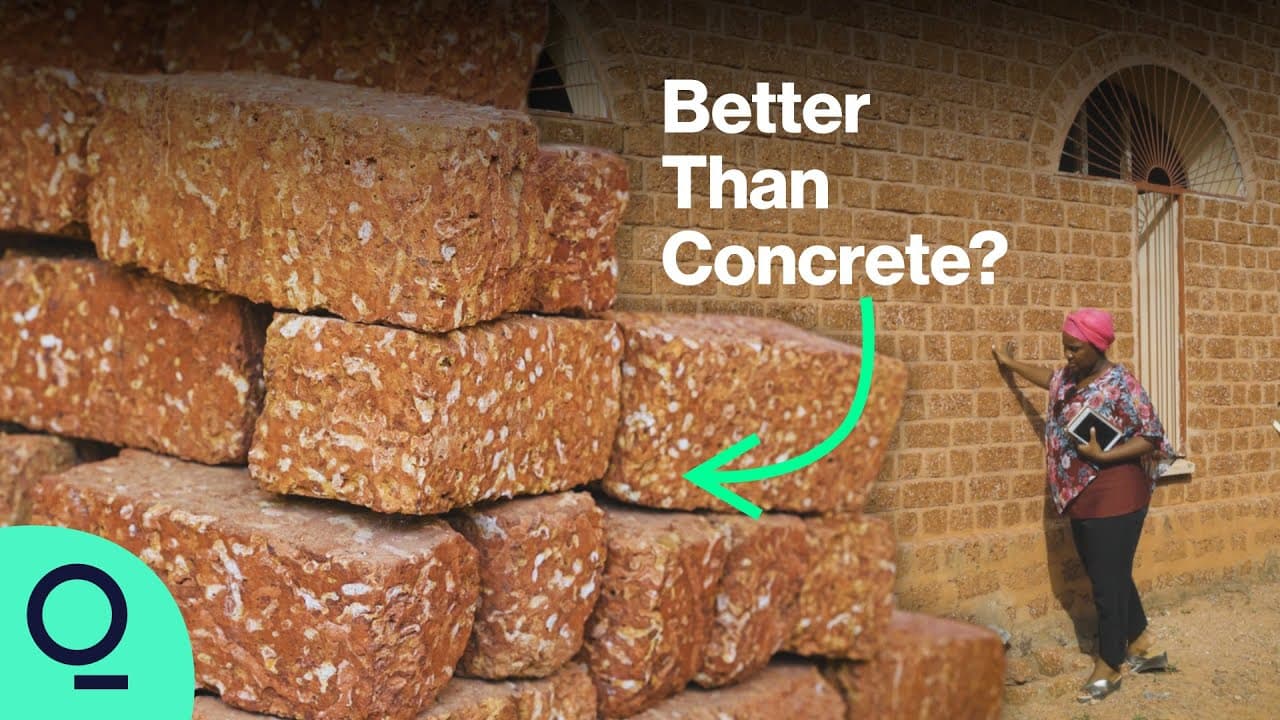
Architects in Africa advocate for mud buildings to combat climate change.
Transcript
Burkina Faso is one of many developing nations swapping traditional earth brick buildings for those made of concrete and cement. While these building materials are often seen as a sign of development, the reality is quite different. The construction industry globally accounts for 38% of carbon dioxide emissions and building with concrete makes up a... Read More
Key Insights
- The construction industry contributes significantly to global carbon emissions, with concrete playing a major role. Architects are urged to seek sustainable alternatives.
- Clara Sawadogo, an advocate for sustainable architecture, promotes the use of mud, specifically adobe, as a viable building material in Burkina Faso.
- Mud buildings have faced criticism due to structural failures during heavy rainfall, but Sawadogo believes they can outperform concrete in resilience.
- The Nubian vault, a design revived by Hassan Fathy, offers an eco-friendly, resource-efficient architectural solution without the need for wood or metal reinforcement.
- Mud's high thermal mass makes it ideal for hot climates, as it absorbs heat during the day and releases it at night, reducing the need for air conditioning.
- Concrete buildings often require air conditioning due to poor thermal regulation, which can be costly for inhabitants in developing regions.
- Burkina Faso, contributing minimally to global emissions, is highly vulnerable to climate change, with temperatures expected to rise significantly.
- Hybrid construction methods using both mud and concrete are emerging, balancing sustainability with structural integrity and modern aesthetics.
Install to Summarize YouTube Videos and Get Transcripts
Explore YouTube Video Summarizer or Get YouTube Transcript Extractor
Questions & Answers
Q: What is the primary environmental concern with concrete buildings?
Concrete buildings are a major concern due to their significant contribution to global carbon emissions. The construction industry accounts for a large portion of these emissions, with concrete alone responsible for about 8% of the total. This highlights the need for sustainable alternatives in building materials.
Q: Why are mud buildings being reconsidered in Burkina Faso?
Mud buildings are being reconsidered in Burkina Faso due to their potential for sustainability and resilience in the face of climate change. Advocates like Clara Sawadogo argue that mud can outperform concrete in terms of environmental impact and thermal regulation, making it a viable alternative for future constructions.
Q: What is the Nubian vault and why is it significant?
The Nubian vault is an architectural design that eliminates the need for wood or metal reinforcement, making it environmentally friendly. Revived by Hassan Fathy, it is significant because it offers a sustainable building method that is well-suited to regions with limited natural resources, providing an alternative to traditional concrete structures.
Q: How does mud help in regulating building temperatures?
Mud has a high thermal mass, which allows it to absorb heat slowly during the day and release it at night. This property helps maintain a stable indoor temperature, reducing the need for air conditioning in hot climates. In contrast, concrete buildings can become excessively hot, necessitating costly cooling solutions.
Q: What are the economic implications of using concrete in building construction?
Using concrete in building construction often leads to increased reliance on air conditioning due to poor thermal regulation, which can be economically burdensome. The cost of installation and upkeep of air conditioning units can be prohibitive for many, particularly in developing regions, emphasizing the need for more sustainable and cost-effective building methods.
Q: Why is Burkina Faso particularly vulnerable to climate change?
Burkina Faso is particularly vulnerable to climate change despite contributing only 0.08% to global emissions. The landlocked nation is expected to experience significant temperature increases, up to 1.6 degrees Celsius by 2050 and up to four degrees by the end of the century, which is much higher than the global average, exacerbating its climate challenges.
Q: What challenges do architects face when using mud as a building material?
Architects face challenges with mud as a building material due to the longer construction times required to create structures that are as sturdy and modern-looking as concrete buildings. Scaling up these methods to meet the demands of the modern building sector remains a significant hurdle, prompting the exploration of hybrid construction techniques.
Q: How are architects balancing modern demands with sustainable practices?
Architects are balancing modern demands with sustainable practices by using hybrid construction methods that incorporate both mud and concrete. This approach aims to combine the environmental benefits of mud with the structural integrity and aesthetic appeal of concrete, allowing for quicker construction while maintaining ecological considerations.
Summary & Key Takeaways
-
Burkina Faso architects are revisiting traditional mud-based construction methods to address climate change and carbon emissions, emphasizing the sustainability and resilience of materials like adobe.
-
Mud buildings, particularly using the Nubian vault design, offer environmental benefits and superior thermal regulation compared to concrete, though challenges in scaling remain.
-
Despite the drawbacks of longer construction times, hybrid methods combining mud and concrete are being explored to meet modern building demands while maintaining ecological balance.
Read in Other Languages (beta)
Share This Summary 📚
Summarize YouTube Videos and Get Video Transcripts with 1-Click
Try YouTube Summary with ChatGPT & Claude or YouTube Transcript Generator
Explore More Summaries from Bloomberg Originals 📚



Summarize YouTube Videos and Get Video Transcripts with 1-Click
Try YouTube Summary with ChatGPT & Claude or YouTube Transcript Generator