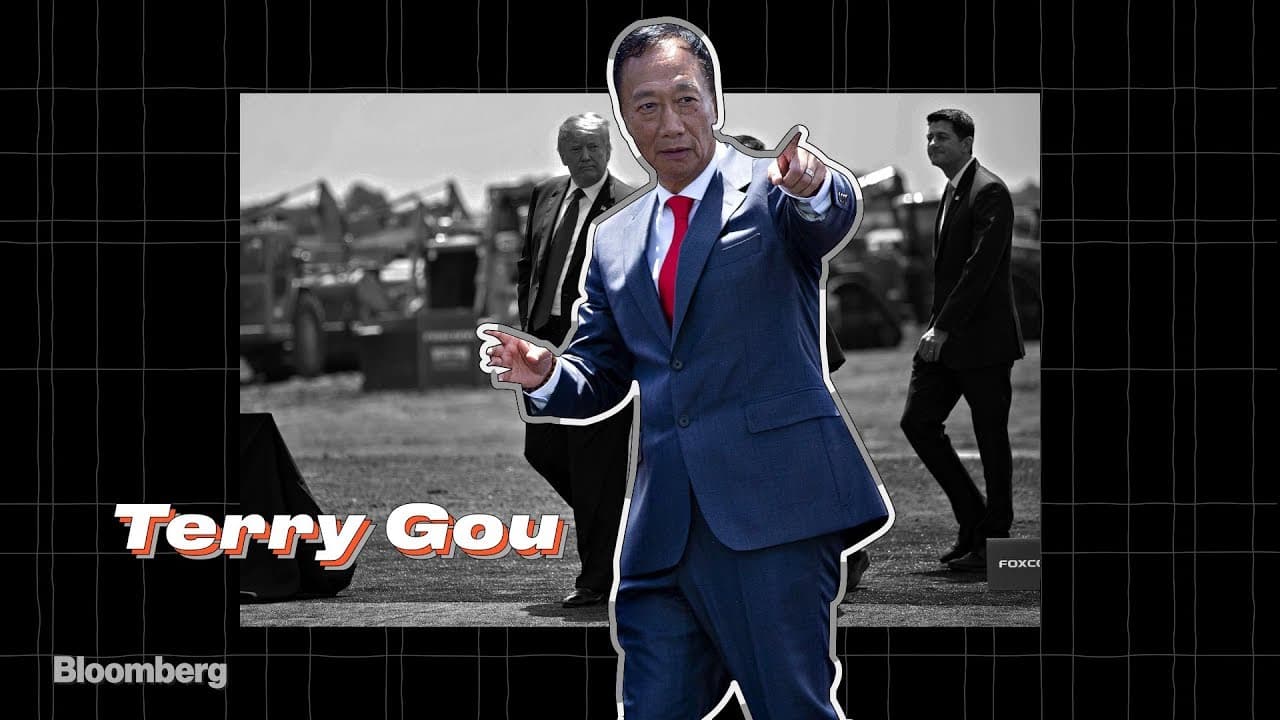
The Billionaire Who Builds iPhones is Coming to America
TL;DR
Terry Gou expands Foxconn to the U.S. with a new factory.
Transcript
If you open an iPhone... this is what you’d see. All of these parts were put together by a company called Foxconn. And many of the parts themselves are manufactured by Foxconn. Almost any piece of electronics has at least some components from the company. Which is owned by this guy: billionaire Terry Gou. He found success by making massive deals wi... Read More
Key Insights
- Terry Gou, the founder of Foxconn, has established the company as a leader in electronics assembly, notably for Apple products, by prioritizing client delivery and taking calculated risks.
- Foxconn is expanding its operations into the United States with a $14.5 billion factory in Wisconsin, driven by Gou's strategic vision and the promise of job creation.
- Wisconsin offered one of the largest incentive packages in U.S. history to attract Foxconn, highlighting the competitive nature of landing such large-scale manufacturing operations.
- Critics are skeptical about the actual job creation potential of the Wisconsin factory, dubbing it a 'white elephant,' but Gou remains focused on his business strategy.
- Terry Gou's early career involved recognizing opportunities in Taiwan's export economy, leading him to establish his own manufacturing business with a small loan from his mother.
- Foxconn's success is partly due to Gou's early decision to integrate production processes and set up factories in mainland China, capitalizing on low labor costs and abundant workforce.
- The company faced challenges in 2010 with worker suicides, prompting Gou to implement measures like wage increases and healthcare clinics to improve worker conditions.
- Despite Foxconn's dominance in hardware manufacturing, the company struggles to diversify into software and cloud services, posing a challenge for future growth.
Install to Summarize YouTube Videos and Get Transcripts
Explore YouTube Video Summarizer or Get YouTube Transcript Extractor
Questions & Answers
Q: What is Terry Gou's approach to client delivery?
Terry Gou prioritizes client delivery by taking significant risks, such as investing heavily in equipment and facilities, even at a potential loss. He believes that once a company commits to working with Foxconn, they will remain loyal due to the company's ability to deliver on massive orders efficiently, which has been a key factor in Foxconn's success.
Q: Why did Wisconsin offer a large incentive package to Foxconn?
Wisconsin offered a large incentive package to Foxconn to secure the construction of a $14.5 billion factory in the state, promising job creation and economic benefits. The competitive nature of landing such a significant manufacturing operation prompted the state to provide one of the largest incentive packages in U.S. history, hoping to boost local employment and industry.
Q: What challenges did Foxconn face in 2010?
In 2010, Foxconn faced international scrutiny following a series of worker suicides at its main factory in Shenzhen. The incidents highlighted the stressful working conditions within the company, leading to criticism and prompting Terry Gou to implement measures such as wage increases, healthcare clinics, and support hotlines to improve worker welfare and address the public relations crisis.
Q: How did Terry Gou start his business?
Terry Gou started his business by recognizing the potential in Taiwan's booming export economy during the 1970s. He took a $7,500 loan from his mother to rent a shed in Taipei, where he began manufacturing channel-changing knobs for black-and-white televisions. This humble beginning laid the foundation for what would become Foxconn, a global leader in electronics assembly.
Q: What was Terry Gou's strategic move in the 1970s?
In the 1970s, Terry Gou strategically moved to set up factories in mainland China, recognizing the region's potential for low labor costs and a plentiful workforce. This decision allowed Foxconn to leverage China's manufacturing capabilities, significantly reducing production costs and positioning the company as a leader in the electronics assembly industry.
Q: How does Foxconn's current revenue structure look?
Foxconn's current revenue structure is heavily reliant on Apple, with over 50% of its estimated $165 billion revenue coming from the tech giant. This dependency underscores the company's success in hardware manufacturing but also highlights the challenge of diversifying into other areas, such as software and cloud services, where Foxconn has struggled to gain a foothold.
Q: What are the critics' concerns about the Wisconsin factory?
Critics are concerned that the Wisconsin factory may not create as many jobs as promised, labeling it a 'white elephant.' They argue that the substantial taxpayer-funded incentives may not yield the expected economic benefits, questioning the long-term viability and impact of the factory in terms of local employment and economic growth.
Q: What is Foxconn's biggest challenge moving forward?
Foxconn's biggest challenge moving forward is diversifying its business beyond hardware manufacturing. As the tech industry shifts towards software and cloud services, Foxconn has struggled to innovate and compete in these areas. The company's future growth depends on overcoming this challenge and finding ways to add value beyond traditional electronics assembly.
Summary & Key Takeaways
-
Terry Gou, the founder of Foxconn, has built the company into a major player in electronics assembly, primarily for Apple, through strategic risks and prioritizing client satisfaction. Now, he's expanding operations to the U.S. with a new factory in Wisconsin, leveraging substantial state incentives.
-
The Wisconsin factory deal is one of the largest incentive packages in U.S. history, but critics question its potential for job creation, labeling it a 'white elephant.' Despite this, Gou remains confident in his business model and continues to focus on large-scale manufacturing.
-
Foxconn's history includes early success in integrating production processes and establishing factories in China. However, the company faces challenges in diversifying into software and cloud services, which are increasingly important in the tech industry, as hardware manufacturing revenue declines.
Read in Other Languages (beta)
Share This Summary 📚
Summarize YouTube Videos and Get Video Transcripts with 1-Click
Try YouTube Summary with ChatGPT & Claude or YouTube Transcript Generator
Explore More Summaries from Bloomberg Originals 📚



Summarize YouTube Videos and Get Video Transcripts with 1-Click
Try YouTube Summary with ChatGPT & Claude or YouTube Transcript Generator