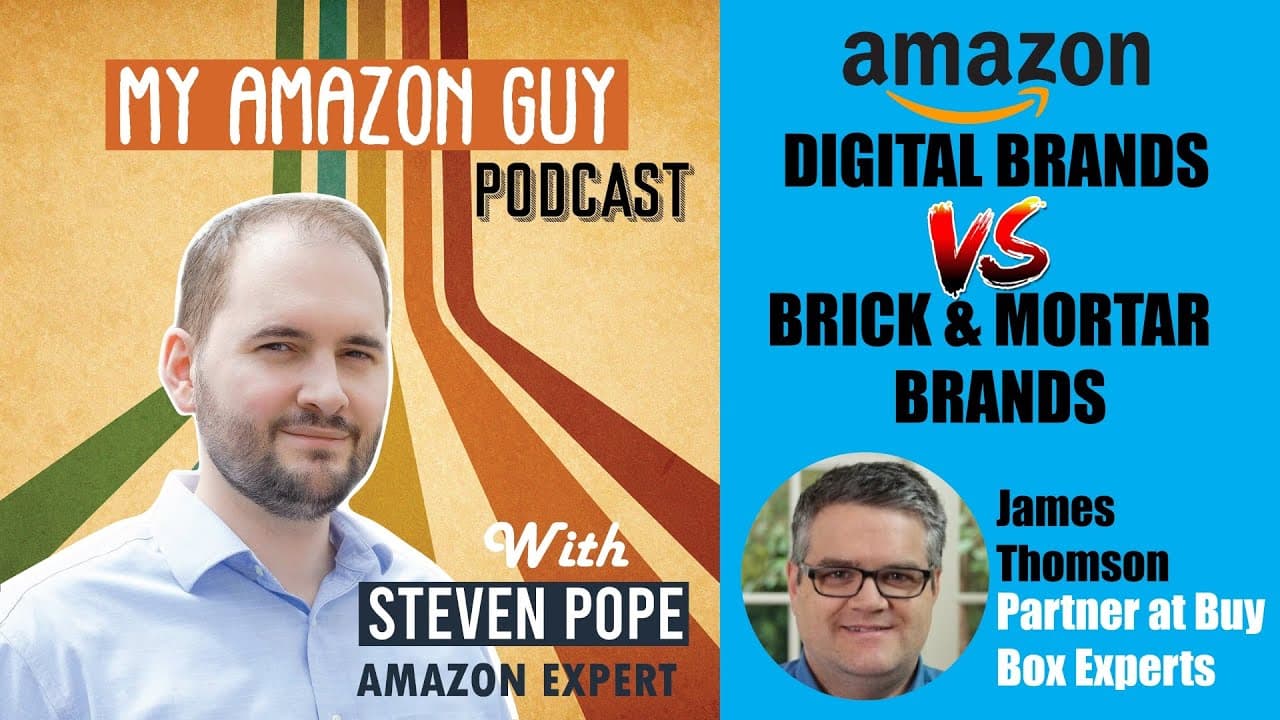
James Thomson Buy Box Experts Founder on Digital Brands vs Brick & Mortar Brands on Amazon
TL;DR
Digital native brands must adapt on Amazon to compete with traditional retailers to avoid losing market share.
Transcript
there's a battle between digital native brands and national retailers with brick and mortar presents and while there's room for both to sell on the platform today we look at how digital native brands need to compete on Amazon or risk losing ground to thousands of entrepreneurs my name is Steven Pope and this is the my Amazon guy podcast I'm now joi... Read More
Key Insights
- 🪡 Digital native brands on Amazon need trademarks, infrastructure, and IP enforcement to protect against copycats.
- 🧱 Traditional brick-and-mortar brands struggle with online adaptation, distribution control, and price erosion.
- 👾 Amazon's fast-paced culture and evolving policies require brands to be proactive in adapting and collaborating internally.
- 🚕 Sales tax compliance and legal protections have improved on Amazon, benefiting sellers and reducing complexity.
- ❓ Brands must navigate Amazon's competitive landscape to maintain market share and brand equity.
- 🗯️ Brands must prioritize brand protection, address distribution control, and enforce IP rights to succeed on Amazon.
- ❓ Collaboration and communication are crucial for resolving internal conflicts and maximizing growth opportunities within Amazon.
Install to Summarize YouTube Videos and Get Transcripts
Explore YouTube Video Summarizer or Get YouTube Transcript Extractor
Questions & Answers
Q: What defines digital native brands on Amazon?
Digital native brands typically start by identifying product gaps and manufacturing products to fill those gaps initially on the Amazon platform. They build brands independently and focus on branding, sales, and traffic.
Q: Why do brick-and-mortar national brands struggle on Amazon?
Traditional brands face challenges in adapting to the online marketplace, controlling distribution, preventing price erosion, and managing unauthorized sellers. They often struggle to compete with digitally native brands in the digital space.
Q: How can brands protect their intellectual property on Amazon?
Brands need to invest in trademarks, design patents, and legal protections to enforce their rights and remove unauthorized sellers' protection under the first sale doctrine. Proper enforcement and monitoring can help maintain brand integrity.
Q: What cultural challenges does Amazon face due to its rapid growth?
Amazon's rapid growth and decentralized structure can lead to silos, overlapping initiatives, and communication gaps among teams. Collaboration and information sharing become essential to address issues efficiently.
Summary & Key Takeaways
-
Digital native brands on Amazon need proper infrastructure, trademarks, and control to prevent copycats and seller issues.
-
Brick-and-mortar national brands face challenges of adapting to online selling and controlling distribution to avoid price erosion.
-
Both types of brands need to compete effectively on Amazon to protect their market share.
Read in Other Languages (beta)
Share This Summary 📚
Summarize YouTube Videos and Get Video Transcripts with 1-Click
Try YouTube Summary with ChatGPT & Claude or YouTube Transcript Generator
Explore More Summaries from My Amazon Guy 📚



![Amazon SEO [Complete 2022 Guide] - New Search Query SEO Phase 4 - Keyword Ranking Optimization thumbnail](/_next/image?url=https%3A%2F%2Fi.ytimg.com%2Fvi%2F-Dc-ufvTHVg%2Fhqdefault.jpg&w=750&q=75)

Summarize YouTube Videos and Get Video Transcripts with 1-Click
Try YouTube Summary with ChatGPT & Claude or YouTube Transcript Generator