How to Apply Ecological Dynamics in Police Training
TL;DR
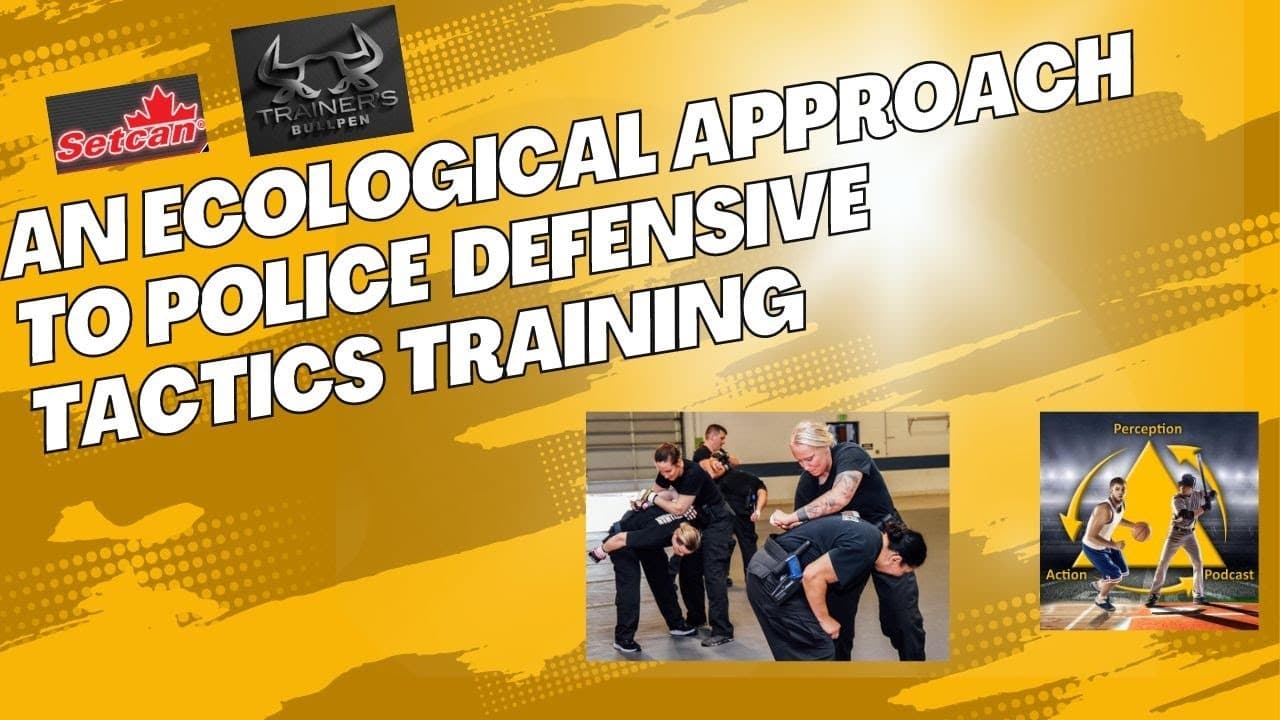
Ecological Dynamics offers a novel approach to police training by emphasizing adaptability and decision-making in dynamic environments. Traditional methods often focus on static techniques, but this approach fosters real-world problem-solving skills. By using realistic scenarios and constraints-led training, officers can develop better situational awareness and responsiveness, ultimately improving performance in unpredictable situations.
Transcript
oh okay here we go I think we're live now so uh welcome everyone to another edition of the perception action Journal club uh if this if you've never been to this before um what the idea of this is I brought on bring on guest to to focus on a particular topic um wherever you happen to be if you're watching it live wherever you happen to be Facebook ... Read More
Key Insights
- Ecological Dynamics emphasizes adaptability and decision-making rather than static techniques.
- Traditional training methods often fail to produce adaptable decision-makers in real-world scenarios.
- The key to effective police training is embedding skills within tactically relevant environments.
- Constraints-led training can help officers develop situational awareness and responsiveness.
- Realistic scenarios enhance learning by providing dynamic and variable contexts for practice.
- Fundamentals in training should focus on outcomes and invariants rather than specific techniques.
- Self-organization of movement is crucial for solving environmental demands in police work.
- Evaluating officers should allow for variability in problem-solving rather than rigid checklists.
Install to Summarize YouTube Videos and Get Transcripts
Explore YouTube Video Summarizer or Get YouTube Transcript Extractor
Questions & Answers
Q: How can Ecological Dynamics improve police training?
Ecological Dynamics improves police training by emphasizing adaptability and decision-making in dynamic environments. Unlike traditional static techniques, this approach uses realistic scenarios and constraints-led training to develop situational awareness and responsiveness. Officers learn to self-organize movements and solve problems in real-time, enhancing their performance in unpredictable situations.
Q: What are the limitations of traditional police training methods?
Traditional police training methods often focus on static techniques, which can fail to produce adaptable decision-makers in real-world scenarios. These methods may not adequately prepare officers for the dynamic and unpredictable nature of their work, as they lack the context and variability needed to develop effective problem-solving skills.
Q: What role do constraints play in police training?
Constraints in police training guide officers' learning by shaping their interactions with the environment. In a constraints-led approach, scenarios are designed to present dynamic and variable challenges, encouraging officers to explore different solutions. This method fosters adaptability and decision-making, helping officers develop skills applicable to real-world situations.
Q: Why is situational awareness important in police training?
Situational awareness is crucial in police training because it enables officers to perceive and interpret environmental cues, allowing them to make informed decisions quickly. By training in realistic scenarios that mimic real-world conditions, officers enhance their ability to assess situations accurately and respond effectively to evolving threats.
Q: How does Ecological Dynamics address the concept of 'fundamentals' in training?
Ecological Dynamics redefines 'fundamentals' by focusing on outcomes and invariants rather than specific techniques. Instead of prescribing exact movements, it encourages officers to achieve desired results through various means. This approach recognizes that successful outcomes can be achieved through multiple solutions, fostering adaptability and creativity.
Q: What is self-organization of movement in the context of police training?
Self-organization of movement refers to the process by which officers adapt their actions based on environmental demands. In Ecological Dynamics, training scenarios encourage officers to explore different movement solutions to achieve goals. This adaptability is crucial for responding to the unpredictable and complex situations officers face in the field.
Q: How should officers be evaluated in a constraints-led training approach?
In a constraints-led training approach, officers should be evaluated based on their ability to solve problems and adapt to changing scenarios. Evaluations should allow for variability in problem-solving, moving away from rigid checklists. This approach recognizes that effective performance involves creativity and adaptability in dynamic environments.
Q: What legal considerations are relevant to Ecological Dynamics in police training?
Legal considerations in Ecological Dynamics include ensuring that training aligns with standards of necessity, proportionality, and reasonableness in use of force. The approach allows for variability in officers' responses, acknowledging that they must adapt to complex situations. Training should prepare officers to meet these legal standards effectively.
Summary & Key Takeaways
-
Ecological Dynamics in police training focuses on adaptability and decision-making in dynamic environments, offering a contrast to traditional static techniques. By embedding skills within tactically relevant contexts, officers develop better situational awareness and responsiveness. This approach fosters real-world problem-solving skills and improves performance in unpredictable situations.
-
Using constraints-led training, officers practice in realistic scenarios that enhance learning through dynamic and variable contexts. The focus shifts from rigid techniques to understanding outcomes and invariants, encouraging self-organization of movement to meet environmental demands.
-
Evaluating officers should allow for variability in problem-solving, moving away from rigid checklists. This approach aligns with legal standards that recognize the need for officers to adapt to complex and rapidly evolving situations, ultimately improving their effectiveness in the field.
Read in Other Languages (beta)
Share This Summary 📚
Summarize YouTube Videos and Get Video Transcripts with 1-Click
Try YouTube Summary with ChatGPT & Claude or YouTube Transcript Generator
Explore More Summaries from Rob Gray 📚
Summarize YouTube Videos and Get Video Transcripts with 1-Click
Try YouTube Summary with ChatGPT & Claude or YouTube Transcript Generator