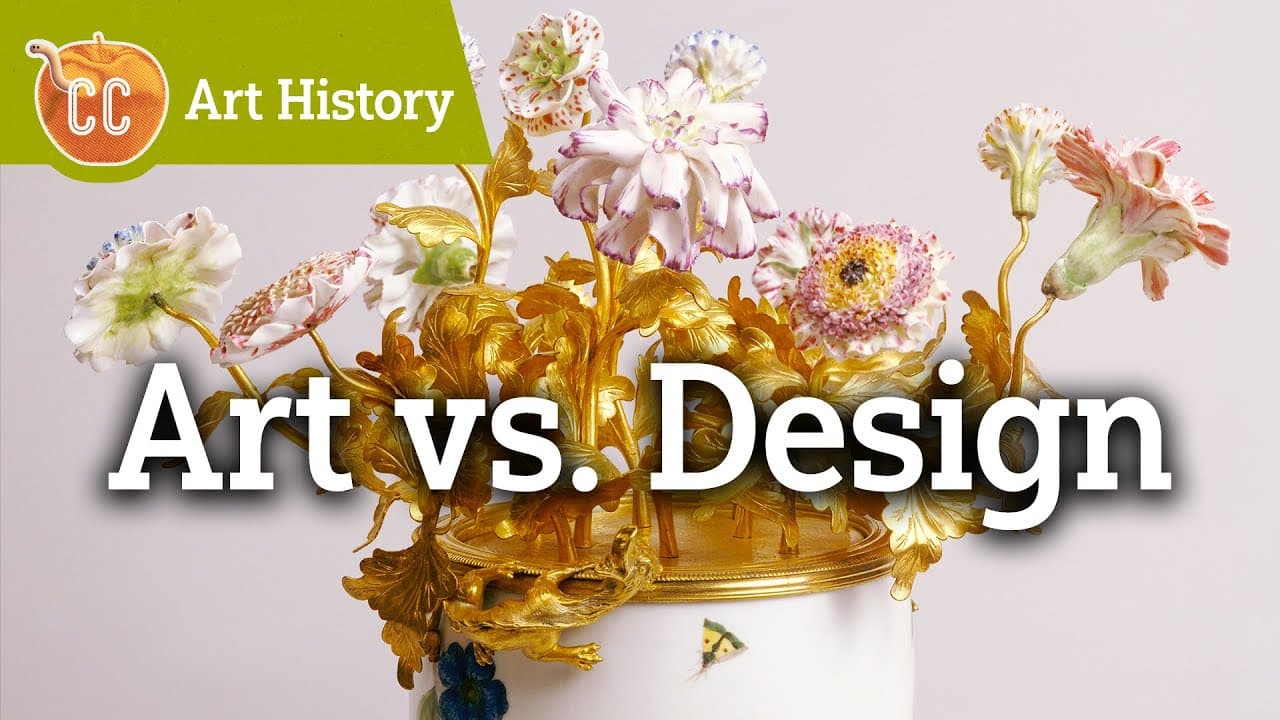
What's the Difference Between Art & Design?
TL;DR
Explores the blurred lines between art and design through history.
Transcript
This is Judy Chicago’s 1970s installation “The Dinner Party.” It’s a setting for a banquet representing 1,038 women from history. Some have seats of honor, like writer Virginia Woolf and abolitionist Sojourner Truth. The place settings have embroidered placemats, gold ceramic chalices, utensils, and porcelain dinner plates that look quite a bi... Read More
Key Insights
- Judy Chicago's 'The Dinner Party' challenges traditional categories by blending art and design, using elements often considered 'women's work'.
- The distinction between art and design has historical roots, evolving from Medieval Europe's craft focus to Renaissance individual creativity.
- 18th-century debates, like those by Denis Diderot and Marquis de Laborde, questioned the hierarchy between art and functional design.
- The Industrial Revolution and movements like Arts and Crafts and Art Nouveau further complicated the art-design boundary with functional yet expressive objects.
- Folk art, such as weaving, often combines utility with cultural expression, challenging Eurocentric art narratives.
- The Sapeurs in Congo use fashion as a form of artistic identity and political resistance, blurring art and design.
- Contemporary artists like Thierry Jeannot use everyday materials to create functional art, emphasizing environmental concerns.
- The ongoing debate about art versus design highlights the limitations of rigid categories in capturing the diversity of human creativity.
Install to Summarize YouTube Videos and Get Transcripts
Explore YouTube Video Summarizer or Get YouTube Transcript Extractor
Questions & Answers
Q: What is the significance of Judy Chicago's 'The Dinner Party' in the art vs. design debate?
'The Dinner Party' by Judy Chicago is significant because it challenges traditional distinctions between art and design by incorporating elements like embroidery and ceramics, often categorized as craft or design. It highlights women's historical contributions, questioning the hierarchy that places 'high' art above craft, and pushes the boundaries of both categories.
Q: How did the Renaissance period influence the distinction between art and design?
During the Renaissance, the idea of art as a reflection of individual creativity emerged, elevating painting and sculpting above skilled crafts. This shift led to questions about whether these practices were expressions of intellect and talent, setting the stage for the ongoing debate about the hierarchy between art and design.
Q: What role did the Industrial Revolution play in the art vs. design discussion?
The Industrial Revolution, along with movements like Arts and Crafts and Art Nouveau, played a significant role in the art vs. design discussion by producing objects that were both functional and expressive. These movements celebrated handcrafted skill and aesthetic design, complicating the distinction between art and design by creating works that defied traditional categories.
Q: How does folk art challenge the traditional art vs. design narrative?
Folk art, such as weaving, challenges the traditional art vs. design narrative by combining utility with cultural expression. Often categorized as 'folk art,' these handmade objects serve functional purposes while reflecting shared cultural values, questioning the Eurocentric hierarchy that separates art from design and highlighting the diverse ways creativity is expressed globally.
Q: What is the significance of the Sapeurs in the context of art and design?
The Sapeurs, a movement in Congo, use fashion as a form of artistic identity and political resistance, blending art and design. By remixing European clothing styles, they challenge colonial legacies and express complex cultural identities, demonstrating how clothing can serve as a powerful medium for artistic expression and cultural commentary.
Q: How do contemporary artists like Thierry Jeannot contribute to the art vs. design debate?
Contemporary artists like Thierry Jeannot contribute to the art vs. design debate by using everyday materials to create functional art. Jeannot's work, made from discarded plastic bottles, emphasizes environmental concerns while challenging the notion of art as luxury objects. This approach highlights how contemporary art can blur the lines between art and design, focusing on cultural and social issues.
Q: What historical debates have shaped the perception of art and design?
Historical debates, such as those between Denis Diderot and Marquis de Laborde in 18th-century France, have shaped the perception of art and design. Diderot argued for a hierarchy that placed art above design, while Laborde advocated for a broader definition of art that included functional objects. These debates reflect ongoing discussions about the value and categorization of creative works.
Q: Why is the distinction between art and design considered limiting?
The distinction between art and design is considered limiting because it fails to capture the diverse and evolving nature of human creativity. Rigid categories overlook the innovative forms and cultural expressions that exist at the intersection of art and design, emphasizing the need for more inclusive frameworks that recognize the complexity and variety of creative practices.
Summary & Key Takeaways
-
Judy Chicago's 'The Dinner Party' uses design elements like embroidery and ceramics to challenge traditional art categories and highlight women's historical contributions. The installation raises questions about the boundaries between art and design.
-
Historically, the distinction between art and design has evolved, from Medieval Europe's focus on craft to Renaissance Europe's emphasis on individual creativity, with ongoing debates about the hierarchy between the two.
-
Movements like Arts and Crafts and Art Nouveau blurred the lines between art and design, while folk art and contemporary practices continue to challenge rigid categories, emphasizing the diverse ways creativity is expressed.
Read in Other Languages (beta)
Share This Summary 📚
Summarize YouTube Videos and Get Video Transcripts with 1-Click
Try YouTube Summary with ChatGPT & Claude or YouTube Transcript Generator
Explore More Summaries from CrashCourse 📚



Summarize YouTube Videos and Get Video Transcripts with 1-Click
Try YouTube Summary with ChatGPT & Claude or YouTube Transcript Generator