BOE's Carney Says U.K. Growth Resilient Since Brexit
TL;DR
UK growth remains strong despite Brexit uncertainties.
Transcript
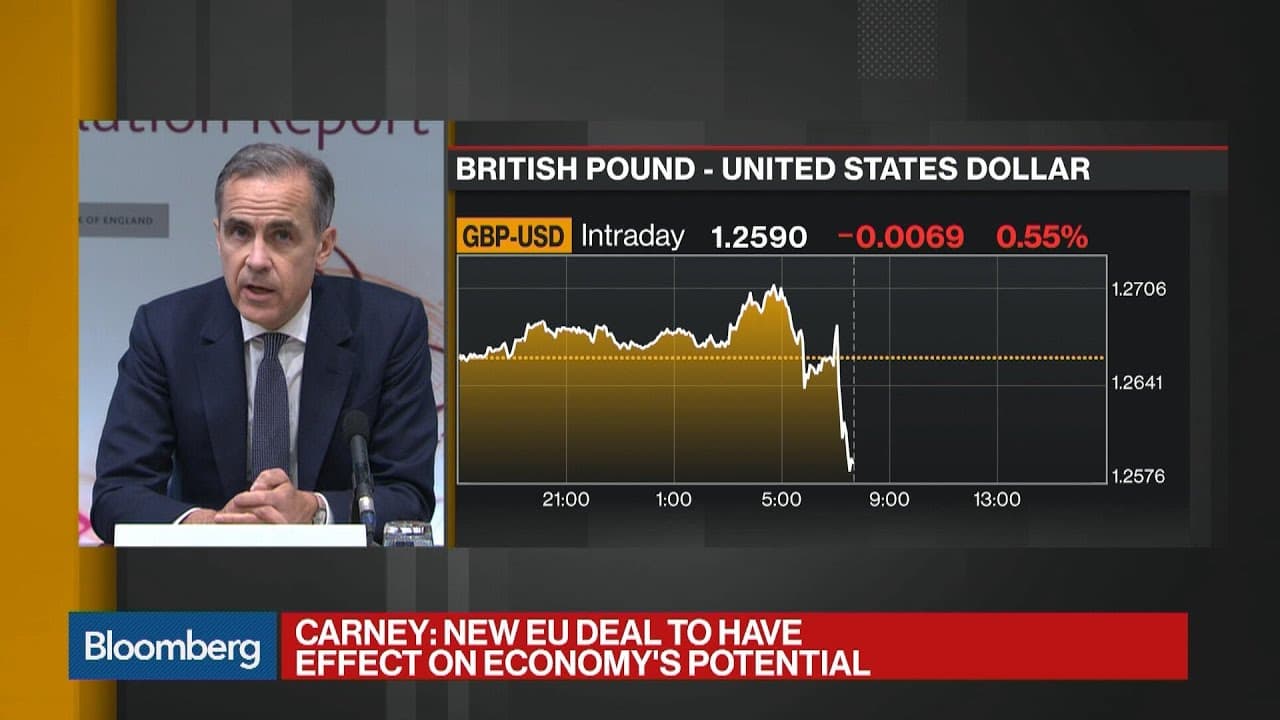
the committee has unanimously confirmed that the current monetary policy stance remains appropriate but it has also made important revisions to its forecast and highlighted some of the key judgments underlying it growth has remained resilient since the referendum with the UK posting the fastest rate in the G7 last year the MPC expects growth to be ... Read More
Key Insights
- The Bank of England's committee unanimously agrees that the current monetary policy is appropriate, with revisions to its growth forecast.
- UK growth has been resilient since the Brexit referendum, with the fastest rate in the G7 last year.
- The UK economy is projected to expand by 2% in 2017 and 1.75% thereafter, higher than previous forecasts.
- The stronger outlook is driven by eased fiscal policy, a firmer global economy, supportive financial conditions, and household spending.
- Eased fiscal policy from the Chancellor's Autumn statement accounts for half of the forecast upgrade.
- Global economic improvements, particularly in the US, contribute to over a quarter of the growth forecast upgrade.
- Despite growth, business investment remains flat and is expected to be lower, impacting productivity and wages.
- Financial markets have already adjusted to Brexit expectations, evidenced by the sterling's value drop, impacting real incomes.
Install to Summarize YouTube Videos and Get Transcripts
Explore YouTube Video Summarizer or Get YouTube Transcript Extractor
Questions & Answers
Q: What is the current stance of the Bank of England's monetary policy?
The Bank of England's committee unanimously agrees that the current monetary policy stance remains appropriate. However, they have made important revisions to their growth forecast, highlighting the resilience of the UK economy post-Brexit, with stronger growth expected over the forecast period.
Q: How has UK growth performed since the Brexit referendum?
Since the Brexit referendum, UK growth has remained resilient, posting the fastest rate in the G7 last year. The economy is projected to expand by 2% in 2017 and 1.75% thereafter, which is an upgrade from previous forecasts, indicating a stronger outlook despite Brexit uncertainties.
Q: What factors contribute to the upgraded growth forecast for the UK?
The upgraded growth forecast for the UK is attributed to four main factors: eased fiscal policy from the Chancellor's Autumn statement, a firmer global economy with improvements in financial conditions and business confidence, supportive domestic financial conditions, and strong household spending.
Q: What impact does Brexit have on business investment in the UK?
Brexit has led to uncertainty over future arrangements, weighing on business investment, which has been flat since the end of 2015. Business investment is expected to be around a quarter lower in three years than projected before the referendum, affecting productivity, wages, and broader incomes.
Q: How have financial markets reacted to Brexit expectations?
Financial markets have already adjusted to Brexit expectations, as evidenced by the sharp fall in the value of sterling. This adjustment reflects the anticipated changes to the UK's economic prospects and is expected to impact real incomes as the UK transitions to its new trading arrangements.
Q: What is the role of household spending in the UK's economic outlook?
Household spending plays a significant role in the UK's economic outlook, with few signs of spending cutbacks despite the upcoming squeeze on real incomes. The savings rate is falling towards pre-crisis lows, and household debt is rising, indicating strong consumer confidence and spending.
Q: What is the expected resolution between consumer strength and financial market pessimism?
The tension between current consumer strength and relative financial market pessimism is expected to begin resolving over the course of the year. This resolution will be influenced by how households adjust their spending and expectations of future income as the UK moves to new trading arrangements.
Q: How does the Bank of England's policy actions influence financial conditions?
The Bank of England's policy actions have helped maintain supportive financial conditions in the UK. These actions have contributed to low risk-free rates, lower credit spreads, and strong competition in consumer credit markets, which in turn reinforce historically low mortgage rates and accommodative domestic credit conditions.
Summary & Key Takeaways
-
The Bank of England's committee maintains its monetary policy stance while revising growth forecasts, highlighting UK resilience post-Brexit. Growth is projected to be stronger than previous estimates due to eased fiscal policy, a firmer global economy, and supportive financial conditions.
-
Despite a positive outlook, Brexit consequences remain, with business investment flat and expected to be lower, impacting productivity and wages. Financial markets have adjusted to Brexit expectations, as seen in the sterling's value drop, affecting real incomes.
-
Household spending remains strong, with the savings rate falling and household debt rising. The tension between consumer strength and financial market pessimism is expected to resolve throughout the year as the UK adjusts to new trading arrangements.
Read in Other Languages (beta)
Share This Summary 📚
Summarize YouTube Videos and Get Video Transcripts with 1-Click
Try YouTube Summary with ChatGPT & Claude or YouTube Transcript Generator
Explore More Summaries from Bloomberg Originals 📚





Summarize YouTube Videos and Get Video Transcripts with 1-Click
Try YouTube Summary with ChatGPT & Claude or YouTube Transcript Generator